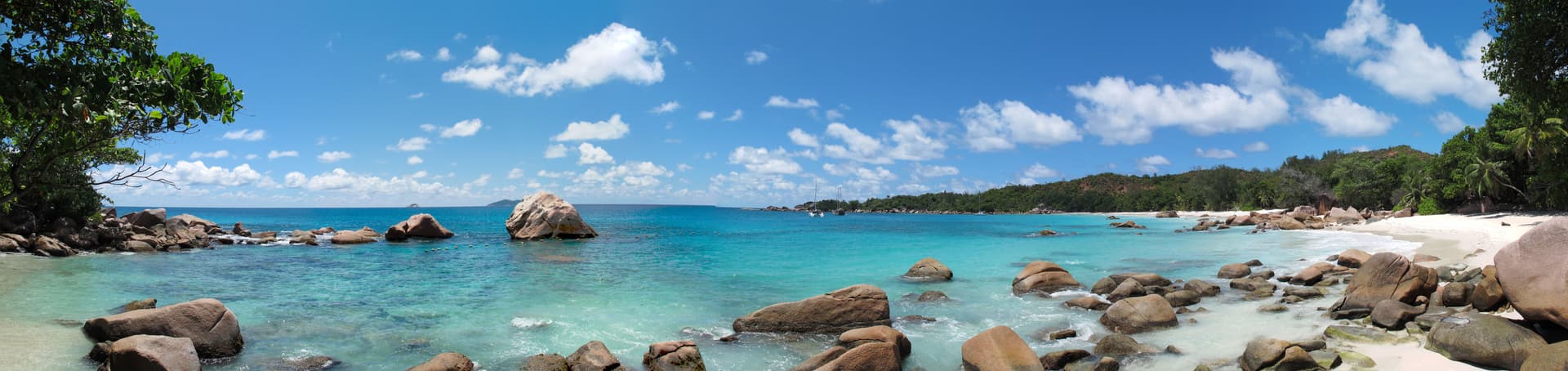
Seychelles is 115 islands scattered across 1.4 million km² of the western Indian Ocean, and the inner ones are geologically unlike anywhere else, granite, not coral, the exposed peaks of a submerged microcontinent.
Read more about Seychelles →Capital: Victoria
Currency: SCR
Best time: April to May and October to November: the calm months between the trade winds.
See more →Comfort: MID RANGE
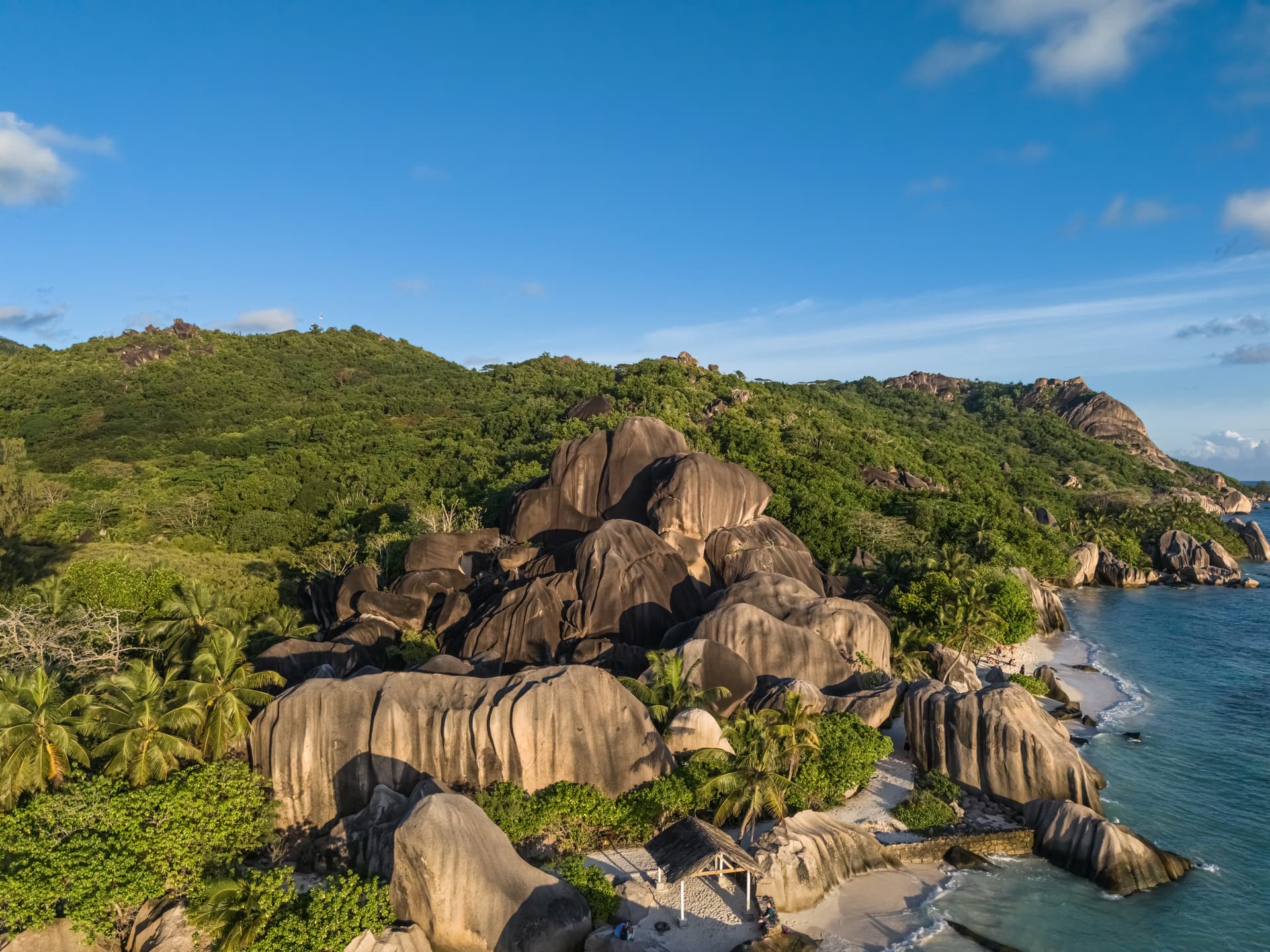
Seychelles is 115 islands scattered across 1.4 million km² of the western Indian Ocean, and the inner ones are geologically unlike anywhere else, granite, not coral, the exposed peaks of a submerged microcontinent. That granite is the reason the beaches look the way they do. Anse Source d'Argent on La Digue and Anse Lazio on Praslin are ringed by weathered boulders that photograph unlike any other coastline. Praslin's Vallée de Mai, a UNESCO World Heritage… Site, is a primeval palm forest holding the coco de mer, which produces the largest seed in the plant kingdom and grows wild nowhere else on earth. Mahé holds the capital, Victoria, the airport and most of the population, plus Morne Seychellois National Park covering a fifth of the island. Aldabra, far to the southwest, is the world's second-largest coral atoll and home to some 100,000 giant tortoises, more than the Galápagos, though reaching it means a liveaboard expedition. Around 40% of the country's land area is protected, which is among the highest proportions anywhere.
April to May and October to November: the calm months between the trade winds. Seychelles sits outside the cyclone belt and is warm year-round, so the seasons are defined by wind rather than temperature. Two trade wind systems alternate, and the transitions between them are the sweet spots. April–May and October–November are those transitions: the sea is calmest, visibility for diving and snorkelling is at its best, often up to 30 m, and the seaweed that the winds pile onto certain beaches is at its lowest. These are the months most operators recommend. The southeast trades blow from May to September, bringing cooler, drier, breezier weather. It suits sailing and hiking, but pushes seaweed onto southeast-facing beaches and stirs up the water. The northwest monsoon runs November to March, hotter and more humid with heavier rain, usually in short bursts. It is the best window for big-game fishing and for the surf on the southwest coasts. Turtle nesting on the inner islands runs roughly October to February.
Seychelles has no visa requirement for any nationality: an unusual position, and one that catches people out because there is still a mandatory pre-arrival step. Every traveller, including children and infants, must obtain a Seychelles Travel Authorisation before departure. Apply at the official portal, seychelles.govtas.com, no earlier than 30 days before arrival. The current fee is around EUR 10 per person and processing usually takes up to 24 hours, though it can run longer in busy periods. Airlines check for the approval at boarding. You will need to upload a passport bio page, your return or onward ticket and confirmed accommodation for the full stay. Seychelles requires that you have somewhere booked, and licensed accommodation only. A passport valid for the duration of the stay is required, and visitor permits are issued on arrival for up to three months, extendable. Beware of unofficial sites charging several times the government fee for the same authorisation. Use the govtas.com portal directly. Confirm current requirements before booking.
Yellow fever: a certificate is required for travellers aged one year and over who are arriving from, or have transited through, a country with risk of yellow fever transmission. Not required for direct arrivals from Europe or Asia. Given how many routings come through the Gulf or East Africa, check your specific itinerary. Malaria: Seychelles is malaria-free and no prophylaxis is required. Commonly recommended: routine immunisations kept current, measles, mumps and rubella, diphtheria-tetanus-pertussis and polio, plus hepatitis A, which is the standard recommendation for food and water exposure. Typhoid and hepatitis B are worth discussing for longer or more adventurous stays. Dengue and chikungunya occur, with periodic outbreaks; use repellent, particularly around dawn and dusk. Tap water on Mahé, Praslin and La Digue is treated and generally regarded as safe, though bottled is widely used, particularly on the smaller islands where supply is rainwater-dependent. The real risks are marine and topographic: strong currents on the exposed beaches with no lifeguards, and steep granite trails that get slippery in rain. Sun exposure is severe this close to the equator. Medical care on Mahé is good; the outer islands are remote and evacuation is by boat or helicopter, so carry insurance that covers it.
Places worth building a trip around in Seychelles, from our travel writing.
Seychelles on the map
Hand-picked safaris, beach escapes, and cultural journeys across Seychelles.