Tunisia packs Roman ruins, a Mediterranean coast, Berber desert villages and Star Wars filming locations into Africa's northernmost and smallest Maghreb country, and does it at consistently lower prices than Morocco.
Read more about Tunisia →Capital: Tunis
Currency: TND
Best time: April to May and September to October: warm sea, comfortable inland temperatures, lower prices.
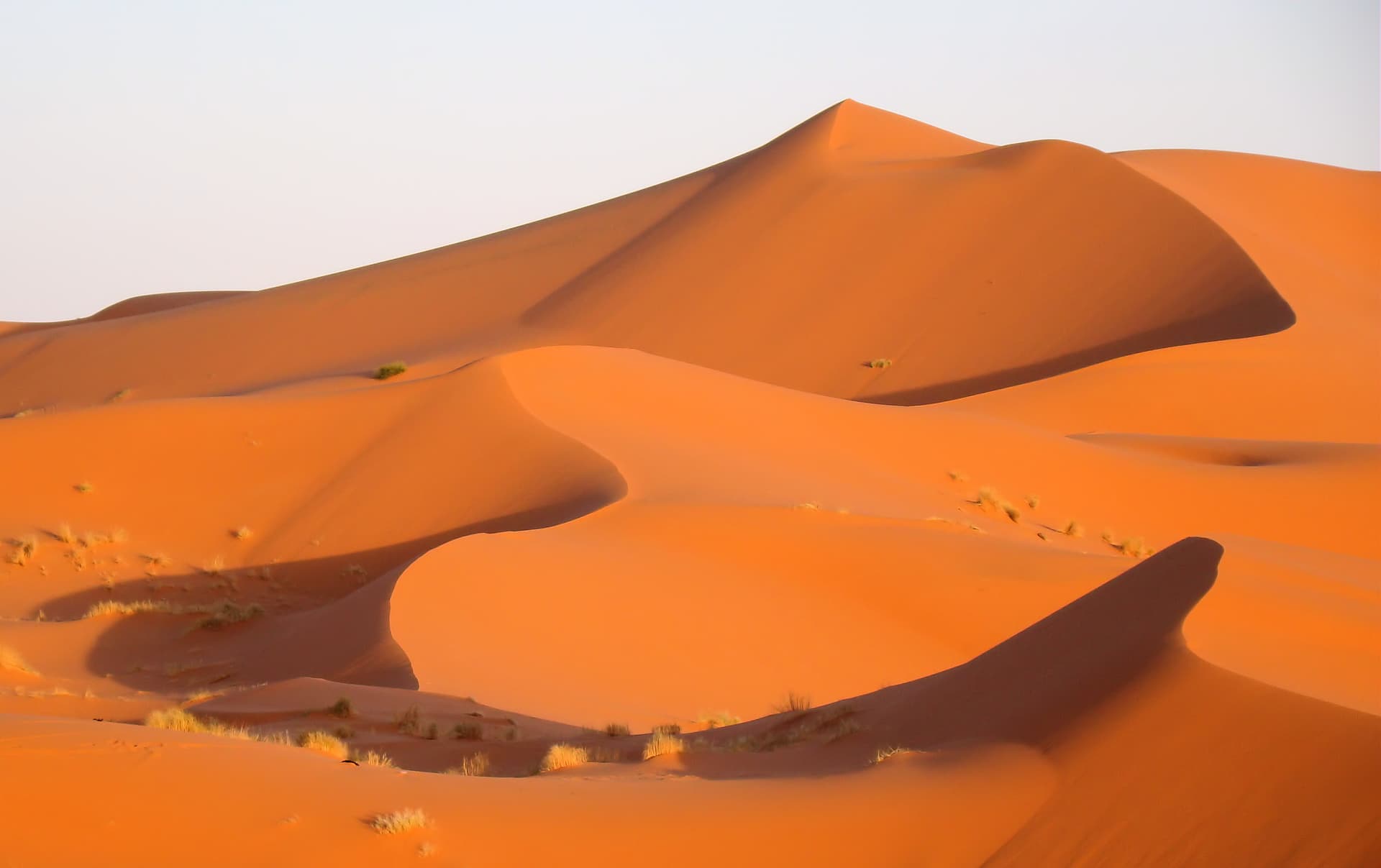
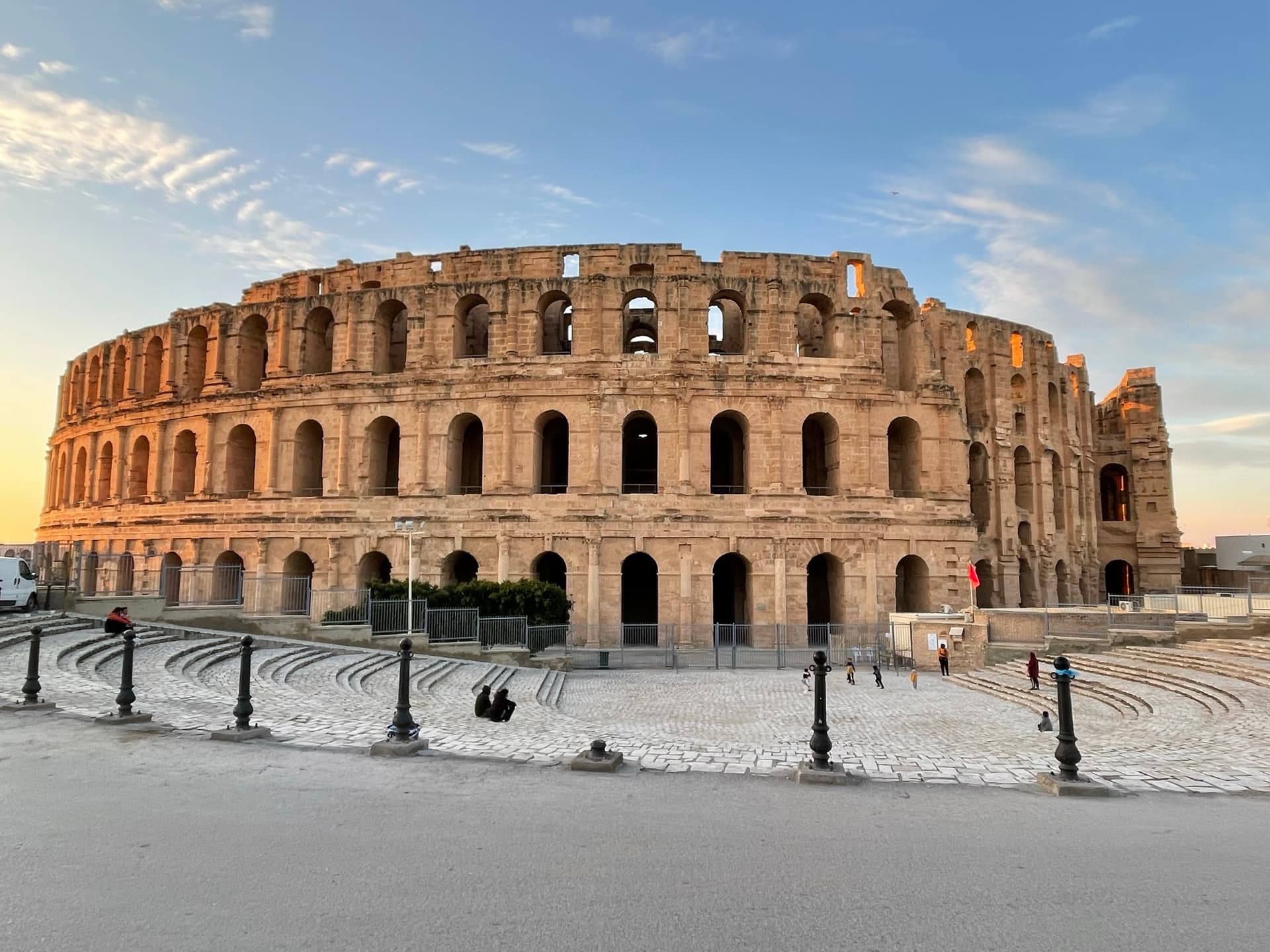
See more →Tunisia packs Roman ruins, a Mediterranean coast, Berber desert villages and Star Wars filming locations into Africa's northernmost and smallest Maghreb country, and does it at consistently lower prices than Morocco. Carthage, on the bay outside Tunis, is what remains of the Phoenician city Rome destroyed in 146 BC and then rebuilt; the site is scattered across a seaside suburb and pairs with the Bardo Museum's Roman mosaic collection, among the finest in the world. El Djem holds one of the largest and best-preserved Roman amphitheatres anywhere, seating 35,000. Sidi Bou Said is the blue-and-white clifftop village above Tunis. The south is a different country. Matmata's troglodyte cave dwellings served as Luke Skywalker's home in Star Wars; Douz is the gateway to the Sahara for camel treks and dune camps; Ksar Ghilane is a hot-spring oasis in the sand sea. Djerba, an island off the southeast coast, has beaches, one of the oldest synagogues in the world at El Ghriba, and direct European flights.
April to May and September to October: warm sea, comfortable inland temperatures, lower prices. The shoulder seasons are clearly the best. Spring and early autumn give you a warm Mediterranean, temperatures that make Roman sites and desert excursions pleasant rather than punishing, and rates well below the European summer peak. Spring adds wildflowers across the north. Summer, June to August, is peak beach season with the busiest resorts and highest prices. The coast is manageable, but the interior and the south become severe, Douz and Tozeur regularly pass 45°C, and desert tours are limited to early morning and evening. Winter, November to March, is the value window: prices drop 40–60% and the coast stays sunny at 18–23°C, though the sea is too cold for most swimmers and northern Tunisia sees rain. The desert is at its most comfortable for trekking, with cold nights. If your dates fall in Ramadan, expect restricted daytime dining outside tourist resorts.
Tunisia is visa-free for most Western visitors. Citizens of the United States may stay up to four months; EU nationals are generally granted up to three months, with some entitled to longer; Canadian, British, Australian, Japanese and many other nationals also enter without a visa for tourist stays of up to 90 days. Your passport must be valid for at least six months beyond your intended departure and hold a blank page. You may be asked for proof of accommodation and a return ticket. There is one wrinkle worth knowing: travellers arriving on a package tour by charter flight or cruise ship have historically been admitted with reduced formalities, but independent travellers should carry a hotel booking to show at immigration. Nationalities that do require a visa apply at a Tunisian consulate; there is no eVisa system and no reliable visa on arrival. Much of the country's southern and western border zones with Libya and Algeria are militarised and subject to travel restrictions and curfews. Desert excursions must be run by licensed operators, who obtain the necessary permissions. Confirm current requirements and your government's travel advice before booking.
Yellow fever: a certificate is required only if you are arriving from, or transiting, a country with risk of yellow fever transmission. Not required for arrivals from Europe or North America. Malaria: Tunisia is malaria-free. No prophylaxis is required. Commonly recommended: hepatitis A and B, typhoid, tetanus-diphtheria-polio, and rabies. Rabies is present in the stray dog population and pre-exposure vaccination is worth considering for rural or desert travel; treat any bite or scratch as urgent. Stomach upsets are the usual complaint. Drink bottled water, be careful with salads and unpeeled fruit outside established restaurants, and skip ice in casual places. Heat is the main hazard on southern excursions: Sahara day trips in summer put people in trouble regularly. Carry water, cover up and avoid midday exertion. Sun on the coast is stronger than European visitors expect in spring and autumn. Medical facilities are good in Tunis and the coastal resorts, with reasonable private clinics; care in the interior and the south is basic. Pharmacies are well stocked and pharmacists are a practical first stop for minor problems. See a travel clinic four weeks ahead.
Places worth building a trip around in Tunisia, from our travel writing.
 Culture & Heritage
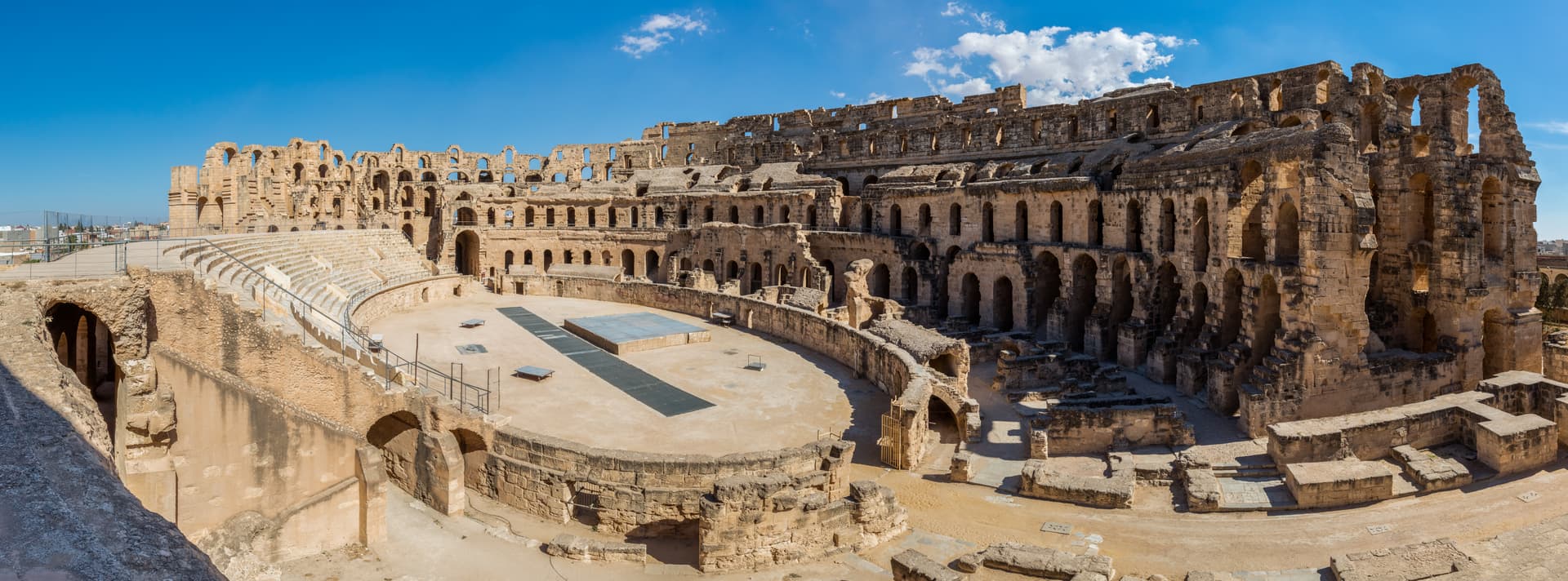
In the flat agricultural landscape of central Tunisia, where the road from Sousse runs south through olive groves and date palms, the Amphitheatre of El Jem appears suddenly and without preamble — a vast oval of honey-coloured stone risi…
 Culture & Heritage
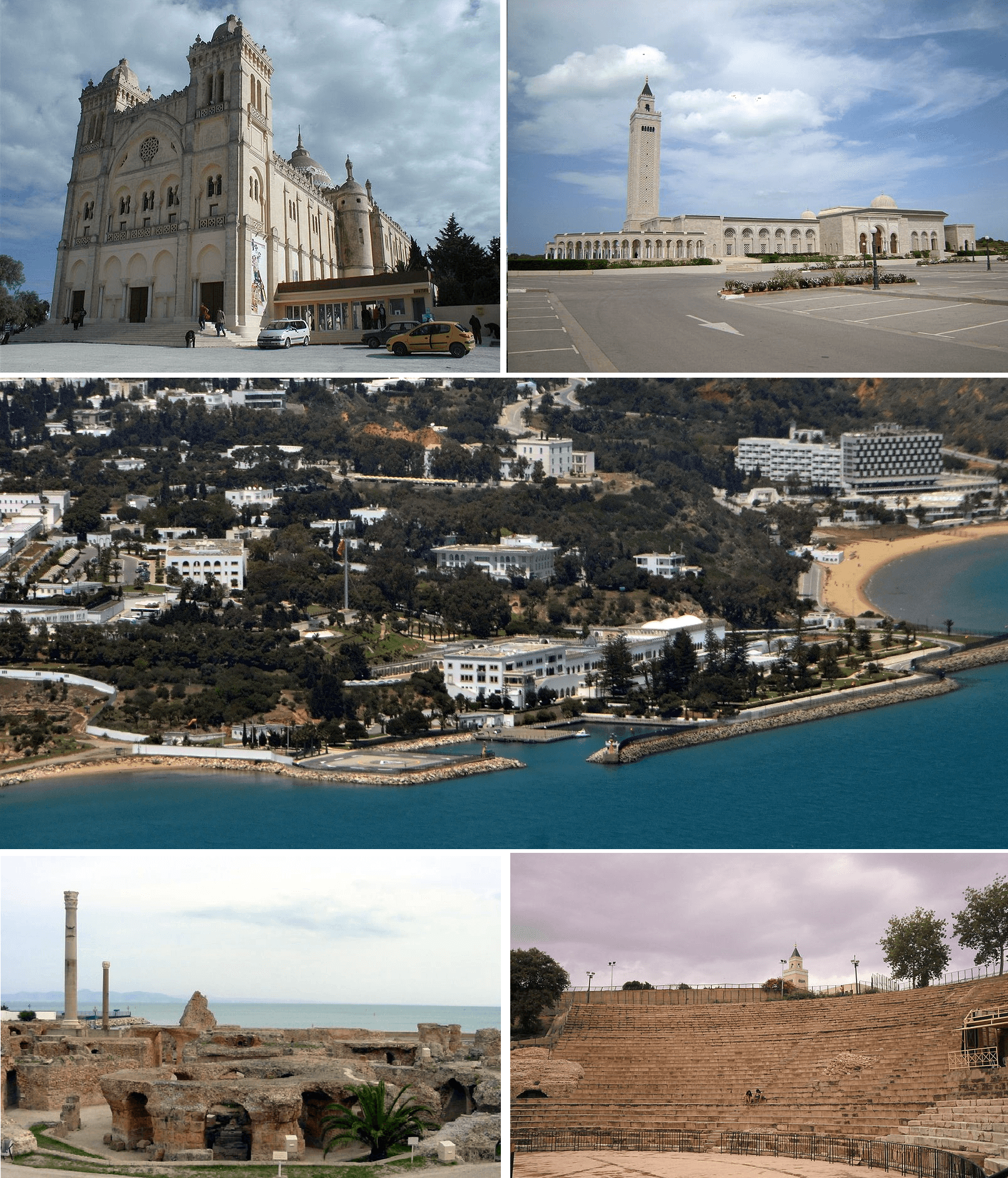
Stand on the hill of Byrsa and look out toward the Gulf of Tunis, and it takes only a moment to understand why Carthage was built here. The view is sweeping, the sea crossing to Sicily is visible on a clear day, and the low ridges runnin…
 Culture & Heritage
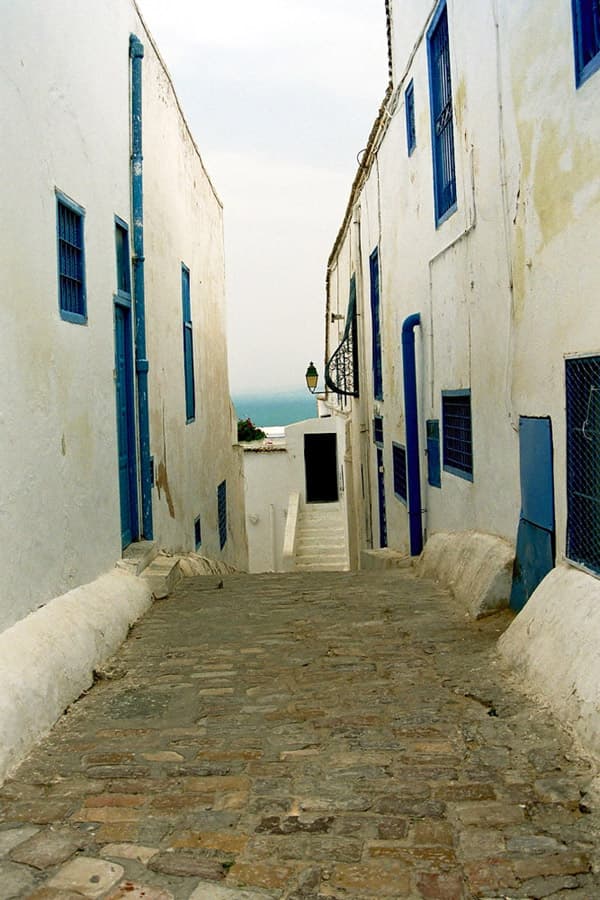
Perched on a cliff above the Gulf of Tunis, the village of Sidi Bou Said has been stopping people in their tracks for centuries. Its blue-painted doors and shutters frame walls of dazzling white, bougainvillea tumbles over courtyard wall…
Tunisia on the map
Hand-picked safaris, beach escapes, and cultural journeys across Tunisia.