Mauritius is the polished end of the Indian Ocean: a volcanic island ringed almost entirely by coral reef, with a lagoon that stays flat and warm and a hotel sector that has been refining itself for fifty years.
Read more about Mauritius →Capital: Port Louis
Currency: MUR
Best time: April to June and September to November: warm, dry and outside the cyclone window.
See more →Comfort: MID RANGE
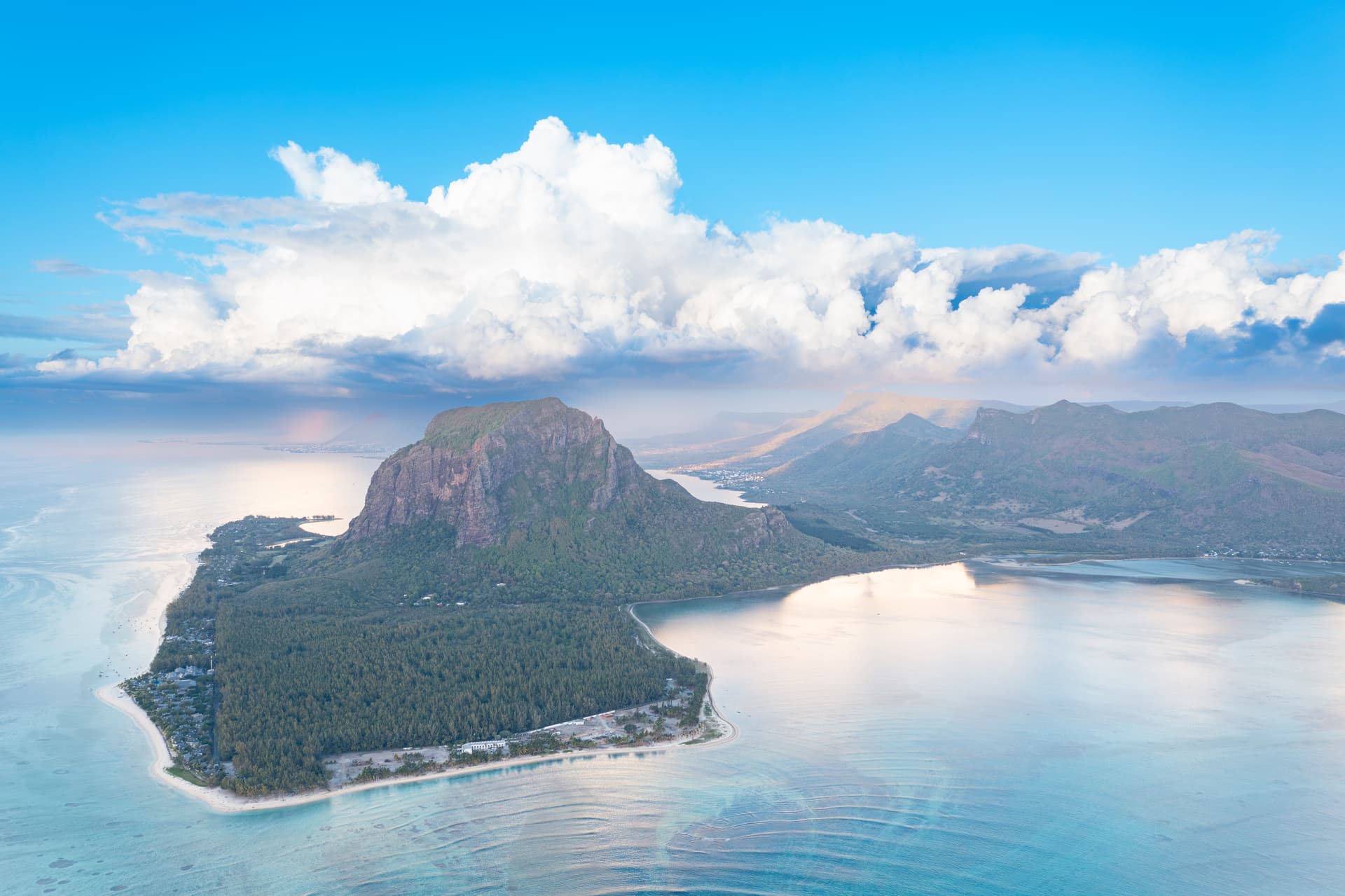
Mauritius is the polished end of the Indian Ocean: a volcanic island ringed almost entirely by coral reef, with a lagoon that stays flat and warm and a hotel sector that has been refining itself for fifty years. The reef is what shapes the experience: it breaks the swell offshore and leaves a shallow turquoise lagoon around most of the coast, which makes the swimming, snorkelling and kitesurfing unusually easy. Le Morne Brabant, the basalt… monolith on the southwest peninsula, is a UNESCO World Heritage Site for its history as a refuge for escaped slaves, and the water beneath it is the island's best kitesurfing. Inland, Black River Gorges National Park holds what remains of the native ebony forest and endemic birds including the Mauritius kestrel, brought back from four known individuals in the 1970s. Chamarel has the seven-coloured earths and a waterfall; the Ganga Talao crater lake is a major Hindu pilgrimage site. Port Louis's market and the Creole-Indian-Chinese-French food culture are worth as much time as the beach.
April to June and September to November: warm, dry and outside the cyclone window. Mauritius has a mild year-round climate, so the shoulder seasons win on the details: comfortable temperatures, low rainfall, calm seas and smaller crowds than the European and South African holiday peaks. The austral winter, June to September, is dry and cooler, with the strongest trade winds, this is peak season for kitesurfing and windsurfing at Le Morne, and the sea can be choppy on exposed coasts. Summer, December to March, is hot and humid and is the cyclone season. Serious cyclones are not annual, but January to March carries genuine risk and it is worth checking that your travel insurance covers weather disruption if you book then. It is also when the water is warmest. Diving is best from November to April when visibility peaks. Big-game fishing runs roughly November to April. The east coast is windier and the west more sheltered, which matters more than the month for choosing where to stay.
Mauritius is one of the most open countries in Africa. Citizens of the European Union, United Kingdom, United States, Canada, Australia, New Zealand and a long list of African, Asian and South American countries enter without a visa, typically for 60 or 90 days depending on nationality. Entry is granted on arrival at Sir Seewoosagur Ramgoolam International Airport on presentation of the standard requirements: a passport valid at least six months beyond your intended stay, a confirmed return or onward ticket, proof of pre-booked accommodation for the full duration, and evidence of sufficient funds. These are checked in practice, not just on paper: travellers without a confirmed booking have been held at immigration. An online arrival form must be completed before travel through the government's passenger portal; it covers immigration and customs and is quick. Nationalities that do require a visa apply through a Mauritian mission or, in some cases, obtain one on arrival. Mauritius has strict biosecurity rules: plant material, seeds, meat and dairy are prohibited and the airport enforces it. Confirm current requirements before travelling.
Yellow fever: a certificate is required only if you are arriving from, or have transited for more than twelve hours through, a country with risk of yellow fever transmission. This is enforced, and travellers routing through Nairobi, Addis Ababa or Johannesburg from an endemic country have been refused. Not required for direct arrivals from Europe or Asia. Malaria: Mauritius is malaria-free and no prophylaxis is required. Commonly recommended: tetanus-diphtheria-polio as a baseline, with hepatitis A, hepatitis B, typhoid and rabies worth discussing depending on the length and style of your trip. For a standard resort holiday, routine immunisations are generally sufficient. Mosquito-borne dengue and chikungunya occur, with occasional outbreaks in the summer wet season. Repellent is worth carrying even though malaria is not a concern. Tap water is treated and generally considered safe in the main towns and hotels, though many visitors prefer bottled. The practical hazards are marine: strong currents in the reef passes, stonefish in shallow lagoon areas where reef shoes are sensible, and sunburn that arrives faster than European visitors expect this close to the tropics. Medical care is good, with well-equipped private clinics. Divers should check their insurance covers diving and note the decompression chamber location.
Mauritius on the map
Hand-picked safaris, beach escapes, and cultural journeys across Mauritius.