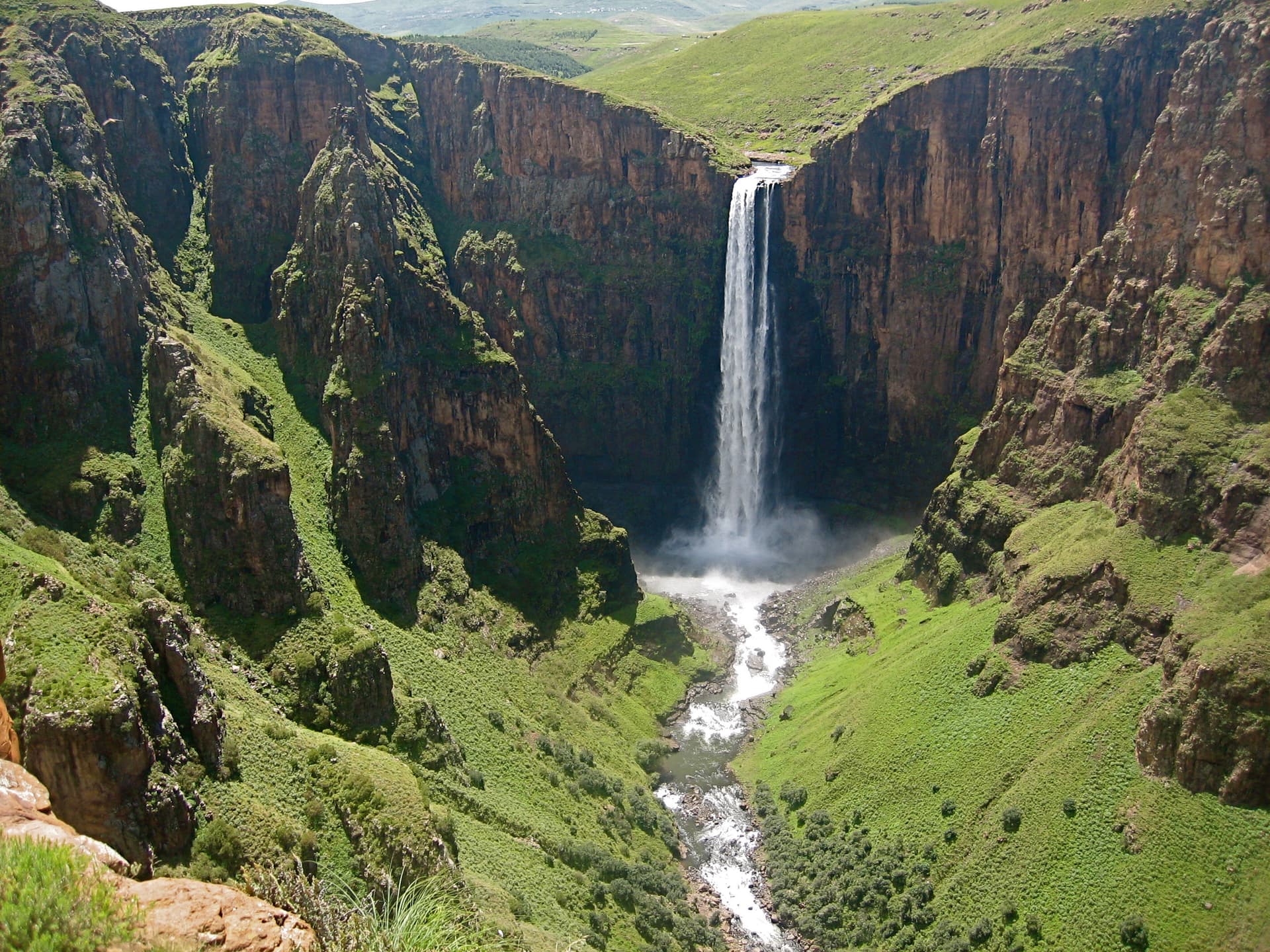
Lesotho is the only country in the world entirely above 1,000 m, and the lowest point in the country, 1,400 m, is higher than the highest point of many others. The nickname, the Kingdom in the Sky, is literal.
Read more about Lesotho →Capital: Maseru
Currency: LSL
Best time: March to May and September to November: mild, clear shoulder months; June to August for snow.
See more →Comfort: MID RANGE
Lesotho is the only country in the world entirely above 1,000 m, and the lowest point in the country, 1,400 m, is higher than the highest point of many others. The nickname, the Kingdom in the Sky, is literal. The Maloti-Drakensberg mountains define everything. Sani Pass, the 4x4 route up from KwaZulu-Natal, climbs to 2,876 m in a series of hairpins and ends at what claims to be the highest pub in Africa; it is… one of the great mountain drives on the continent and requires a genuine four-wheel drive. Sehlabathebe National Park, part of a UNESCO World Heritage Site, holds rock arches, San rock art and the rare Maloti minnow. Pony trekking is the country's signature activity: multi-day rides on sure-footed Basotho ponies through highland villages that have no road access, staying in village huts. Afriski, near the Mahlasela Pass, is one of only two ski resorts in southern Africa. Winter here brings real snow.
March to May and September to November: mild, clear shoulder months; June to August for snow. Autumn, March to May, is the pick for most visitors: the summer rains have finished, the highlands are still green, skies are clear and daytime temperatures are comfortable for hiking and pony trekking. Spring, September to November, is similar and brings wildflowers. Winter, June to August, is cold and dry, with heavy frost, sub-zero nights and snow on the passes. It is beautiful and the visibility is exceptional, but Sani Pass and the higher routes can close at short notice and you need real cold-weather gear, the huts on multi-day treks are unheated. This is the season for Afriski. Summer, December to February, brings the rains as dramatic afternoon thunderstorms and is when the country is greenest. Lightning is a genuine hazard on exposed high ground, and dirt roads and river crossings can become impassable quickly. Whatever the season, pack for cold: the altitude means nights are chilly year-round.
Lesotho is easy to enter. Citizens of most Commonwealth countries, the United States, Canada, the EU and many others do not require a visa for tourist visits; United States passport holders may stay up to 180 days, and most other visa-exempt nationals are granted 30 days at the border, extendable through the Department of Immigration in Maseru. A passport valid at least three months beyond your stay, with at least two blank pages, is required. Nationalities that do need a visa can apply online through the Lesotho eVisa portal or at a mission, in practice, often the South African one, given limited representation abroad. The practical points matter more than the paperwork here. Lesotho is entirely surrounded by South Africa, so you will pass through a South African border post on the way in and out, and each crossing uses South African passport pages, factor that into the two-blank-pages rule. Sani Pass requires a genuine 4x4; two-wheel-drive vehicles are turned back at the South African post, and rental agreements frequently prohibit the route. Carry the hire company's cross-border letter. Smaller border posts close in the early evening; Maseru Bridge and Caledonspoort keep longer hours. Confirm current requirements for your nationality with a Lesotho mission before travelling.
Yellow fever: a certificate is required only if you are arriving from, or have transited through, a country with risk of yellow fever transmission. Not required for arrivals from South Africa, Europe or North America. Malaria: Lesotho is malaria-free. The altitude puts the entire country above the transmission zone, so no prophylaxis is needed, one of very few African destinations where that is true without qualification. Commonly recommended: hepatitis A and B, typhoid, tetanus-diphtheria-polio, and rabies for extended rural travel or pony trekking in remote areas. The real risks here are environmental. Altitude affects some visitors above 3,000 m on the higher passes and treks; ascend gradually and do not push through a headache. Hypothermia is a genuine danger year-round: the weather on the high plateau turns fast, and multi-day trekkers and pony riders have died of exposure in conditions that started out fine. Carry proper layers, waterproofs and a way to keep warm overnight even on a day trip. Drink bottled or treated water outside Maseru. Lesotho has a high HIV prevalence; take the obvious precautions. Medical facilities are limited and serious cases are referred to South Africa. Carry insurance that covers cross-border evacuation. See a travel clinic four weeks ahead.
Lesotho on the map
Hand-picked safaris, beach escapes, and cultural journeys across Lesotho.