Ethiopia is the outlier in African travel: never colonised, home to its own alphabet, calendar and church, and holding a run of historical sites that have no equivalent elsewhere on the continent.
Read more about Ethiopia →Capital: Addis Ababa
Currency: ETB
Best time: October to February: dry, clear and cool, with the major religious festivals falling in this window.
See more →Comfort: MID RANGE
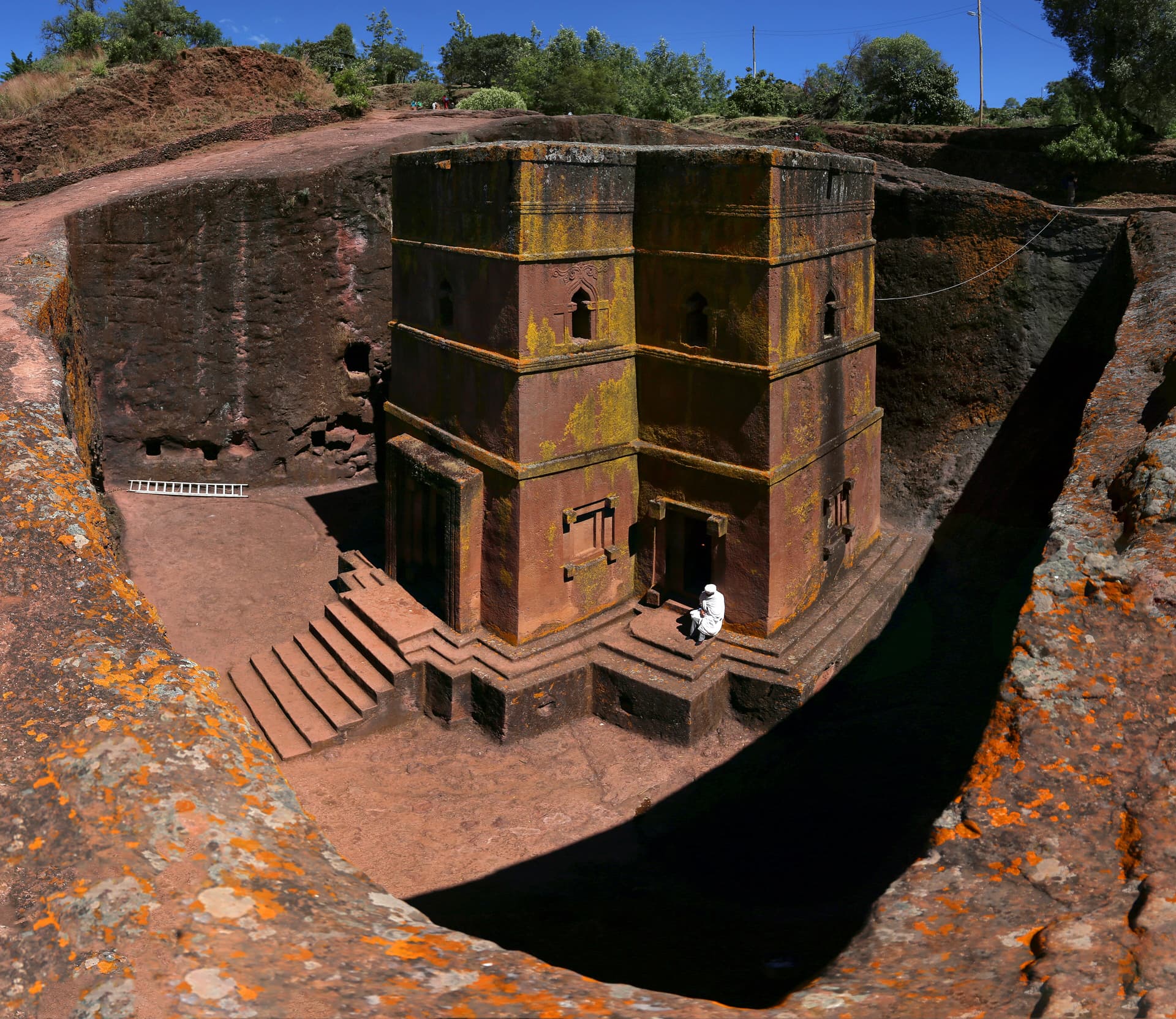
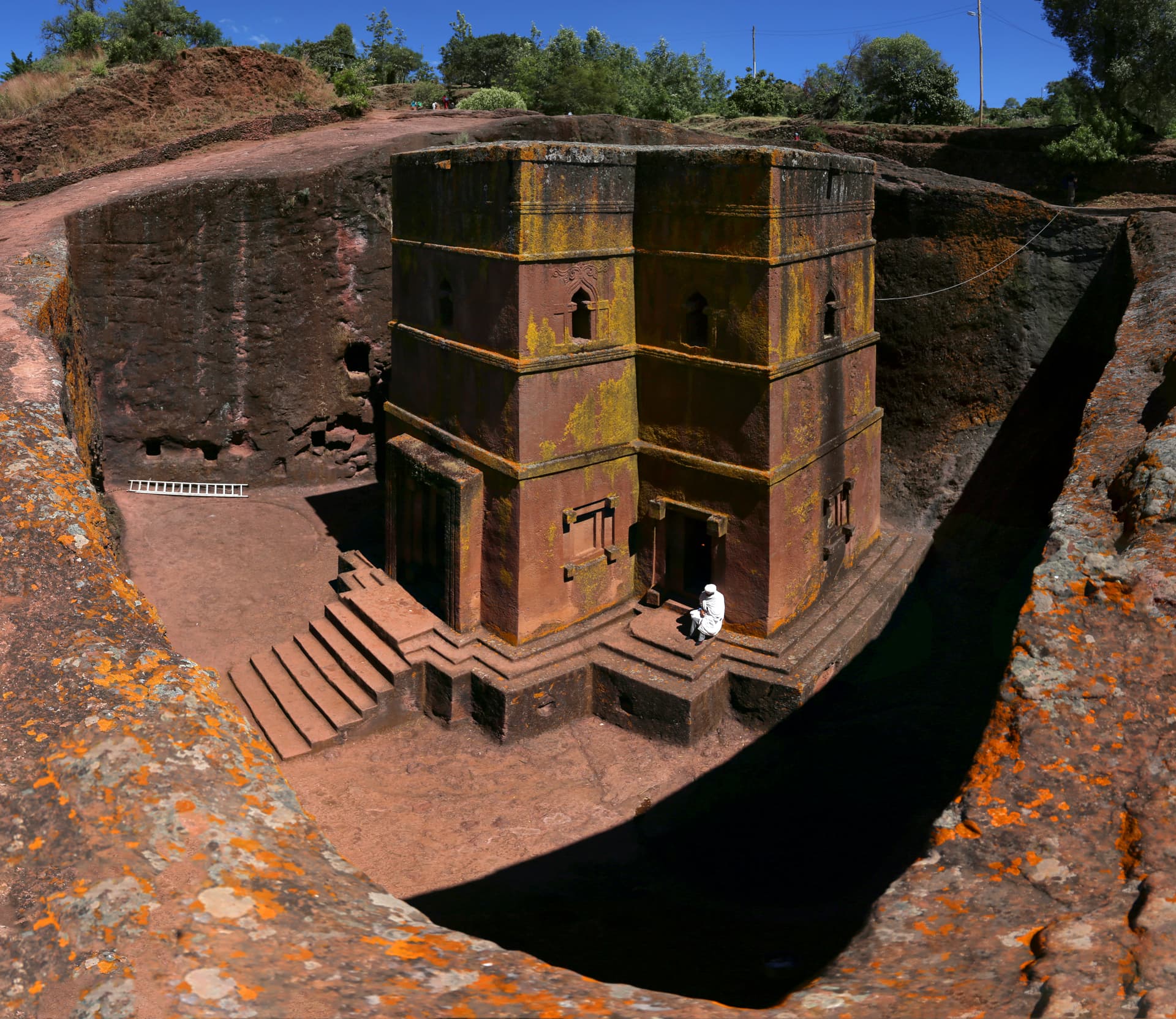
Ethiopia is the outlier in African travel: never colonised, home to its own alphabet, calendar and church, and holding a run of historical sites that have no equivalent elsewhere on the continent. The northern historic circuit links Lalibela's eleven rock-hewn churches, carved down into volcanic tuff more than 800 years ago and still in daily use; the castles of Gondar; the obelisks of Axum; and the island monasteries of Lake Tana, where the Blue Nile… begins. The Simien Mountains offer some of Africa's most spectacular trekking, with gelada monkeys in troops of hundreds and the chance of an Ethiopian wolf. In the far northeast, the Danakil Depression sits more than 100 m below sea level and holds sulphur fields and a permanent lava lake at Erta Ale. The south is a different trip entirely: the Omo Valley's peoples, and endemic wildlife in Bale Mountains National Park. Addis Ababa, at 2,355 m, is the continent's main aviation hub and Ethiopian Airlines reaches more African cities than any other carrier.
October to February: dry, clear and cool, with the major religious festivals falling in this window. The main rains end in September and leave the highlands green and the air clean. October to February is the reliable window for the northern historic circuit, Simien trekking and photography, with warm days and genuinely cold highland nights. Timing to a festival is worth doing. Meskel falls in late September and Timkat, the Epiphany celebration, on 19 January. Timkat at Lalibela or Gondar is one of the great religious spectacles anywhere, and accommodation books out a year ahead. The Danakil Depression is only sensible between November and March; even then daytime temperatures pass 45°C, and operators will not run it in high summer. March to May brings intermittent short rains and rising heat. The main rainy season, June to September, makes some roads impassable and closes parts of the Omo Valley, though the highlands are at their greenest and rates are lowest.
Ethiopia operates an online-only eVisa system for tourists. Apply at the official portal, evisa.gov.et, which is the only authorised site. Several commercial lookalikes charge a large markup for the same document. The standard tourist eVisa is issued for 30 or 90 days, single entry, with fees starting around USD 82 for 30 days. Processing is usually one to three working days. You will need a passport valid at least six months beyond arrival with two blank pages, a passport photo, a return ticket and proof of accommodation. The eVisa is valid for arrival at Addis Ababa Bole International Airport. If you are entering overland, different rules apply and you should arrange the visa through an Ethiopian embassy in advance. Some regions require separate permits or an accredited guide, and access to parts of the north and the Danakil has been restricted at various points for security reasons. Any reputable operator will handle these and will tell you plainly if a region is currently closed. Check evisa.gov.et and your government's travel advice before booking.
Yellow fever: a certificate is required if you are arriving from, or have transited for more than twelve hours through, a country with risk of yellow fever transmission. Many travellers arriving on regional routings through Nairobi or West Africa will need one, so check your exact itinerary. Malaria: risk is limited by altitude, which works in the traveller's favour here. Addis Ababa, Lalibela, Gondar, Axum and the Simien Mountains all sit above 2,000 m and are essentially malaria-free. Risk is real below about 2,000 m, the Omo Valley, Gambella, the Awash lowlands and the Danakil, so prophylaxis depends on your route rather than on visiting the country. Commonly recommended: hepatitis A and B, typhoid, tetanus-diphtheria-polio, meningococcal (Ethiopia sits in the African meningitis belt), and rabies for rural travel. Altitude is the underrated risk. Much of the northern circuit is above 2,500 m and the Simien treks go higher; build in acclimatisation days and do not fly straight from sea level into a hard trek. Drink bottled or treated water and be careful with raw vegetables outside good hotels. Medical facilities outside Addis Ababa are limited, and the Danakil in particular is a long way from anywhere. Evacuation cover is essential. See a travel clinic six to eight weeks before departure.
Places worth building a trip around in Ethiopia, from our travel writing.
Ethiopia on the map
Hand-picked safaris, beach escapes, and cultural journeys across Ethiopia.