Côte d'Ivoire has re-emerged as one of West Africa's most confident destinations, the region's largest economy, with a beach coast, rainforest parks and a capital that earned the nickname Paris of West Africa.
Read more about Côte d'Ivoire →Capital: Yamoussoukro
Currency: XOF
Best time: November to February: the main dry season, and the most comfortable time to travel.
See more →Comfort: MID RANGE
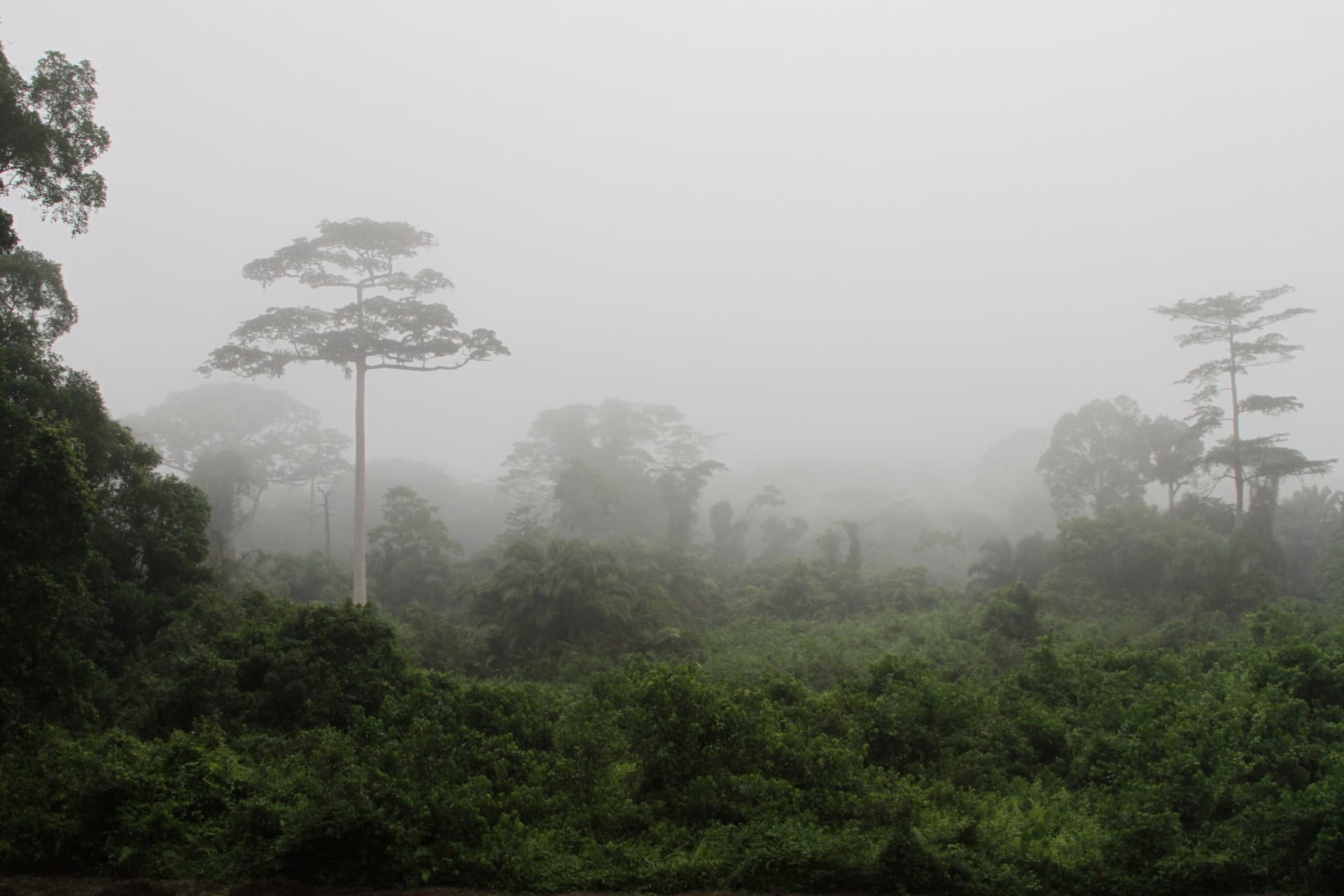
Côte d'Ivoire has re-emerged as one of West Africa's most confident destinations, the region's largest economy, with a beach coast, rainforest parks and a capital that earned the nickname Paris of West Africa. Abidjan is the commercial centre: lagoons, the modernist St Paul's Cathedral, the galleries and nightlife of Cocody and Marcory, and a food scene that runs from maquis grills to serious French cooking. Yamoussoukro, the official capital, holds the Basilica of Our Lady… of Peace, the largest church in the world. Grand-Bassam, the former colonial capital half an hour east of Abidjan, is a UNESCO World Heritage Site of decaying French colonial buildings on a sand spit between lagoon and ocean, and hosts the Abissa festival each November. Taï National Park in the southwest is one of the last major tracts of primary rainforest in West Africa, a UNESCO site with chimpanzees known for tool use. Comoé in the northeast is one of the largest protected areas in the region. The surf beaches at Assinie and Sassandra are the weekend escape.
November to February: the main dry season, and the most comfortable time to travel. The dry season from November to February is the clear window: lower humidity, reliable roads, and good conditions for both the coast and the interior. January and February are particularly good for the national parks, when wildlife concentrates at water and forest tracks are firm. November also brings the Abissa festival at Grand-Bassam, a week-long N'Zima celebration that is one of the country's best cultural events. There is a shorter dry interval in July and August, which is a workable second window, particularly in the south. The main rains fall roughly May to July, with a second wet period in September and October. The southwest, including Taï, is very wet, this is rainforest that receives well over 2,000 mm a year, and forest tracks become difficult. The north is drier and follows a single Sahelian pattern. Humidity on the coast is high year-round; the harmattan in December and January is the one genuinely dry spell.
Côte d'Ivoire has run an eVisa system since 2017 and it is straightforward. Apply online in advance through the official portal. The approval is issued as a pre-authorisation which you present at Abidjan's Félix Houphouët-Boigny International Airport, where the visa itself is issued after biometric capture. Allow time for this on arrival. Tourist visas are typically valid for 90 days. You will need a passport valid at least six months beyond arrival, a passport photo, proof of accommodation, a return ticket, and your yellow fever vaccination certificate, which is mandatory. The eVisa route is designed for arrival by air at Abidjan. If you are entering overland, arrange the visa at an Ivorian embassy in advance. ECOWAS nationals are visa-exempt. Border areas with Mali and Burkina Faso in the north have been affected by regional insecurity and some governments advise against travel there. The main tourist areas, Abidjan, Grand-Bassam, Assinie, Yamoussoukro, are not affected. Confirm current requirements before booking.
Yellow fever: vaccination is mandatory for all travellers aged nine months and over, regardless of origin. The certificate is required for the visa and checked on arrival. Get it at least ten days before travel. Malaria: risk is high and year-round throughout the country including Abidjan. Prophylaxis is essential for every visitor, and is particularly important for forest itineraries in Taï. Commonly recommended: hepatitis A and B, typhoid, tetanus-diphtheria-polio, meningococcal (the north falls within the meningitis belt), and rabies for rural and forest travel. Drink bottled or sachet water. Traveller's diarrhoea is common; be selective about food outside established restaurants, though the maquis grills are part of the experience and generally fine when the food is cooked to order. Schistosomiasis is present in fresh water: do not swim in lakes, lagoons or rivers. Atlantic currents along this coast are strong and there are frequent drownings; swim only where locals do and treat the surf beaches with respect. Medical facilities in Abidjan are among the better ones in West Africa, with adequate private clinics. Care outside the city is limited. Carry insurance including evacuation. See a travel clinic six weeks ahead.
Côte d'Ivoire on the map
Hand-picked safaris, beach escapes, and cultural journeys across Côte d'Ivoire.