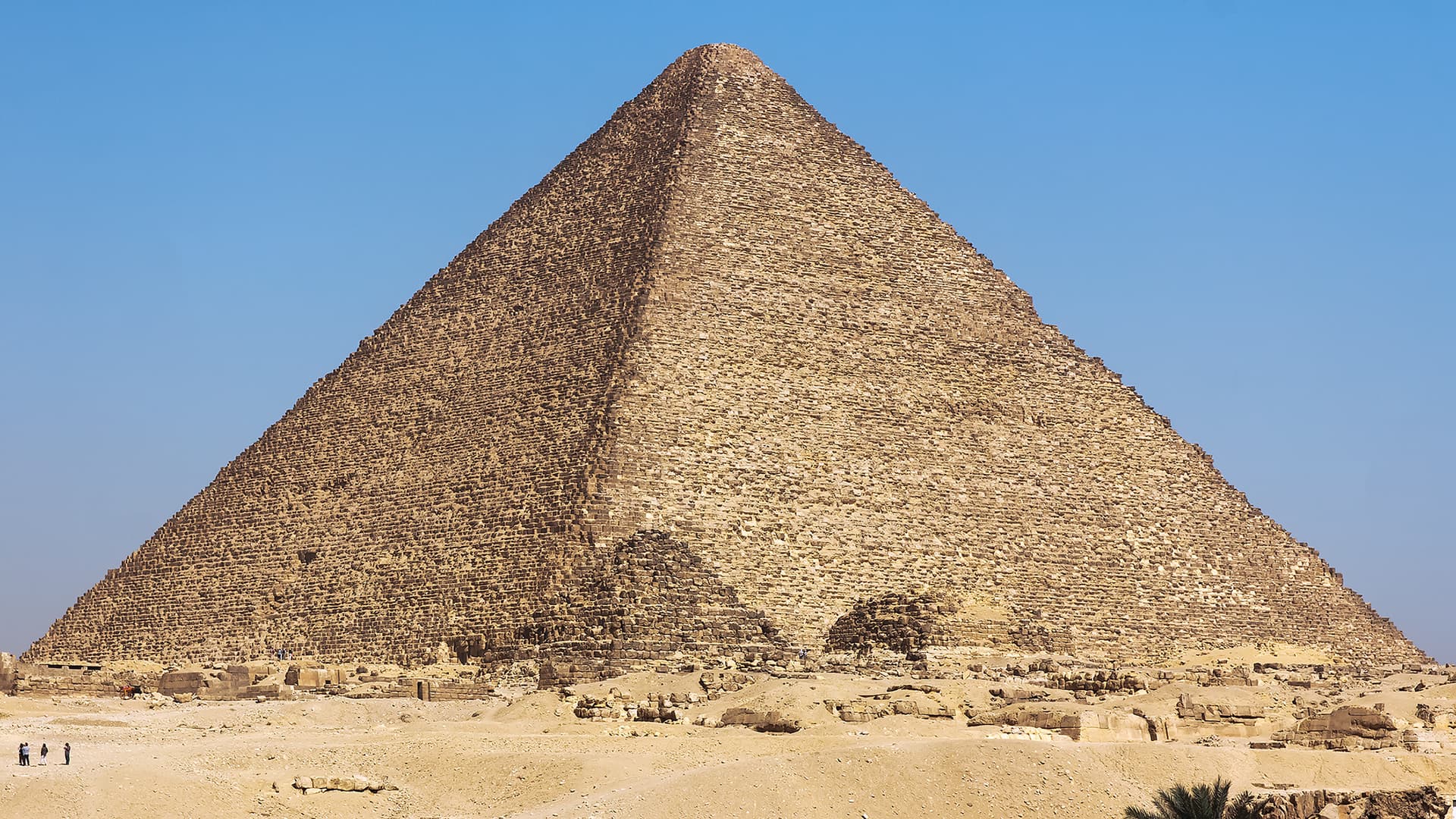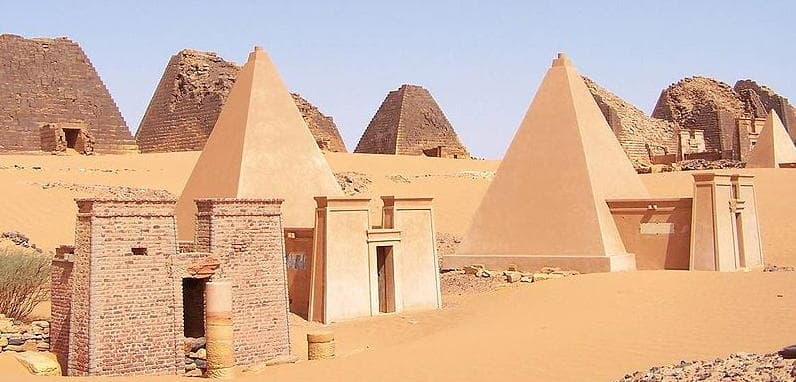
Sudan has more pyramids than Egypt, around 250 against Egypt's 130, and until recently you could walk among them alone.
Read more about Sudan →Capital: Khartoum
Currency: SDG
Best time: November to February: the cool dry months, and the only comfortable window for the pyramids.
See more →Sudan has more pyramids than Egypt, around 250 against Egypt's 130, and until recently you could walk among them alone. The Meroë pyramids, on a ridge of desert dunes about 200 km northeast of Khartoum, were built by the Kushite kings between roughly 300 BC and 300 AD. They are steeper and smaller than the Egyptian ones and stand in dense clusters, and the site is a UNESCO World Heritage Site. Jebel Barkal and the… temples at Naqa and Musawwarat es-Sufra complete a Nubian circuit that predates and outlasts several Egyptian dynasties. The Red Sea coast around Port Sudan and Sanganeb atoll holds some of the least-dived reef in the region, and the confluence of the Blue and White Niles at Khartoum is a genuine geographical landmark. Since April 2023 the country has been in civil war. Tourism has effectively ceased, airports have closed and reopened intermittently, and every major government advises against all travel. The information below describes conditions for a country that is not currently receiving visitors.
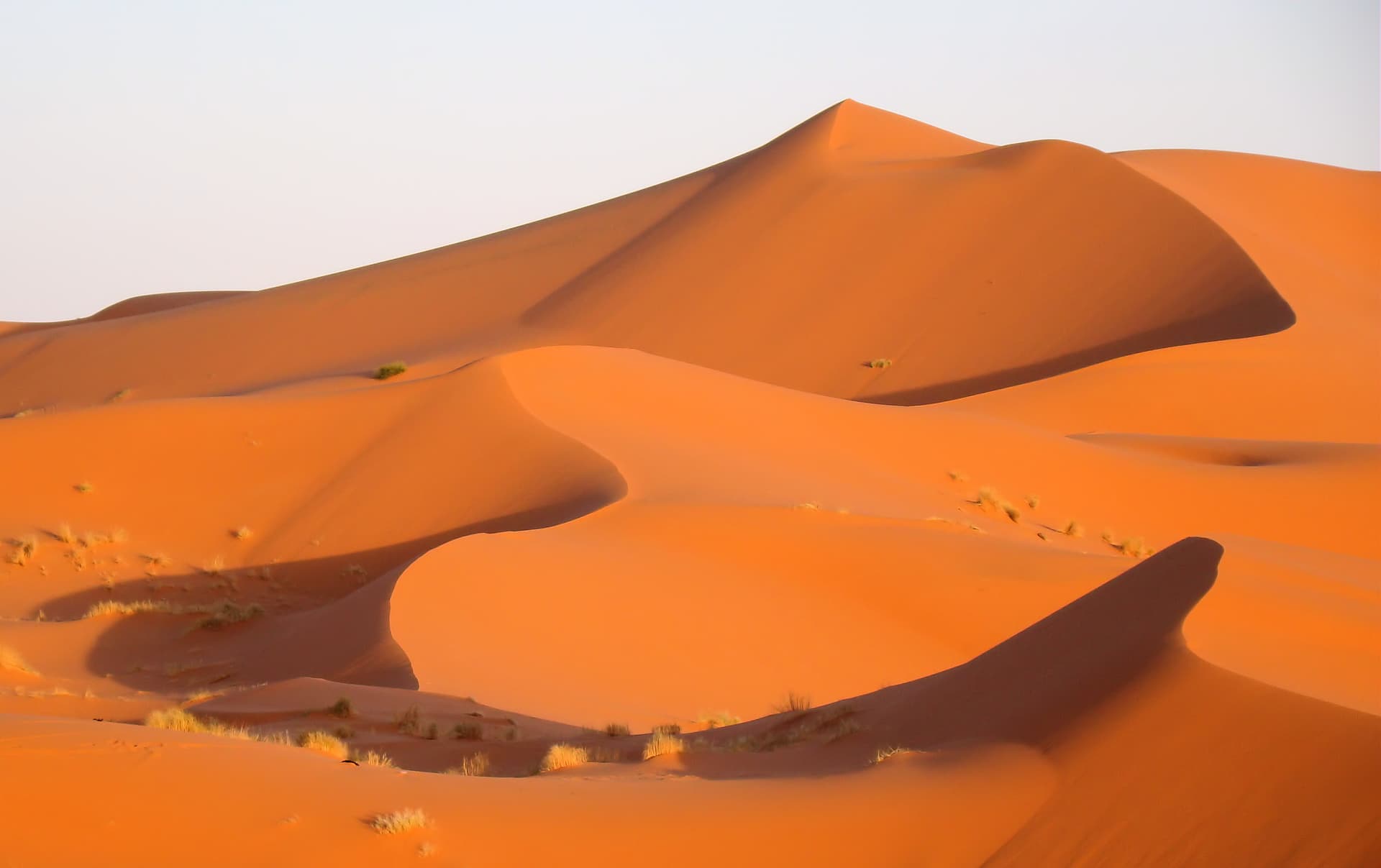
November to February: the cool dry months, and the only comfortable window for the pyramids. Sudan is one of the hottest countries on earth and the season is dictated by heat. From November to February, daytime temperatures at Meroë and Khartoum sit around 20–30°C, which makes desert archaeology comfortable and the nights cool. This is also when the light on the pyramids is at its best, early and late. March to May is the build-up, rising through the thirties into the forties. June to August is extreme, regularly passing 45°C, with the haboob dust storms rolling across Khartoum and the north. The rains fall roughly July to October and affect the south and centre far more than the desert north; they can make unsealed roads impassable and are the reason the classic Nubian circuit is a winter trip. None of this is currently the operative constraint. Armed conflict has closed the country to tourism since 2023; check your government's current advice before considering any travel.
Sudan's visa system was demanding before the war and is now largely non-functional for tourism. In normal times, most nationalities including United States and EU citizens required a visa obtained in advance from a Sudanese embassy. The process involved a letter of invitation or a booking from a registered Sudanese tour operator, a completed application, passport photos, and a passport valid at least six months. Approval required clearance from the Ministry of Foreign Affairs in Khartoum and routinely took several weeks. Passports showing an Israeli stamp were refused. Two further requirements applied on arrival: registration with the authorities within three days of entry, and separate travel permits for movement outside Khartoum, including to Meroë and the Nubian sites. Photography permits were also required, and photographing bridges, military sites and government buildings was prohibited and enforced. Since the outbreak of civil war in April 2023 embassies have suspended or heavily restricted visa issuance, and there is no functioning tourism sector to sponsor an application. Check your government's travel advice, which currently advises against all travel. Standard travel insurance will not be valid.
Yellow fever: a certificate is required for travellers arriving from a country with risk of yellow fever transmission, and vaccination is recommended for parts of the south. Malaria: risk is present across most of the country and is year-round in the south and centre, rising after the rains. Prophylaxis is recommended. The far northern desert is lower-risk. Commonly recommended: hepatitis A and B, typhoid, cholera, polio, meningococcal (Sudan lies in the African meningitis belt), tetanus-diphtheria, measles and rabies. The conflict has collapsed much of the health system, and the consequences are the dominant risk. Cholera outbreaks have been severe and widespread, dengue and malaria transmission have risen sharply, and famine conditions have been declared in parts of the country. Routine immunisation coverage has broken down. Medical facilities in conflict-affected areas are destroyed, closed or overwhelmed, and there is no dependable emergency care or evacuation infrastructure. Drink only bottled or properly treated water and be rigorous about food hygiene. Any travel here requires specialist high-risk insurance including air evacuation; standard policies are void under a do-not-travel advisory. Consult a travel medicine specialist rather than a routine clinic, at least eight weeks ahead.
Sudan on the map
Hand-picked safaris, beach escapes, and cultural journeys across Sudan.