Somalia has the longest coastline in mainland Africa and a deep trading history along the Indian Ocean and the Gulf of Aden, but decades of conflict mean that conventional tourism does not operate across most of the country.
Read more about Somalia →Capital: Mogadishu
Currency: SOS
Best time: October to April: the cooler dry months, and the only practical window for the interior.
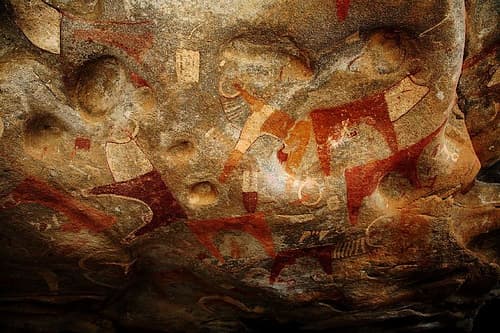
See more →Somalia has the longest coastline in mainland Africa and a deep trading history along the Indian Ocean and the Gulf of Aden, but decades of conflict mean that conventional tourism does not operate across most of the country. Where organised travel does happen it is almost entirely in the self-declared Republic of Somaliland in the northwest, which has run its own administration, currency and security since 1991. Its main draw is Laas Geel, a complex… of granite shelters about an hour from Hargeisa holding some of the oldest and best-preserved rock art in the Horn of Africa, polychrome paintings of long-horned cattle and human figures that are more than 5,000 years old and remarkably intact. Berbera on the Gulf of Aden has Ottoman-era architecture and empty beaches. All travel here is by organised 4x4 tour with an armed police escort, which is a legal requirement rather than an operator preference. Federal Somalia, including Mogadishu, is under do-not-travel advice from most governments.
October to April: the cooler dry months, and the only practical window for the interior. The northwest, where organised travel operates, is comfortable between October and April, with daytime temperatures of roughly 20–30°C in the Hargeisa highlands and firm road conditions for the drive to Laas Geel and Berbera. The gu rains fall roughly April to June and the deyr rains October to November, varying by region and year; unsealed roads deteriorate quickly and some routes become impassable. June to September is the jilaal-to-hagaa hot season, and the coastal strip around Berbera becomes one of the hottest inhabited places on earth, regularly exceeding 45°C. Avoid it. Security, not weather, is the binding constraint on when and whether to travel. Conditions change quickly and by region; check your government's current advice, and be aware that most travel insurance is void in areas under a do-not-travel advisory.
There are two separate systems and they do not recognise one another. A visa for Somaliland is not valid for federal Somalia, and a Somalia visa is not accepted at Hargeisa. For Somaliland, most visitors obtain a visa on arrival at Hargeisa Egal International Airport, currently around USD 60 in cash, or in advance from a Somaliland Liaison Office. A letter of invitation from a registered local tour operator is normally required and should be printed and carried. Arriving without one causes real problems. Overland entry from Ethiopia at Wajaale is possible with the right paperwork arranged in advance. For federal Somalia, visas are issued by Somali embassies and, for some nationalities, on arrival at Mogadishu with a prior letter of invitation and confirmed secure accommodation. A passport valid at least six months is required for both. Travel outside Hargeisa requires an armed police escort (a *Special Protection Unit* officer), arranged and paid for through your operator; this is mandatory and enforced at checkpoints. Most governments advise against all travel to federal Somalia and against all but essential travel to Somaliland. Check current advice and your insurance terms before committing.
Yellow fever: proof of vaccination is enforced at entry points. Carry the certificate. Malaria: risk is present across much of the country, with the greatest transmission in the south and after the rains. Prophylaxis is recommended; discuss your route with a travel clinic. Commonly recommended: hepatitis A and B, typhoid, cholera, polio, tetanus-diphtheria, measles, meningococcal and rabies. Somalia is one of the few countries where polio remains a live concern and a booster is genuinely advised rather than routine, some neighbouring states require proof of polio vaccination from travellers who have spent time here. Cholera is endemic and outbreaks are frequent. Drink only bottled or properly treated water, avoid raw food and be rigorous about hand hygiene. Medical infrastructure is minimal. There is effectively no reliable emergency care outside a small number of private clinics in Hargeisa and Mogadishu, and no dependable air ambulance service. Bring all prescription medication for the full trip plus a comprehensive first-aid kit, and understand that most standard travel insurance is void in areas under a do-not-travel advisory. Specialist high-risk cover is required. See a travel clinic at least eight weeks before departure.
Somalia on the map
Hand-picked safaris, beach escapes, and cultural journeys across Somalia.