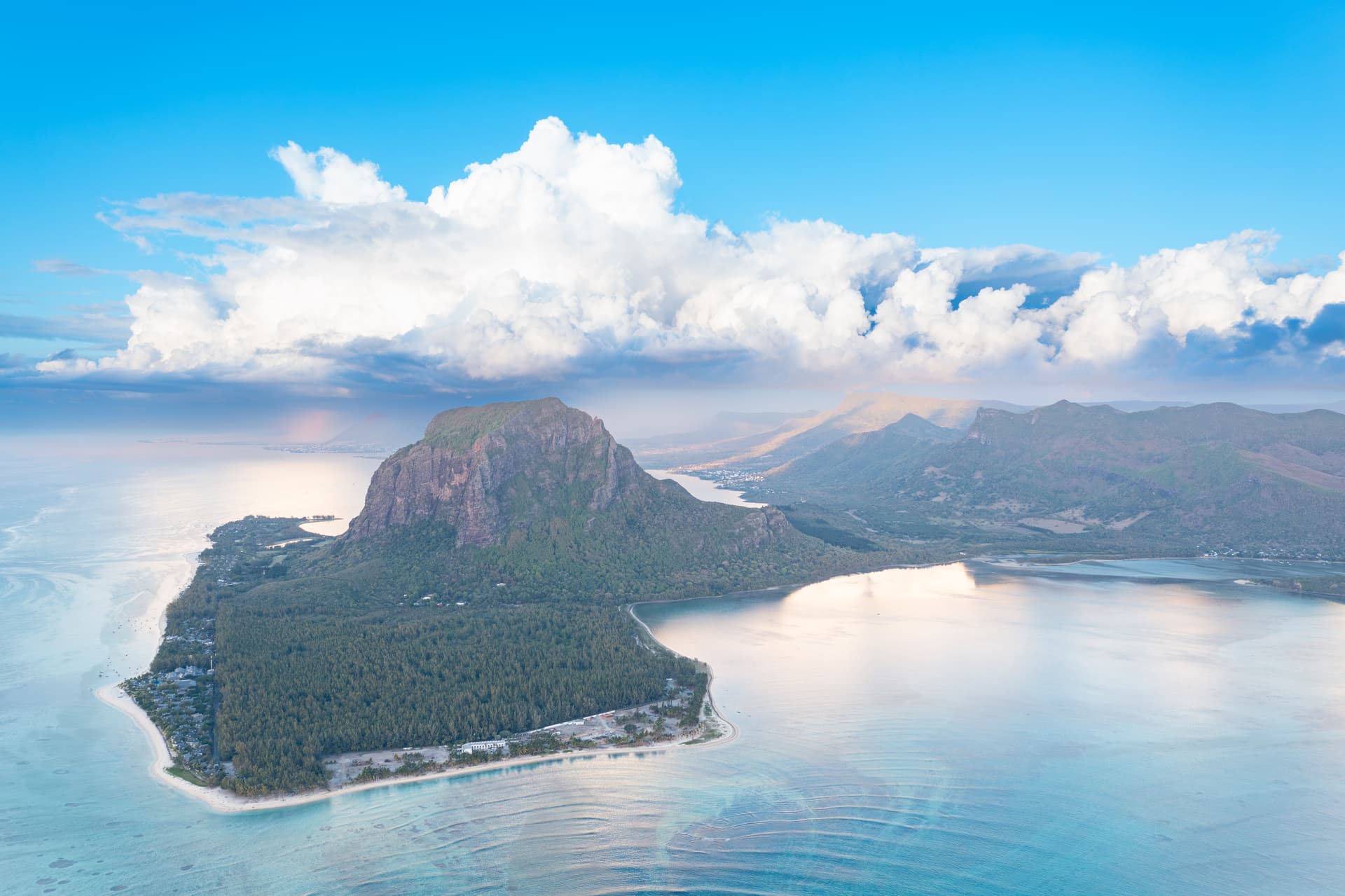
São Tomé and Príncipe is Africa's second-smallest country: two volcanic islands in the Gulf of Guinea, almost on the equator, with a population smaller than a mid-sized town and a landscape that looks invented.
Read more about São Tomé and Príncipe →Capital: São Tomé
Currency: STN
Best time: June to September: the gravana dry season, the coolest and clearest months.
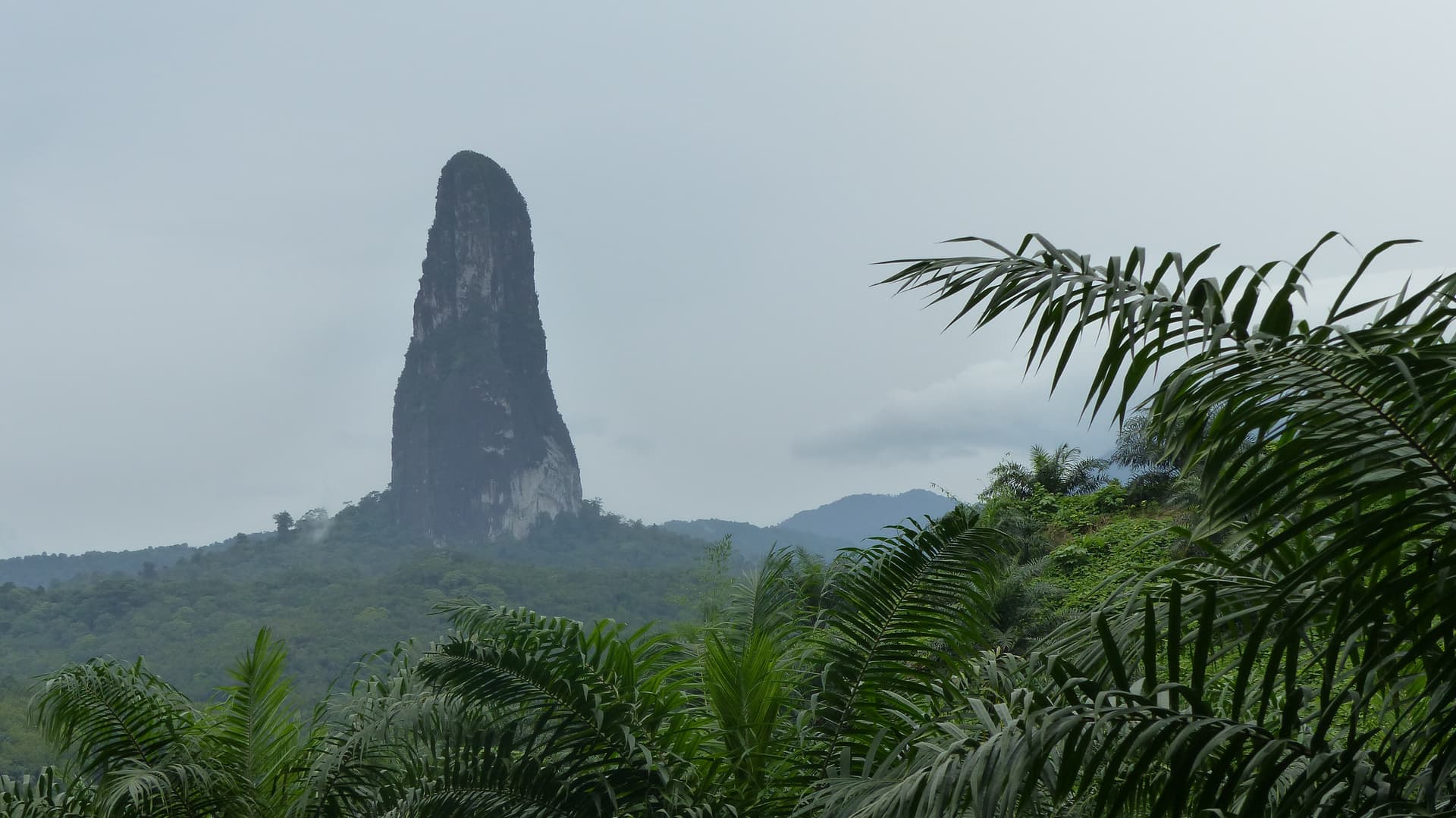
See more →São Tomé and Príncipe is Africa's second-smallest country: two volcanic islands in the Gulf of Guinea, almost on the equator, with a population smaller than a mid-sized town and a landscape that looks invented. The islands were uninhabited until the Portuguese arrived in the 1470s and became the world's leading cocoa producer in the nineteenth century. The abandoned plantation houses, the roças, are scattered through the forest in various states of grand decay, and some… have been converted into hotels. Cocoa production continues on a small, high-quality scale, and plantation tours are one of the main things to do. Obô Natural Park covers close to 30% of the land area across both islands, protecting primary rainforest around Pico de São Tomé at 2,024 m. Endemism is extraordinary for the size: more than 230 bird species with a high proportion found nowhere else, plus over 100 orchids. Príncipe, a UNESCO Biosphere Reserve, is quieter and more dramatic, with volcanic plugs rising straight out of the forest. Beaches are empty, and turtle nesting is reliable.
June to September: the gravana dry season, the coolest and clearest months. The islands sit on the equator so temperatures barely move, and the seasons are about rain. The main dry season, locally called the gravana, runs June to September: cooler, less humid, lower rainfall, and the best conditions for hiking in Obô, climbing Pico de São Tomé and getting around on the unsealed roads. There is a shorter dry interval, the gravanito, around late December to early February, which is also good. The rains fall October to May, peaking March to May. This is when the forest is at its most dramatic and the waterfalls are full, but trails become slippery, leeches appear and road access to the south deteriorates. Some wildlife has its own calendar: turtle nesting runs roughly October to February, whales pass between July and October, and birdwatching is best from October to March when the endemics are most active. Diving visibility is generally best in the dry season.
Entry is unusually easy for the region. Since 2015, citizens of the EU and EEA, the United Kingdom, United States, Canada, Brazil and several other countries do not require a visa for stays of up to 15 days. For longer stays, a 30-day visa is available through the eVisa service run by the Serviço de Migração e Fronteiras, or arranged through a tour operator or a São Toméan diplomatic mission. Apply online in advance; processing is generally quick. A passport valid at least six months beyond arrival is required, along with a return or onward ticket and proof of accommodation. Travel between São Tomé and Príncipe is by a short domestic flight or a much longer boat crossing, and the flights are small and weather-dependent. Do not book a tight connection back to an international departure. The islands are cash-based. ATMs exist in São Tomé town but card acceptance is limited, so bring euros to change. The dobra is pegged to the euro. Confirm current requirements before travelling.
Yellow fever: a vaccination certificate is required for entry and is checked on arrival. Get it at least ten days before travel. Malaria: risk is present year-round on both islands, though transmission has fallen substantially thanks to a sustained control programme. Prophylaxis is generally recommended; discuss the current position with a travel clinic, as the picture here has genuinely improved. Commonly recommended: keep tetanus, polio, diphtheria and MMR current, plus hepatitis A and typhoid as standard. Hepatitis B, tuberculosis and rabies may be advised depending on the length and nature of your stay. Dengue occurs. Use repellent regardless of the malaria position. Drink bottled or properly treated water. Food hygiene standards in the small guesthouses are variable. The practical hazards are the forest and the sea. Obô's trails are largely unmarked and a local guide is genuinely necessary rather than a formality. People get lost. The Pico ascent is steep, wet and slippery. Atlantic currents on the exposed beaches are strong and there are no lifeguards. Medical facilities are very limited; the hospital in São Tomé town handles basics only and serious cases mean evacuation to Lisbon or Libreville. Bring a full supply of prescription medication and carry evacuation cover. See a travel clinic six to eight weeks ahead.
São Tomé and Príncipe on the map
Hand-picked safaris, beach escapes, and cultural journeys across São Tomé and Príncipe.