Namibia is a self-drive country in a way almost nowhere else in Africa is: 2.5 million people in a territory larger than France and Germany combined, on gravel roads that are graded, signposted and empty.
Read more about Namibia →Capital: Windhoek
Currency: NAD
Best time: May to October: the dry winter, and the peak for Etosha waterhole game viewing.
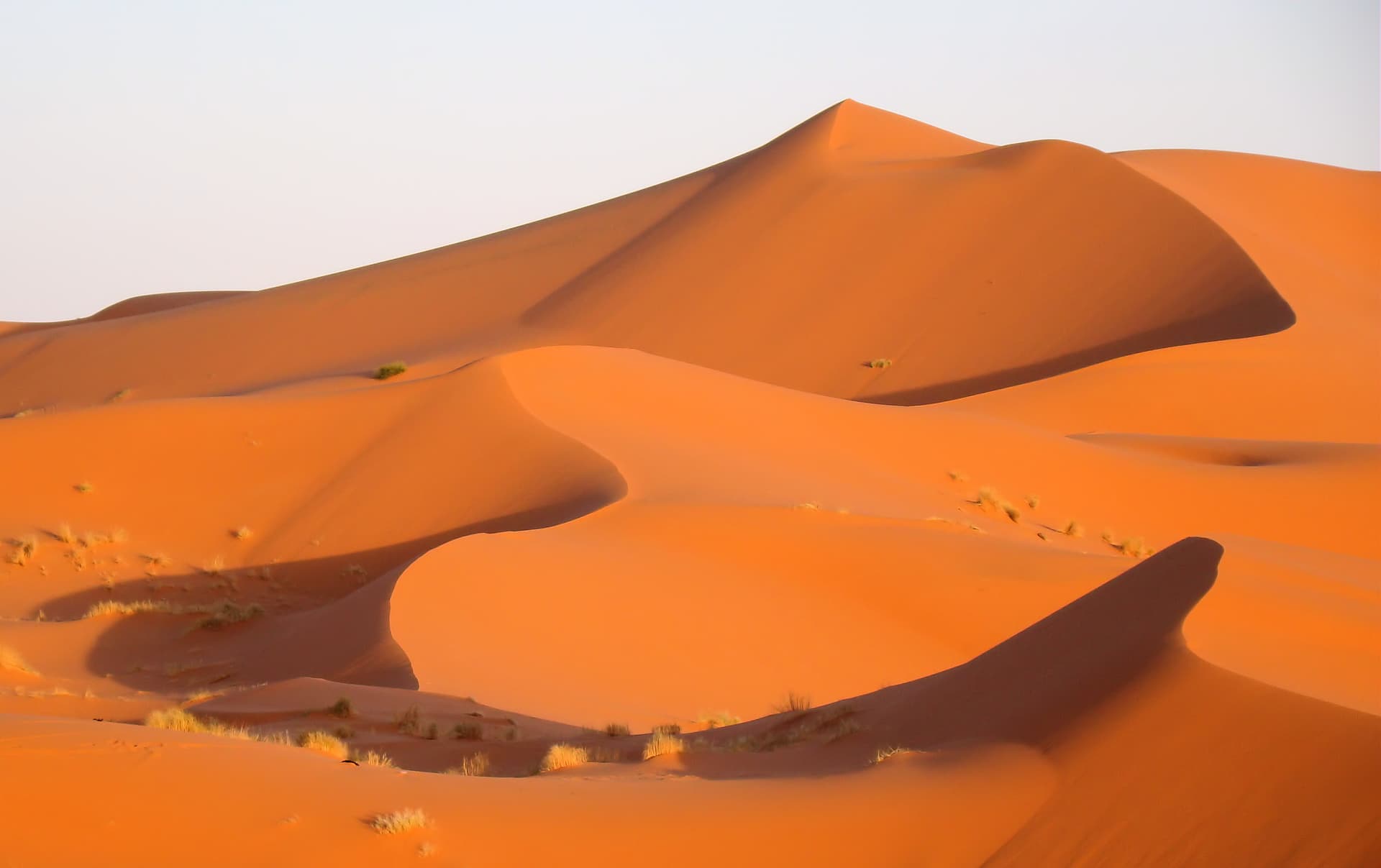
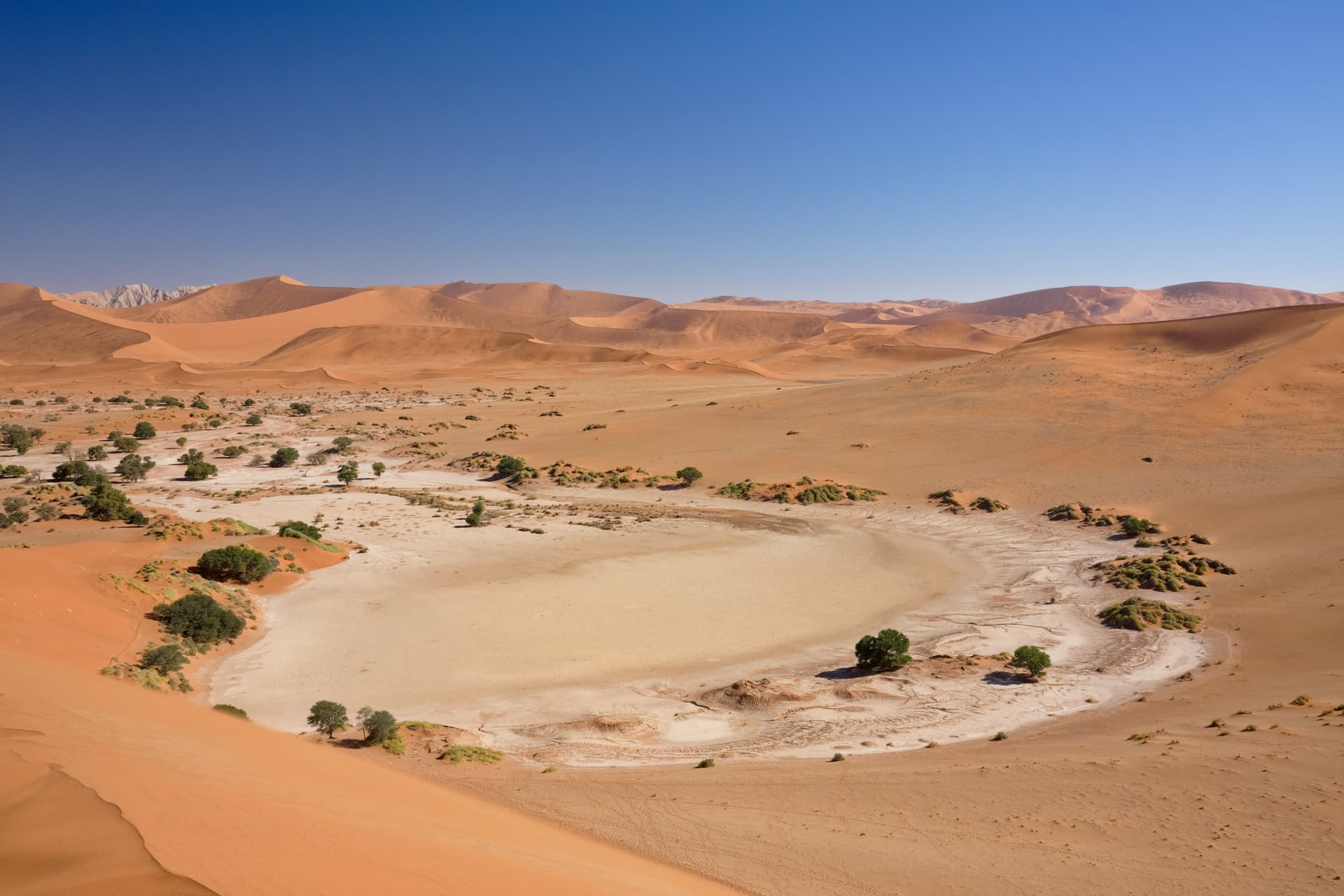
See more →Namibia is a self-drive country in a way almost nowhere else in Africa is: 2.5 million people in a territory larger than France and Germany combined, on gravel roads that are graded, signposted and empty. Sossusvlei's dunes in the Namib-Naukluft are the image most people arrive for, some of the tallest in the world, at their best in the first hour of light with the dead camelthorns of Deadvlei below them. Etosha National Park in… the north is built around a vast salt pan, and its dry-season waterhole viewing is unlike anywhere else: you park and the animals come to you. The Skeleton Coast, where the desert meets cold Atlantic fog, holds shipwrecks and one of Africa's largest Cape fur seal colonies at Cape Cross. Damaraland has desert-adapted elephant and black rhino outside any national park, and the Kaokoveld remains genuinely remote. Distances are long: plan on 300–400 km driving days.
May to October: the dry winter, and the peak for Etosha waterhole game viewing. The dry season is Namibia's strongest window. Between May and October the bush thins, surface water disappears and Etosha's waterholes become the only game in town. You can sit at Okaukuejo and watch elephant, rhino, lion and giraffe come in through the afternoon. Skies are clear, humidity is nil and the light for photography in the Namib is at its best. Nights in winter are genuinely cold in the desert, often near freezing. This is peak season, and Sossusvlei lodges and Etosha camps book out well ahead. November to April is the green season. Summer rains, mostly short and heavy, bring dramatic skies, calving in Etosha and migratory birds; the desert can bloom. The trade-offs are heat above 40°C, occasional flash flooding on gravel roads and dispersed game. Rates fall substantially. The coast, Swakopmund, Walvis Bay, is cool and foggy year-round regardless of season.
Namibia changed its rules in 2025 and the old assumptions no longer hold. Many nationalities that previously entered visa-free, including the United Kingdom, United States, Canada, Australia and most EU states, now require a visa on arrival, currently around NAD 1,600, payable at the port of entry. An eVisa system operates through the Ministry of Home Affairs and Immigration, and applying online in advance is the recommended route: it avoids the arrivals queue at Hosea Kutako and removes the risk of the payment system being down. Tourist visas are typically issued for up to 90 days within a twelve-month period. Your passport must be valid at least six months beyond your intended departure and hold at least two blank pages. A return or onward ticket and proof of accommodation may be requested. If you are self-driving, carry your national licence plus an International Driving Permit, and be aware that a cross-border letter from the rental company is required to take a vehicle into Botswana or South Africa. This is a recently changed policy: confirm the current position for your nationality before booking flights.
Yellow fever: a certificate is required only if you are arriving from, or have transited for more than twelve hours through, a country with risk of yellow fever transmission. Namibia enforces this: travellers routing through Nairobi or Addis Ababa without a certificate have been refused entry. Malaria: most of Namibia is malaria-free. There is no meaningful risk in the Namib, Sossusvlei, Swakopmund, Windhoek or the southern half of the country. Risk is confined to the northern regions, Etosha and north, Kavango, the Zambezi Region (Caprivi) and the Kunene river valley, and is seasonal, running roughly November to June. Prophylaxis is recommended for those areas in the wet season; a dry-season Etosha trip is usually considered low-risk. Take advice on your route and dates. Commonly recommended: hepatitis A and B, typhoid, tetanus-diphtheria-polio, and rabies for extended rural travel. Practical notes: tap water is safe in towns and lodges. The real risks in Namibia are road-related, not medical: gravel-road rollovers from driving too fast are the single most common cause of serious injury to visitors, and most rental insurance excludes tyre and windscreen damage. Keep to 80 km/h on gravel. Distances between fuel and medical help are long; carry water, a spare tyre and evacuation cover. See a travel clinic four to six weeks ahead.
Places worth building a trip around in Namibia, from our travel writing.
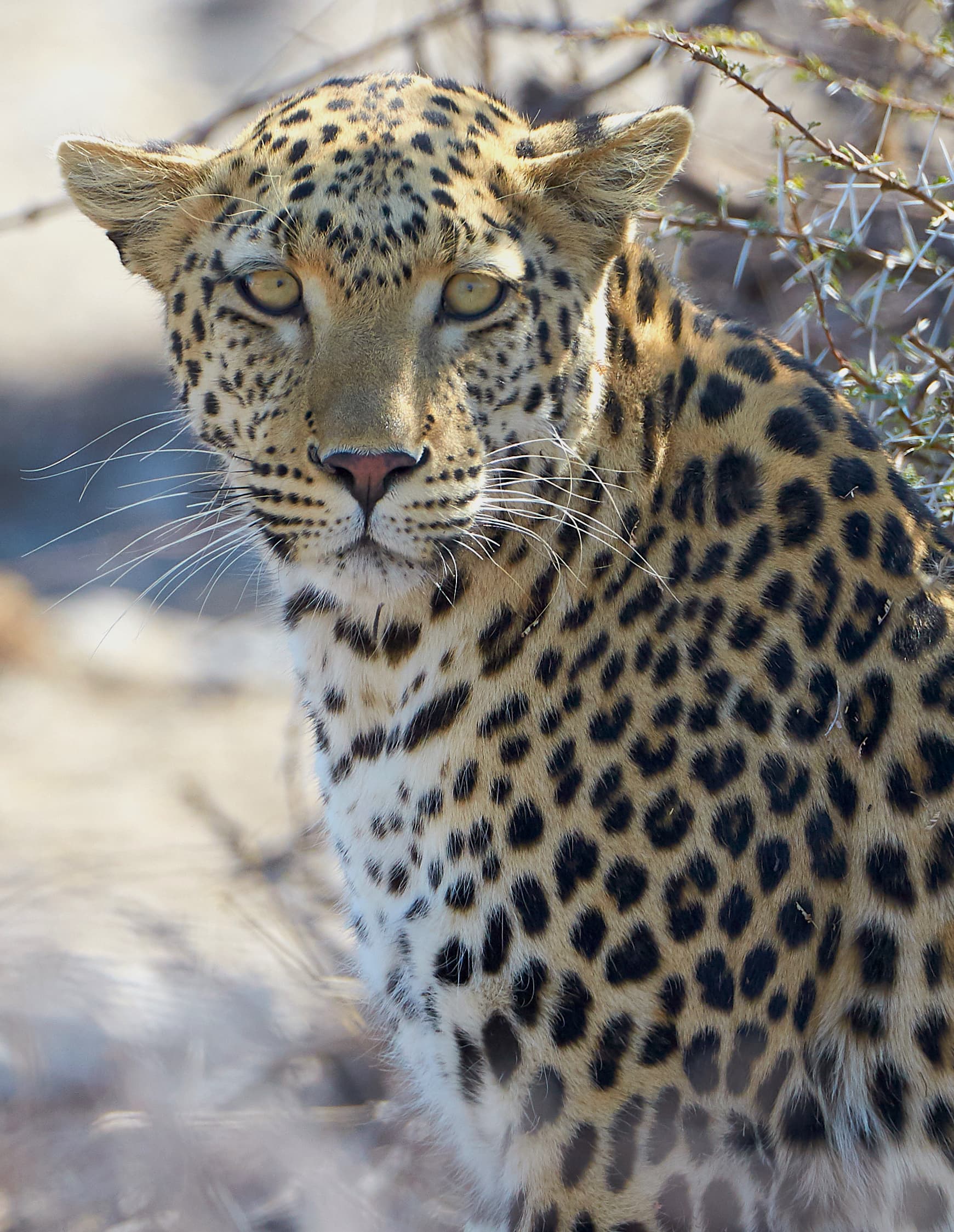 Wildlife & Nature
The sun dips low over the Kalahari sands, casting long shadows across the vast Etosha Pan as a herd of elephants ambles towards a distant waterhole. You sit in your open Land Cruiser, the air thick with the scent of dust and wild sage, w…
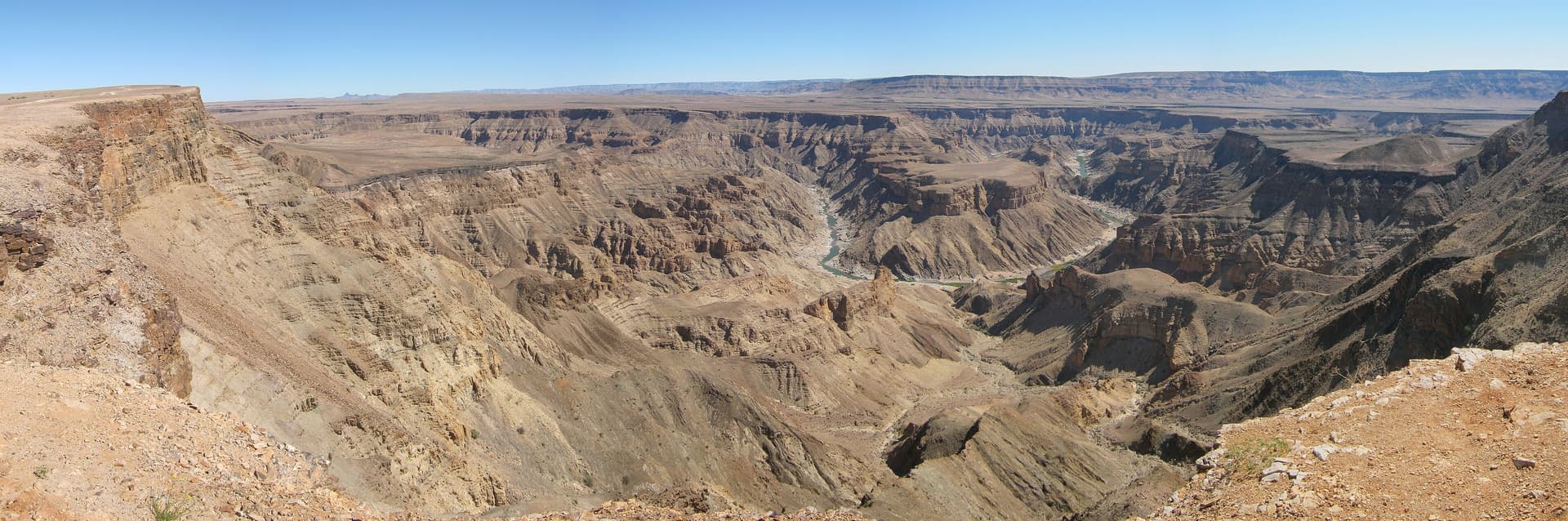 Wildlife & Nature
Fish River Canyon stands as Africa's largest canyon, a colossal rift that dwarfs even the Grand Canyon in scale. Its sheer walls plunge 549 metres deep, carving through ancient rock formations that tell stories of continental shifts and …
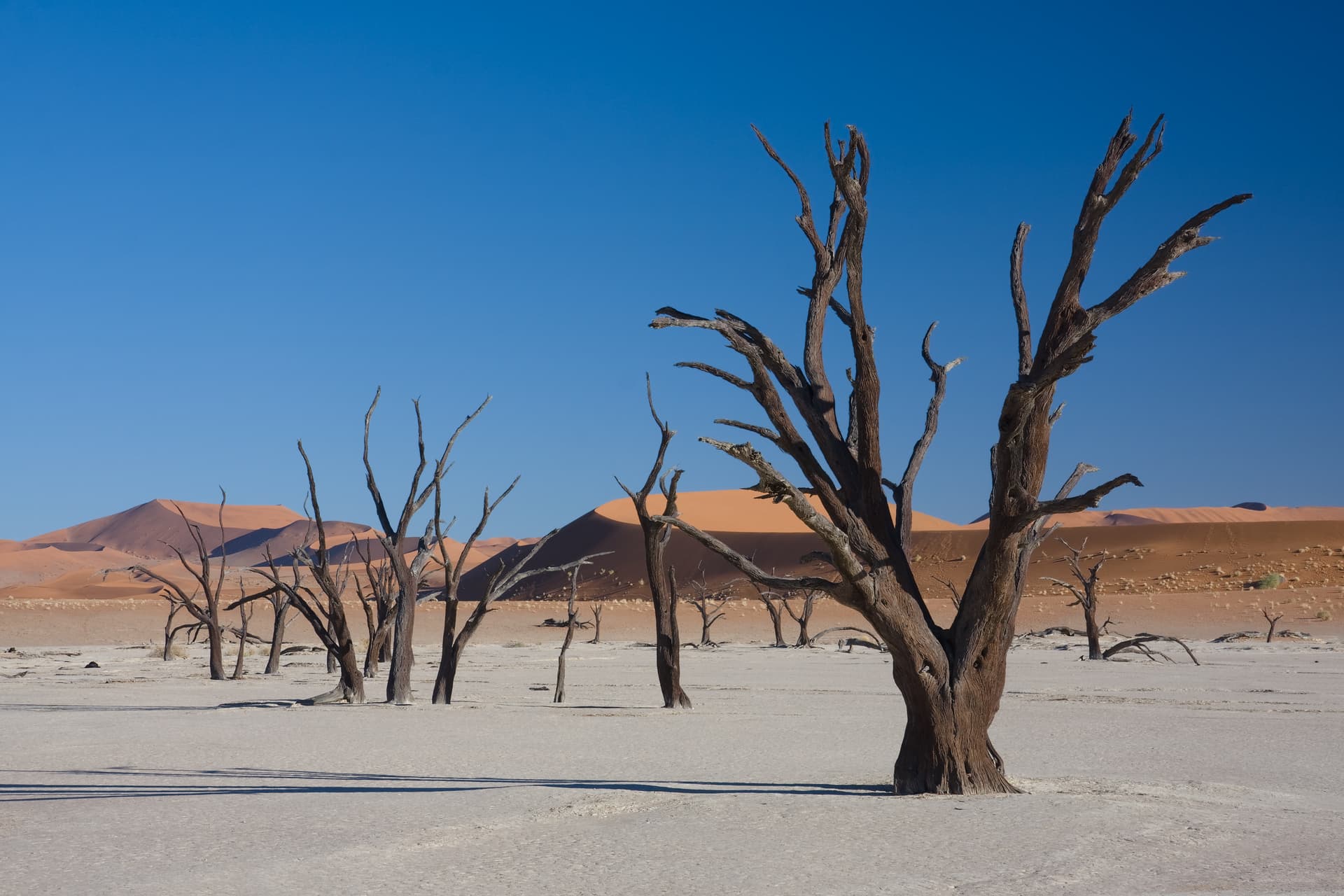 Culture & Heritage
You stand atop a towering dune, the crimson sands of the Namib Desert stretching endlessly beneath you like a frozen ocean of fire. The sun hangs low, casting long shadows across the ancient landscape, and in the distance, the stark whit…
Namibia on the map
Hand-picked safaris, beach escapes, and cultural journeys across Namibia.