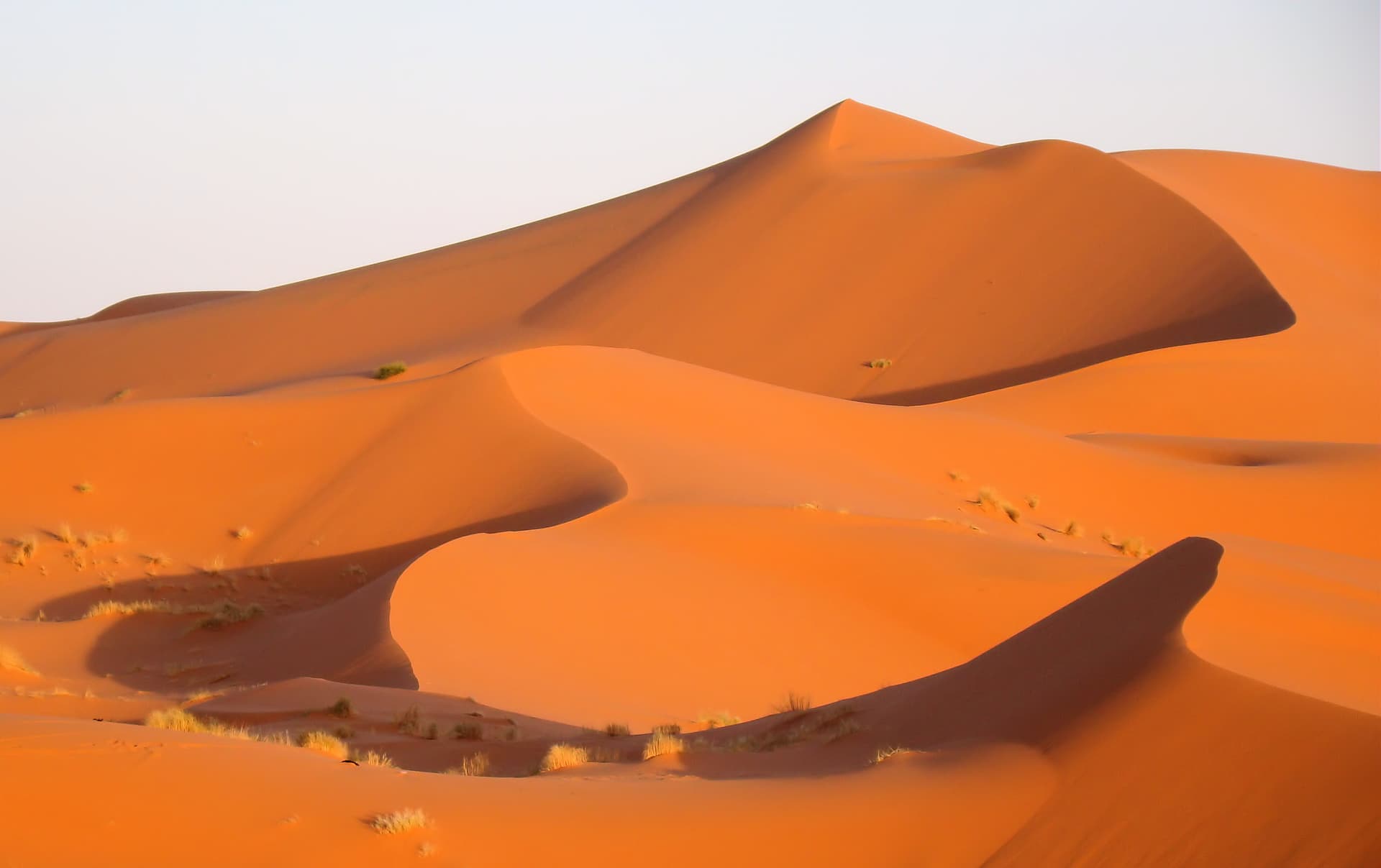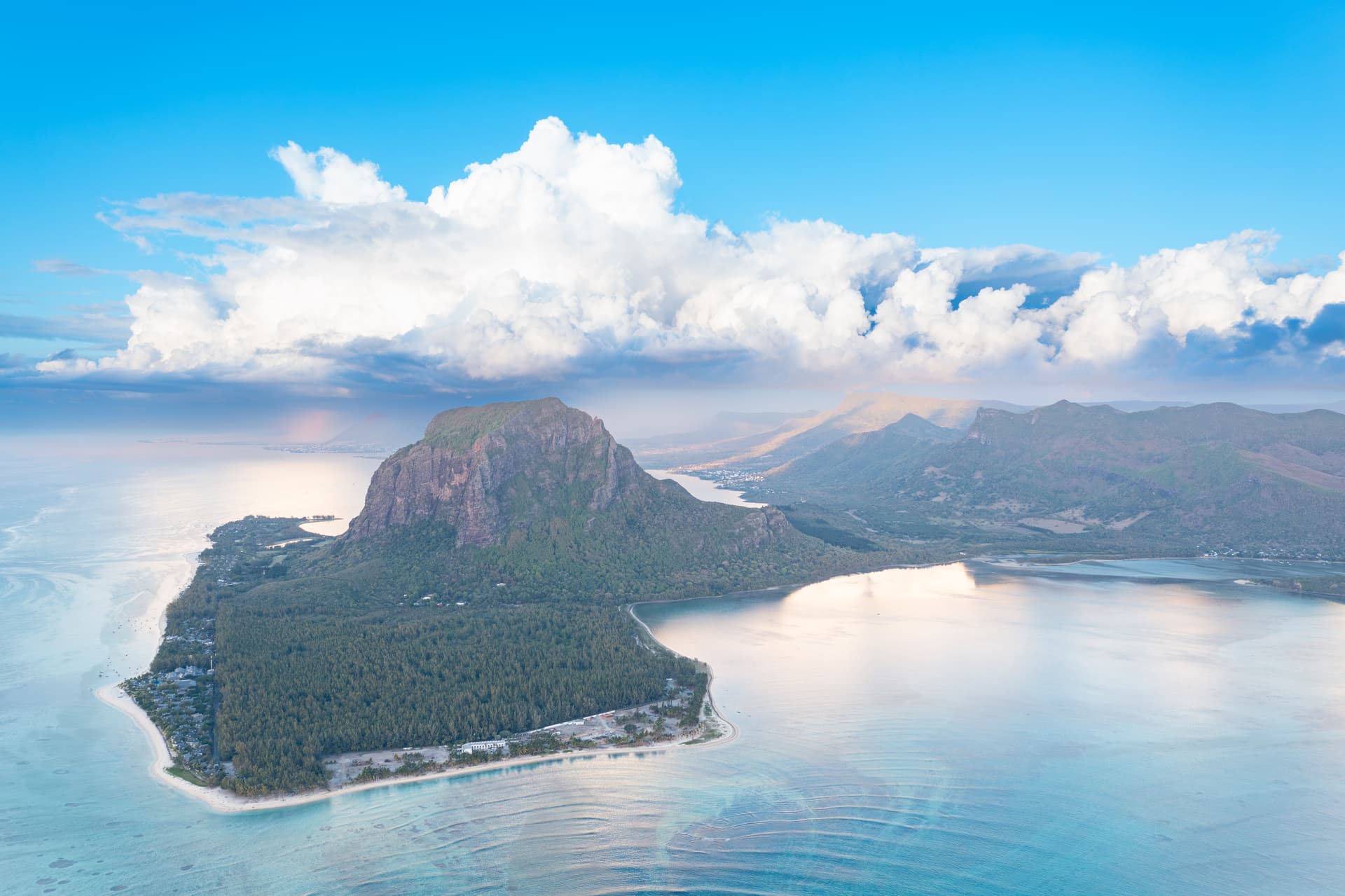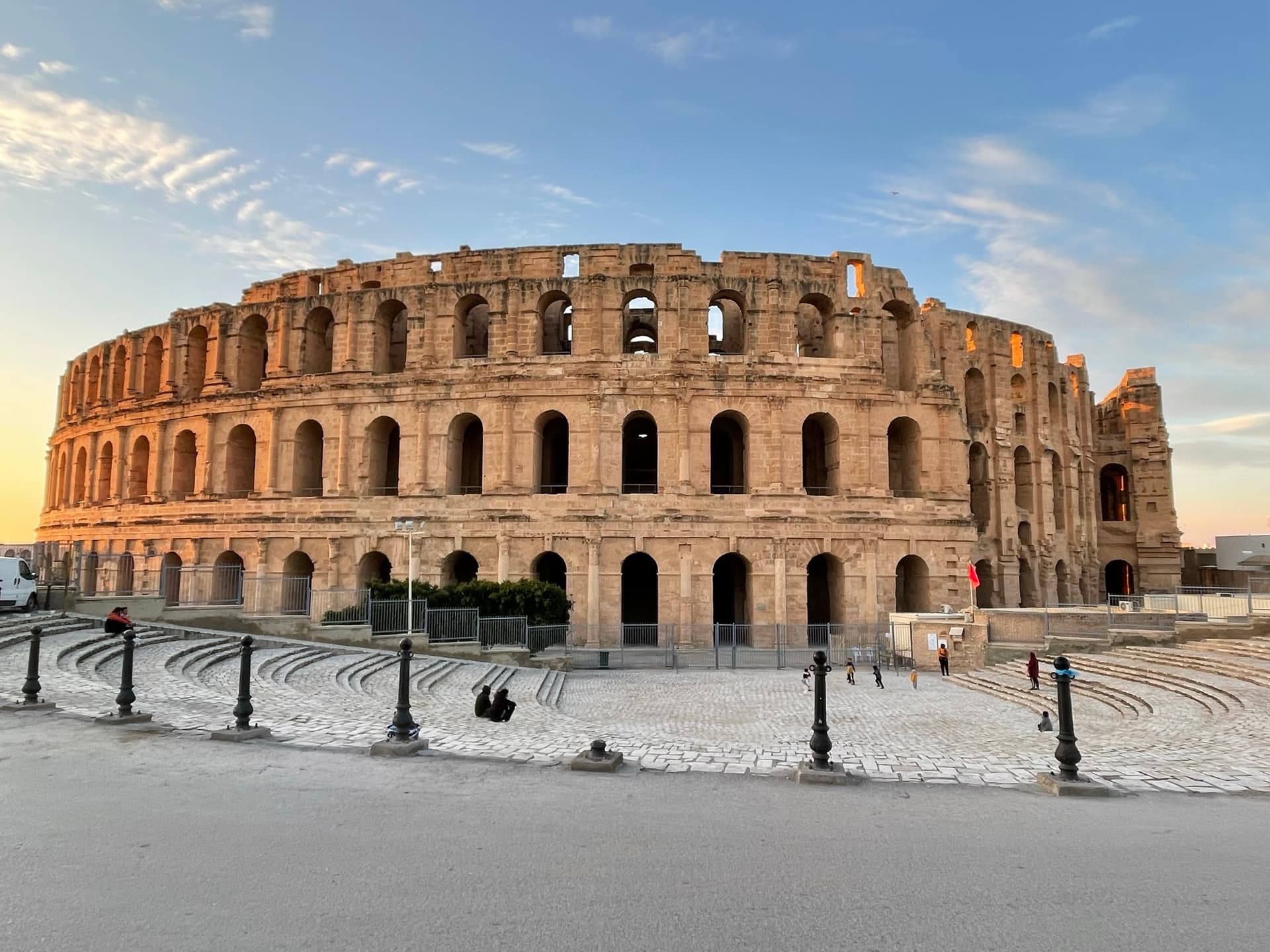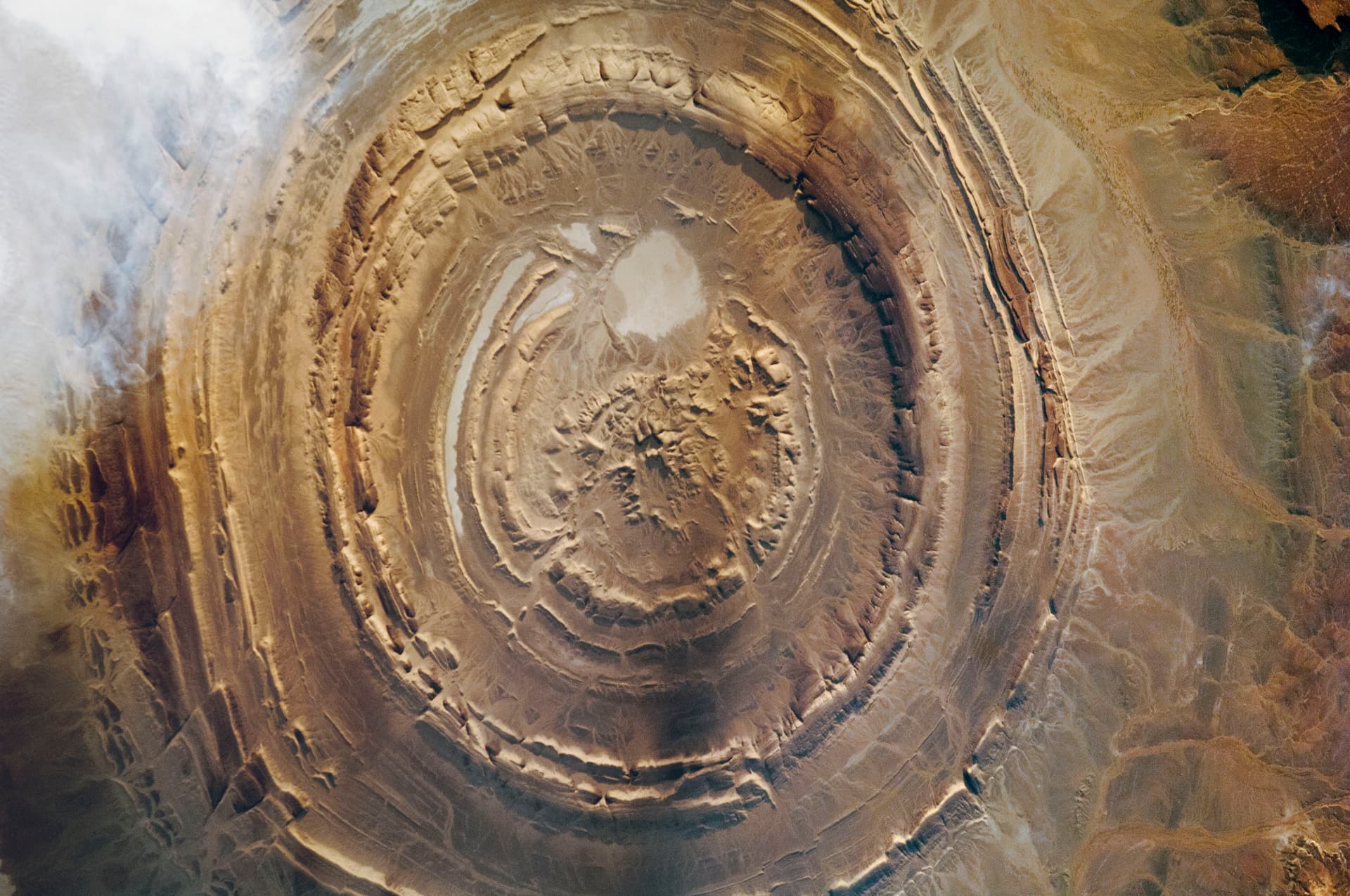
Mauritania is the point where the Sahara meets the Atlantic, and it holds two experiences that draw travellers from a long way for very different reasons.
Read more about Mauritania →Capital: Nouakchott
Currency: MRU
Best time: November to February: the cool dry months, and the peak of the bird season at Banc d'Arguin.
See more →Mauritania is the point where the Sahara meets the Atlantic, and it holds two experiences that draw travellers from a long way for very different reasons. The first is the iron ore train: the longest and heaviest train in the world, up to 3 km of open freight wagons running from the mines at Zouerat across 700 km of desert to the port at Nouadhibou. Riding on top of the ore, or in the single… passenger carriage, takes twelve to fourteen hours through the Sahara and has become a fixture of adventure travel. It is genuinely uncomfortable, extremely dusty and unforgettable. The second is Banc d'Arguin National Park, a UNESCO World Heritage Site where desert meets ocean and the cold Canary current produces one of the richest fisheries on earth. Millions of migratory waders winter here, and the Imraguen people still fish from sail-powered lanches with the help of dolphins. Inland, the ancient caravan towns of Chinguetti and Ouadane are UNESCO-listed, holding libraries of medieval manuscripts in the sand.
November to February: the cool dry months, and the peak of the bird season at Banc d'Arguin. Mauritania is desert and the calendar is dictated by heat. November to February is the window: daytime temperatures are manageable, nights are cold, and travel into the interior to Chinguetti, Ouadane and the Adrar is comfortable rather than punishing. This is also the best period for Banc d'Arguin, when the Palearctic migrants are present in enormous numbers and the birdwatching is at its finest. March to May sees rising heat and the sirocco winds carrying sand, which can reduce visibility to nothing for days at a time. June to September is extreme, regularly above 45°C in the interior, and there is a short rainy season in the south around July to September that can wash out desert tracks. Most desert travel stops. The coast is moderated by the Atlantic year-round and Nouakchott and Nouadhibou stay cooler than the interior, but the interior is where the trip is.
Most travellers can obtain a visa on arrival at Nouakchott–Oumtounsy International Airport, and at some land borders, provided they meet the requirements. The fee is typically around EUR 55 in cash, and biometric data is captured at the border. Despite the availability of visa on arrival, obtaining the visa in advance at a Mauritanian embassy is worth doing where practical, the on-arrival process is discretionary and travellers have been turned back. Confirm the current position for your nationality rather than assuming. Requirements include a passport valid at least six months beyond your intended departure, a return or onward ticket, proof of accommodation, and your yellow fever vaccination certificate, which is required. If you are driving in from Morocco through Western Sahara, the border crossing at Guerguerat involves a stretch of no-man's-land and requires vehicle paperwork and insurance bought at the border. Some regions, the eastern and southeastern border areas with Mali and parts of the far north, are under travel restrictions or advised against by most governments. Desert travel outside established routes requires a guide and, in places, permits. Check current requirements and travel advice before booking.
Yellow fever: a vaccination certificate is required to enter Mauritania and is checked. Get it at least ten days before travel. Malaria: risk is present in most of the country and prophylaxis is recommended, with the notable exceptions of the far northern regions of Dakhlet Nouadhibou and Tiris Zemmour, which are considered no-risk. Risk is highest in the south and after the rains. Discuss your specific route with a travel clinic: a train-and-Adrar itinerary and a southern river itinerary carry different advice. Commonly recommended: hepatitis A and B, typhoid, tetanus-diphtheria-polio, meningococcal (Mauritania lies within the African meningitis belt), cholera for some itineraries, and rabies for desert and rural travel. The dominant risks are environmental. Heat, dehydration and cold desert nights are what actually put travellers in trouble, and the iron ore train in particular is a genuinely harsh environment, open wagons, blowing ore dust, no shelter and freezing overnight temperatures. Take goggles, a face covering, far more water than seems necessary and proper warm layers. Drink bottled or properly treated water. Medical facilities are very limited outside Nouakchott. Carry insurance with air evacuation. See a travel clinic six to eight weeks ahead.
Mauritania on the map
Hand-picked safaris, beach escapes, and cultural journeys across Mauritania.