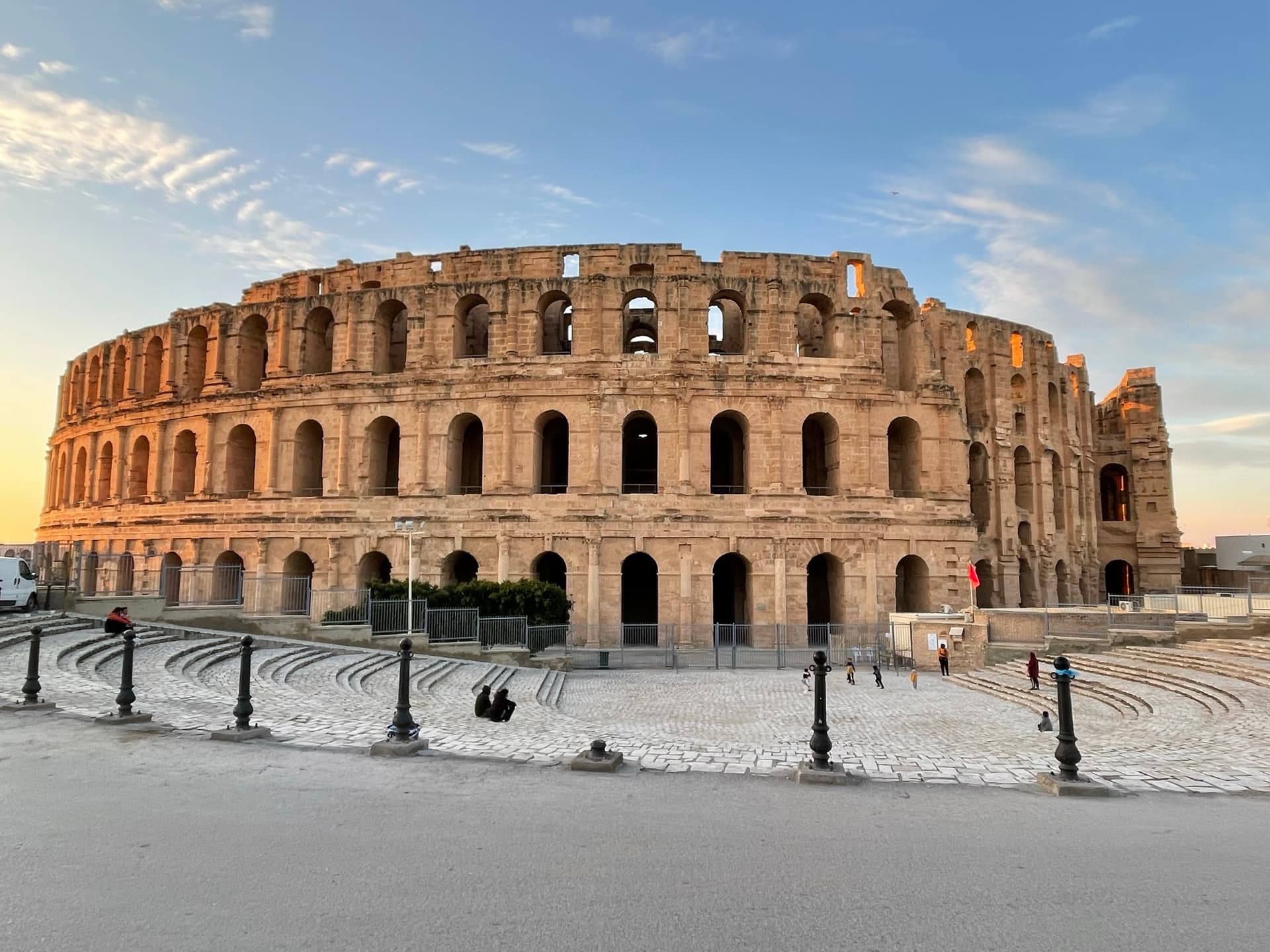
Libya holds some of the finest Roman and Greek archaeology in the Mediterranean, and almost nobody sees it.
Read more about Libya →Capital: Tripoli
Currency: LYD
Best time: November to March: the mild winter, and the only comfortable window for the coast and the desert.
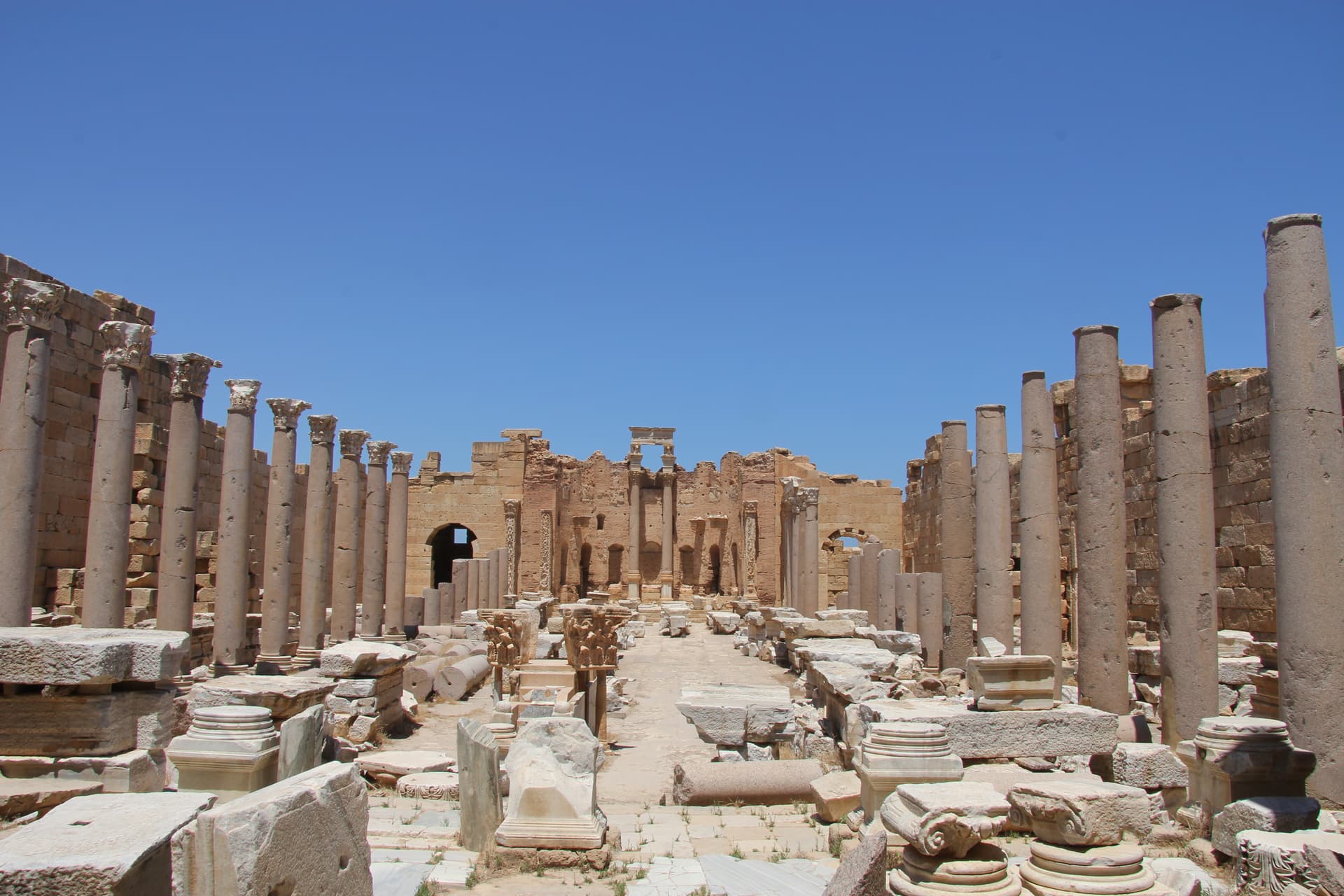
See more →Libya holds some of the finest Roman and Greek archaeology in the Mediterranean, and almost nobody sees it. Leptis Magna, an hour and a half east of Tripoli, is arguably the best-preserved Roman city anywhere, a forum, basilica, theatre, market and bath complex built out under Septimius Severus, who was born there, and buried under sand for centuries, which is why so much survives. Sabratha, west of the capital, has a three-storey theatre facing the… sea. Cyrene in the east was a major Greek city and is a UNESCO site, and Ghadames in the west is a mud-brick Saharan oasis town built with covered streets to keep out the heat. The Acacus Mountains in the southwest hold prehistoric rock art comparable to Tassili across the Algerian border. The practical reality is that independent travel is impossible. All foreign visitors travel with a licensed Libyan operator, with security escorts, and this is a visa condition rather than a precaution. Most governments advise against all travel.
November to March: the mild winter, and the only comfortable window for the coast and the desert. Libya is a hot country and the calendar reflects it. Winter, November to March, gives comfortable temperatures on the Mediterranean coast for Leptis Magna, Sabratha and Cyrene, and makes the Saharan interior and the Acacus tolerable. Coastal winters see some rain; desert nights are cold. Spring and autumn, March to May and September to November, are pleasant shoulder periods, though the ghibli, a hot sand-laden wind off the desert, blows through spring and can reduce visibility to nothing for days. Summer, mid-May to September, is severe. Coastal temperatures are high and humid, and the interior regularly reaches the mid-forties. Operators generally do not run desert itineraries then. The binding constraint is not weather. Security conditions vary by region and change quickly, and access to the east, the south and the Acacus in particular opens and closes. Check current advice and confirm with your operator what is actually reachable before committing.
Libya cannot be visited independently, and the visa system enforces it. Every foreign visitor must be sponsored by a licensed Libyan tour operator, which arranges the invitation and the security clearance; without one there is no route to a tourist visa. Apply through a Libyan diplomatic mission with the operator's invitation letter, a confirmed itinerary, proof of accommodation, evidence of sufficient funds, medical insurance covering the trip, and a passport valid at least six months. Single-entry tourist visas are usually issued for 30 days. Processing can take several weeks and approval is not guaranteed. Two specific rules catch people out. First, passports containing an Israeli stamp or visa are refused entry. Second, some categories of visa require a certified Arabic translation of the passport bio page. On arrival you will be accompanied by your operator and, in most areas, by tourist police or a security escort at all times. This is mandatory and is the basis on which site access is granted. Most governments, including the United States, United Kingdom and Canada, advise against all travel to Libya. Standard travel insurance is generally void under such an advisory, and specialist cover is required.
Yellow fever: a certificate is required if you are arriving from a country with risk of yellow fever transmission. Not required for arrivals from Europe. Malaria: Libya is essentially malaria-free and no prophylaxis is required for normal itineraries. Commonly recommended: hepatitis A and B, typhoid, tetanus-diphtheria-polio, and rabies for extended or desert travel. Ensure routine immunisations including measles and polio are current. The health risks here are secondary to the security ones, and the two overlap. Unexploded ordnance and landmines remain a serious hazard in areas affected by fighting, including some ground away from major sites. Stay on marked routes and do not wander off, however empty the terrain looks. Your escort's instructions on where you may and may not walk are not negotiable. Drink bottled water only. Heat and dehydration are significant on coastal sites in summer and in the desert at any time. Medical infrastructure has been badly degraded by years of conflict; hospitals are short of supplies and specialist care is largely unavailable. Bring the full trip's supply of any prescription medication and a comprehensive first-aid kit. Evacuation options are limited and expensive; carry specialist high-risk insurance that explicitly covers Libya and includes air evacuation. See a travel clinic at least six weeks ahead.
Libya on the map
Hand-picked safaris, beach escapes, and cultural journeys across Libya.