Liberia was founded in 1822 as a settlement for freed African Americans and declared independence in 1847, making it Africa's oldest republic. The connection shows: in the flag, the constitution, the place names and the English.
Read more about Liberia →Capital: Monrovia
Currency: LRD
Best time: November to March: the dry season, and the only reliable window for the interior.
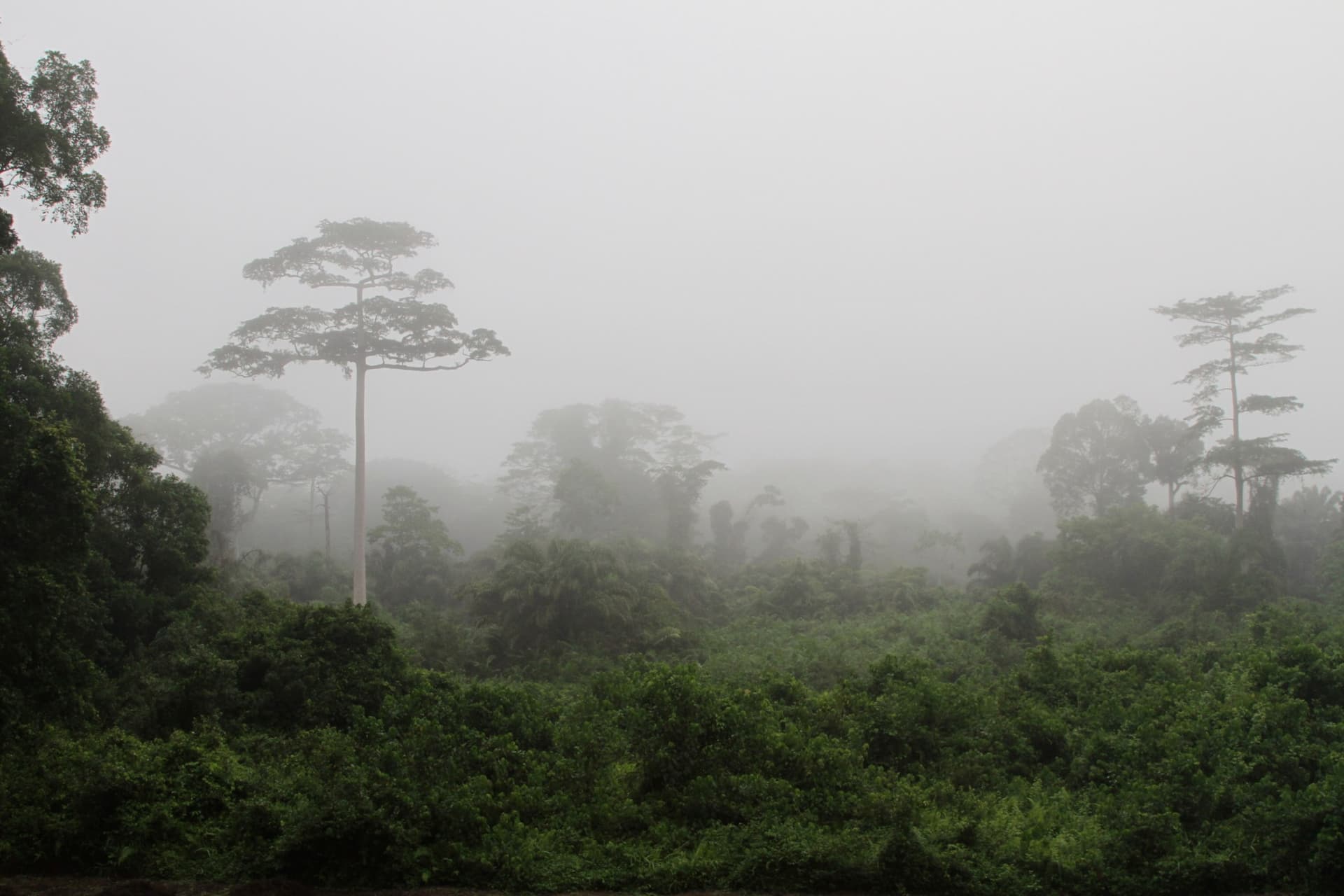
See more →Liberia was founded in 1822 as a settlement for freed African Americans and declared independence in 1847, making it Africa's oldest republic. The connection shows: in the flag, the constitution, the place names and the English. Robertsport, three hours northwest of Monrovia on Lake Piso, has become the country's best-known destination for a reason that has nothing to do with history: it has consistent Atlantic point breaks and an emerging surf scene, with long empty… rides at Cotton Trees and Fisherman's Point. The town sits between the lake and the ocean under forested hills. Sapo National Park in the southeast is Liberia's largest protected area, over 180,000 hectares of primary Upper Guinean rainforest holding forest elephant, chimpanzee and the pygmy hippopotamus, one of very few places the last is found. Access is genuinely difficult and requires permits and planning. Monrovia has Providence Island, the Waterside Market and a string of beaches. Infrastructure across the country remains limited after fourteen years of civil war that ended in 2003.
November to March: the dry season, and the only reliable window for the interior. The dry season runs roughly November to April, and December to February is the best of it: least humidity, reduced rainfall and the most reliable road conditions. This is the window for reaching Sapo National Park, where wet-season river access becomes genuinely difficult, and for travel outside Monrovia generally. Surfing at Robertsport works year-round, but the cleanest conditions and most consistent swell are generally from around April to October, which sits awkwardly against the dry-season logic. Many surfers accept the rain for the waves; the shoulder months of April and November are the compromise. The rains fall May to October and are heavy: Liberia receives some of the highest rainfall in West Africa, with Monrovia among the wettest capital cities in the world. July and August are extreme. Unsealed roads become impassable, and the last stretches into Sapo are often cut off entirely. The harmattan blows in December and January, bringing dust and cooler nights.
Most travellers need a visa arranged before arrival. There is no dependable visa on arrival for tourists. Apply at a Liberian embassy or consulate, or through the online application system where available. Requirements include a completed application, passport photos, a passport valid at least six months beyond arrival, proof of accommodation or a letter of invitation, a return ticket, and your yellow fever vaccination certificate. Fees are typically around USD 100 and processing takes one to three weeks. ECOWAS nationals enter without a visa. Sapo National Park requires separate permits arranged through the Forestry Development Authority, and visiting realistically means going through an operator or NGO contact who can organise transport, permits and rangers. Turning up independently does not work. Roberts International Airport is around 50 km from Monrovia on a road that is slow after dark; arrange your transfer in advance. Check current requirements with a Liberian mission and consult your government's travel advice before booking.
Yellow fever: vaccination is required for entry and the certificate is checked on arrival. Get it at least ten days before travel. Malaria: risk is high and year-round throughout the country including Monrovia. Prophylaxis is essential for every visitor. Commonly recommended: hepatitis A and B, typhoid, tetanus-diphtheria-polio, meningococcal, cholera for some itineraries, and rabies for rural and forest travel. Liberia was heavily affected by the 2014–16 Ebola epidemic. Screening procedures at the airport and public buildings remain in place; cooperate with them. Lassa fever occurs seasonally in rural areas: avoid contact with rodents and with food stored where rodents can reach it. Drink bottled or properly treated water. Cholera and typhoid outbreaks occur, particularly in the rainy season and in crowded areas of Monrovia. Do not swim in fresh water: schistosomiasis is present in rivers and Lake Piso. Atlantic currents are strong; Robertsport's breaks are for competent surfers and there is no lifeguard cover anywhere. Medical facilities are among the most limited in the region and were badly damaged by the war and the epidemic. Bring the full trip's supply of any prescription medication and a comprehensive first-aid kit. Insurance including air evacuation is essential. See a travel clinic six to eight weeks ahead.
Liberia on the map
Hand-picked safaris, beach escapes, and cultural journeys across Liberia.