Guinea-Bissau is one of the least-visited countries in Africa, and the Bijagós Archipelago is the reason anyone makes the effort.
Read more about Guinea-Bissau →Capital: Bissau
Currency: XOF
Best time: November to May: the dry season, when the islands are reachable and the birding peaks.
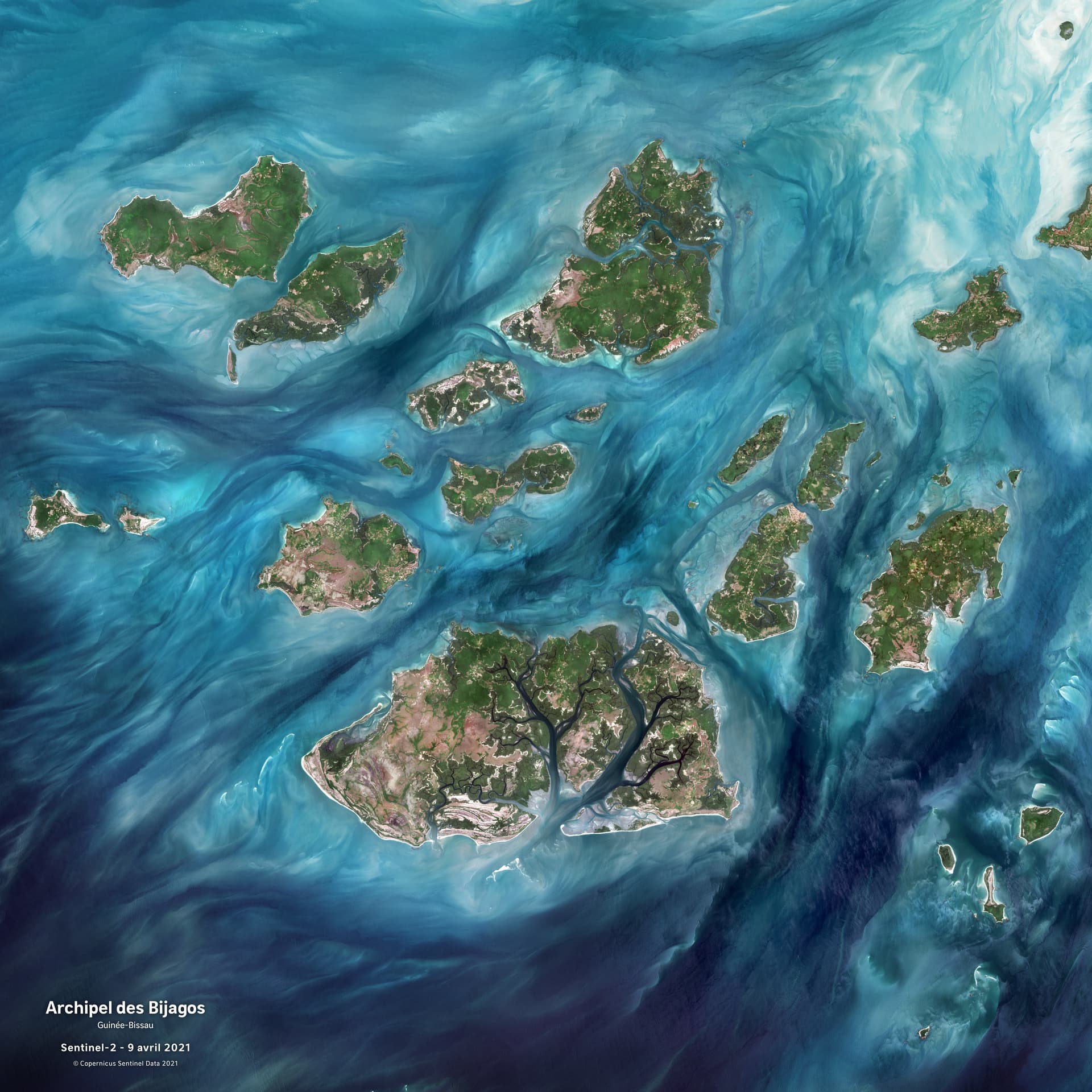
See more →Guinea-Bissau is one of the least-visited countries in Africa, and the Bijagós Archipelago is the reason anyone makes the effort. The Bijagós are 88 islands off the Atlantic coast, only about twenty of which are inhabited, and they form a UNESCO Biosphere Reserve. They hold saltwater hippos, a population that has adapted to swim between islands in the sea, as well as green turtle nesting on Poilão at one of the highest densities in the… Atlantic, manatees, and an extraordinary volume of migratory shorebirds. The Bijagó people maintain a matrilineal society with initiation traditions and sacred forests that remain genuinely intact rather than performed. Orango Islands National Park is the usual base for hippo tracking; João Vieira-Poilão for turtles and birds. Getting there means a pirogue or a small boat from Bissau or Bubaque, and schedules are informal. Bissau itself has a decaying Portuguese colonial quarter and a strong music scene. The country has a long history of political instability and coups.
November to May: the dry season, when the islands are reachable and the birding peaks. The dry season runs roughly November to May and is when travel here is practical: lower humidity, calmer seas for the island crossings, and reliable boat schedules. Some sources put the start as early as mid-August in a light year, but November is the safe assumption. Within that window, December to March is best for birdwatching, with enormous numbers of Palearctic migrants on the mudflats and mangroves. Turtle nesting on Poilão peaks between roughly July and October, which sits in the rains and requires more determination to reach. The wet season runs June to October and is heavy, peaking in July and August. Boat crossings to the Bijagós become unreliable and sometimes dangerous, mainland roads deteriorate badly, and mosquito numbers rise sharply. Build slack into any itinerary. Boat schedules are informal, weather-dependent and frequently change, and there is no reliable way to guarantee getting back from an outer island on a given day.
Most nationalities require a visa and it should be arranged before travel. Guinea-Bissau operates an eVisa, and visas are also issued at diplomatic missions; a visa on arrival has been available at Osvaldo Vieira International Airport for some nationalities but is not dependable and should not be relied on. Requirements include a passport valid at least six months beyond your intended departure, passport photos, proof of accommodation or an invitation, a return ticket, and your yellow fever vaccination certificate, an International Certificate of Vaccination is required from all travellers. ECOWAS nationals enter without a visa. Visiting the Bijagós requires a permit for the national parks, generally arranged locally through the park authority (IBAP) or your accommodation. Some islands are sacred and access is restricted or requires community permission, this is taken seriously and is not a formality. The country has experienced repeated coups and periods of political instability, and travel advice reflects that. Check your government's current position before booking.
Yellow fever: an International Certificate of Vaccination is required from all travellers and is checked on arrival. Get it at least ten days before travel. Malaria: risk is high and year-round throughout the country including Bissau and the islands. Prophylaxis is essential for every visitor. Commonly recommended: hepatitis A and B, typhoid, tetanus-diphtheria-polio, meningococcal, cholera, polio, and rabies for rural and island travel. Cholera outbreaks occur and can be severe, particularly in the rainy season. Drink only bottled or properly treated water, carry purification tablets or a filter, because bottled water is not reliably available outside Bissau, and be rigorous about food hygiene. Do not swim in fresh water; schistosomiasis is present. In the Bijagós, be aware that the hippos are in the sea as well as in the creeks, and they are dangerous. Take your guide's instructions seriously. Medical facilities are among the most limited anywhere. There is effectively no reliable emergency care and no dependable evacuation infrastructure; the islands are hours from Bissau by boat in good conditions. Bring the full trip's supply of any prescription medication and a comprehensive first-aid kit, and carry insurance that explicitly covers air evacuation. See a travel clinic at least eight weeks ahead.
Guinea-Bissau on the map
Hand-picked safaris, beach escapes, and cultural journeys across Guinea-Bissau.