Ghana is West Africa's easiest introduction: English-speaking, politically stable, genuinely welcoming, and holding the region's most significant historical sites.
Read more about Ghana →Capital: Accra
Currency: GHS
Best time: November to March: the dry season, and the most comfortable window countrywide.
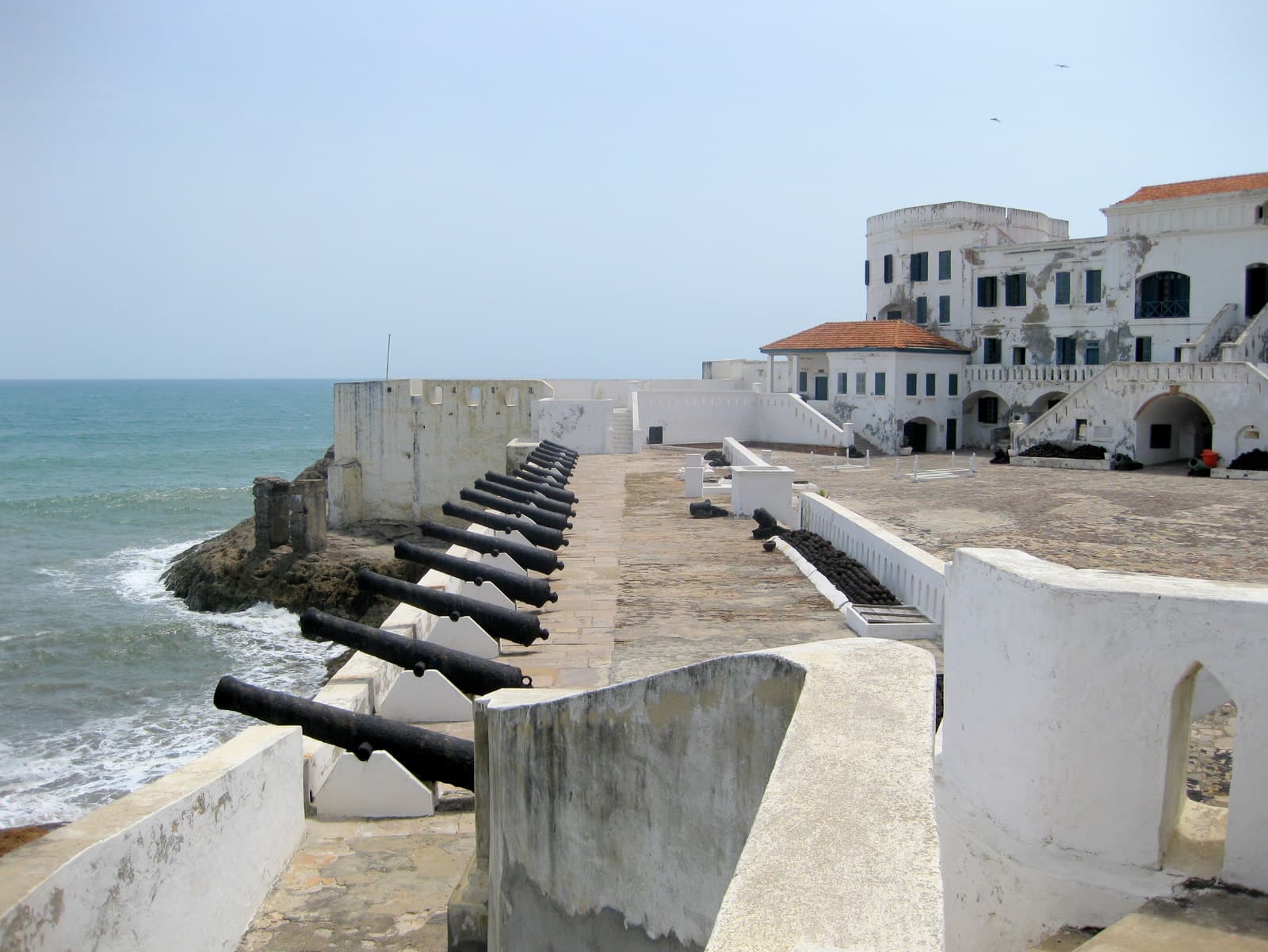
See more →Ghana is West Africa's easiest introduction: English-speaking, politically stable, genuinely welcoming, and holding the region's most significant historical sites. The coast is lined with some forty European forts and castles built between the fifteenth and eighteenth centuries. Cape Coast Castle and Elmina Castle are UNESCO World Heritage Sites and are visited primarily for the slave dungeons and the Door of No Return, through which captives were loaded onto ships. These are difficult places rather than… sightseeing stops, and they anchor a diaspora heritage route that draws visitors from across the Americas and Europe. Kakum National Park, inland from Cape Coast, has a canopy walkway strung 30 m above the rainforest floor. Mole National Park in the north is the country's best wildlife reserve, with elephant that can be tracked on foot. Kumasi is the Ashanti capital, with the region's largest market and a strong kente weaving and goldsmithing tradition. Accra is the arrival point and increasingly a destination in itself for music, food and design.
November to March: the dry season, and the most comfortable window countrywide. The main dry season runs November to March and is the best time to travel. Rainfall is minimal, roads to Mole and the north are reliable, and humidity on the coast is at its lowest. December and January bring the harmattan, a dry dust-laden wind off the Sahara that cools the nights and hazes the light, good for temperature, less good for photography. The December period is also when the diaspora return is at its peak, with festivals and events in Accra; accommodation books out and prices rise. April and May bring festivals and green landscapes but rising humidity. The main rains fall roughly April to July, with a shorter second rainy period in September and October. Roads in the north deteriorate and the canopy walkway at Kakum becomes slippery, though the forest is at its most impressive. For Mole National Park, February to April is the peak for wildlife, when animals concentrate at the waterhole in front of the lodge.
Most visitors need a visa arranged before arrival. Ghana does not operate a general visa on arrival for tourists, and turning up without one is not an option. Apply at a Ghanaian diplomatic mission or through the online application system. Requirements include a completed application, passport photos, a passport valid at least six months beyond arrival with blank pages, proof of accommodation or an invitation letter, a return ticket, and, mandatory, your yellow fever vaccination certificate. Single-entry tourist visas are typically valid for 90 days and processing takes one to three weeks. ECOWAS nationals and citizens of several African Union states enter without a visa. Ghana has periodically trialled visa-on-arrival for African passport holders and announced visa-free entry for all African nationals; check the current position if that applies to you. On arrival, the yellow fever certificate is checked before immigration and entry is refused without it, this is enforced consistently. Have it in hand, not buried in your luggage. Confirm current requirements with a Ghanaian mission before booking.
Yellow fever: vaccination is mandatory for all travellers aged nine months and over, including anyone transiting. The certificate is required for the visa application and checked at the port of entry, and you will be refused entry without it. It must be administered at least ten days before arrival. Malaria: risk is high and year-round in all regions of Ghana including Accra. Prophylaxis is essential for every visitor. Commonly recommended: hepatitis A and B, typhoid, tetanus-diphtheria-polio, meningococcal (the northern regions fall within the African meningitis belt), cholera for some itineraries, and rabies for extended rural travel. Drink bottled or sachet water, the latter is ubiquitous and generally reliable, and avoid tap water. Street food is a genuine part of the experience; the practical rule is to eat where there is a queue and the food is cooked in front of you. Schistosomiasis is present in Lake Volta and slow-moving fresh water; do not swim. Medical facilities in Accra and Kumasi are reasonable, with adequate private hospitals. Care in the north is basic. Insurance covering evacuation is worth carrying. See a travel clinic six weeks ahead: the yellow fever certificate needs ten days to become valid.
Ghana on the map
Hand-picked safaris, beach escapes, and cultural journeys across Ghana.