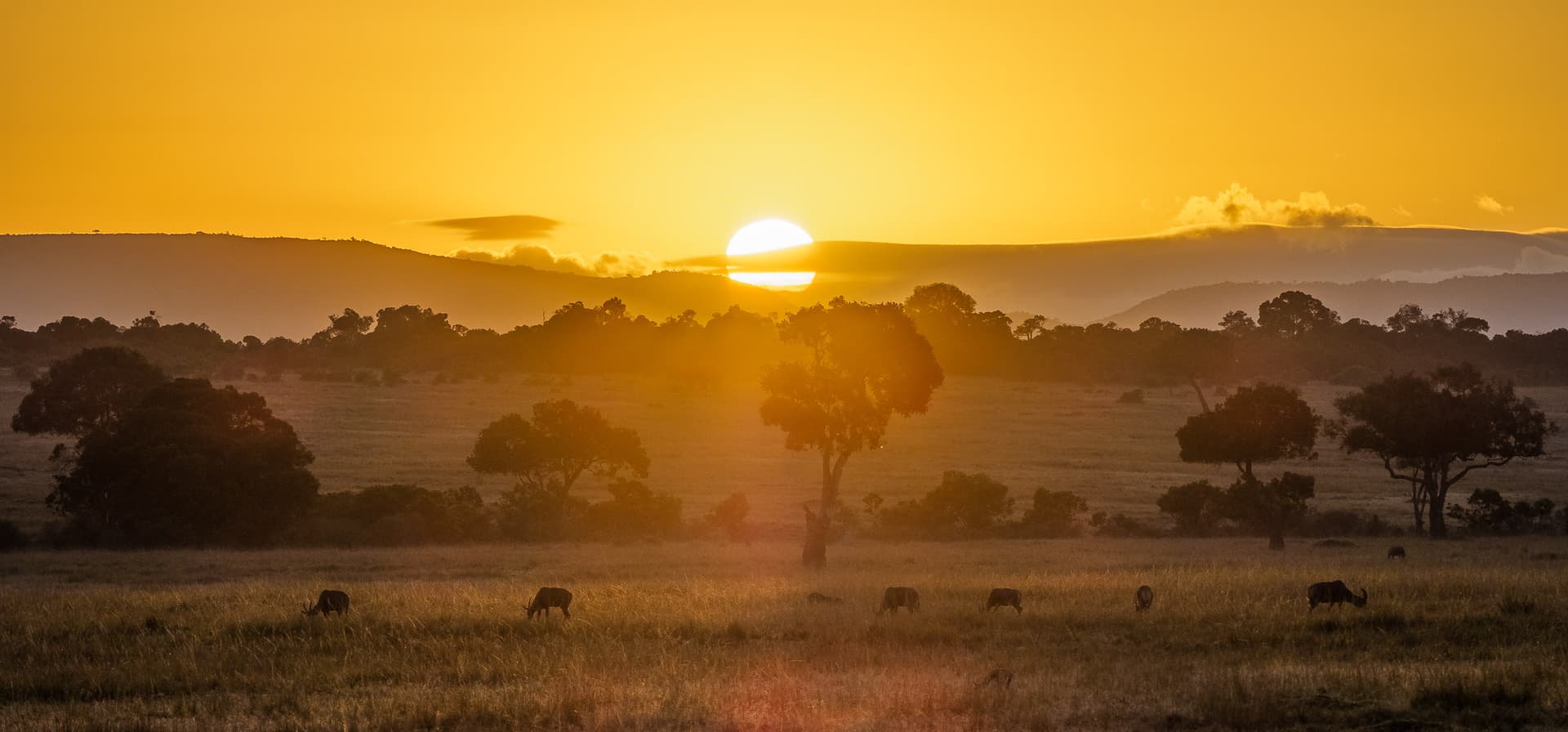
Gabon is nearly 90% forest and has set aside 13 national parks covering roughly 11% of its territory, the most ambitious conservation commitment in Central Africa, and the reason it is the region's most viable wildlife destination.
Read more about Gabon →Capital: Libreville
Currency: XAF
Best time: June to September for the main dry season; January to May for gorilla tracking in Loango.
See more →Gabon is nearly 90% forest and has set aside 13 national parks covering roughly 11% of its territory, the most ambitious conservation commitment in Central Africa, and the reason it is the region's most viable wildlife destination. Loango National Park is the signature. It is one of very few places where forest elephant, buffalo and hippo come out onto the Atlantic beach, and where habituated western lowland gorillas can be tracked in the coastal forest. Access is strictly limited, a maximum of four visitors per day, four days a week, at a minimum distance of seven metres, which keeps the experience genuinely wild. Ivindo National Park holds Langoué Baï, a forest clearing where elephants, gorillas and sitatunga come to the mineral-rich mud, and Kongou Falls. Lopé, a UNESCO site, sits on the forest-savanna boundary and holds mandrill hordes that can run to several hundred animals. Mayumba's beaches host one of the world's largest leatherback turtle nesting populations. Gabon is expensive and logistically demanding; almost everyone travels with a specialist operator.
June to September for the main dry season; January to May for gorilla tracking in Loango. Gabon sits on the equator and has two dry and two wet seasons, which makes the calendar unusually specific to what you want to see. The long dry season, June to September, is the general-purpose window: least rain, easiest road and river access, best beach and turtle-nesting conditions in the south, and the period when whales pass offshore. Leatherback nesting at Mayumba runs roughly October to April, with hatching from January. For gorilla tracking specifically, January to May is often better. The gorillas range less far each day when fruit is abundant, which shortens the trek and improves the odds of a sighting, the opposite of the usual dry-season logic. The short dry season in December and January is a workable alternative. The heavy rains fall roughly October to December and again in March to May, when forest tracks deteriorate badly and some camps close. Even in the dry season, expect rain: this is rainforest, and nothing here is truly dry.
Gabon operates an eVisa and it is the practical route for most visitors. Apply through the official portal of the Direction Générale de la Documentation et de l'Immigration before travel; normal processing takes three to five working days, with an expedited one-day option. The eVisa is issued as an entry authorisation that you present at Libreville, where the visa itself is stamped in. Expect a second round of formalities and biometrics on arrival. Standard tourist visas are valid for 30 days. You will need a passport valid at least six months beyond entry, a passport photo, proof of accommodation, a return ticket, evidence of sufficient funds, and, mandatory, no exceptions, your yellow fever vaccination certificate. Applications without it are refused. National park access is separately controlled. Entry permits for Loango, Ivindo and Lopé are arranged through the Agence Nationale des Parcs Nationaux, in practice by your operator, and gorilla tracking slots are capped and must be booked well in advance. Confirm current requirements before booking flights.
Yellow fever: vaccination is mandatory for all travellers to Gabon regardless of where you are arriving from, and the certificate is checked at the visa stage and again on arrival. It must be at least ten days old to be valid. Malaria: risk is high and year-round across the entire country, including Libreville. Prophylaxis is essential for every visitor without exception. Forest camps mean prolonged exposure at dawn and dusk; use repellent, cover up and sleep under nets. Commonly recommended: hepatitis A and B, typhoid, tetanus-diphtheria-polio, meningococcal, and rabies. Proof of polio vaccination is sometimes requested for longer stays. Gorilla tracking carries the same respiratory rule as East Africa: anyone with a cold, flu or fever will be turned back at the briefing, masks are required and a seven-metre distance is enforced. Great apes are highly susceptible to human respiratory infection. Other considerations: drink bottled or treated water; tap water is not safe. Filariasis and other tropical parasites are present in forest areas. Do not swim in fresh water. Medical facilities in Libreville are adequate for basic care and the parks are extremely remote, often a charter flight from anything. Insurance covering air evacuation is essential. See a travel clinic six to eight weeks ahead.
Gabon on the map
Hand-picked safaris, beach escapes, and cultural journeys across Gabon.