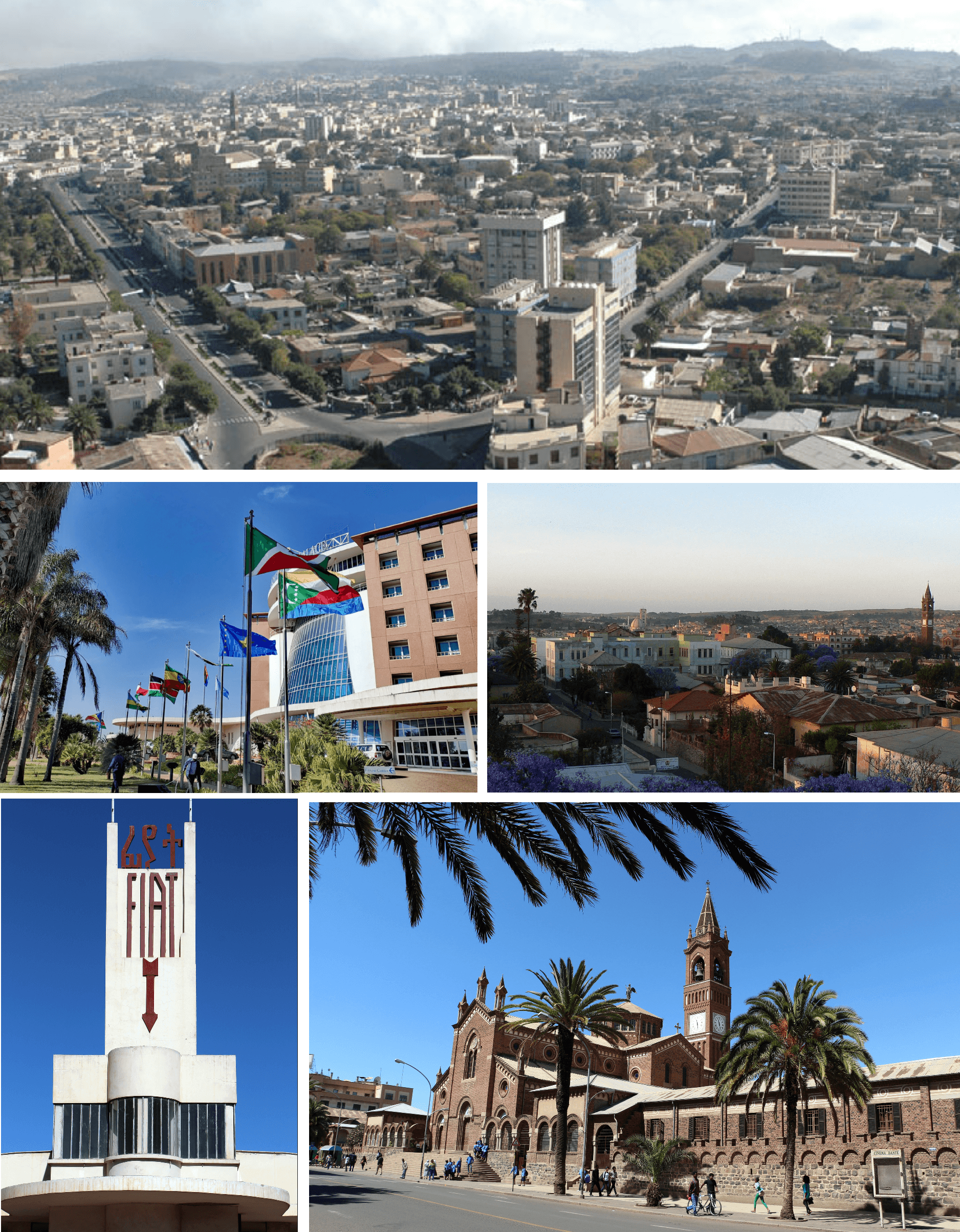
Eritrea is one of the least-visited countries in the world and, for the traveller who reaches it, one of the most distinctive, a Red Sea nation whose capital is an intact Italian modernist city.
Read more about Eritrea →Capital: Asmara
Currency: ERN
Best time: September to October and March to April: the mild shoulder months that suit both highlands and coast.
See more →Eritrea is one of the least-visited countries in the world and, for the traveller who reaches it, one of the most distinctive, a Red Sea nation whose capital is an intact Italian modernist city. Asmara sits at 2,325 m and was built out in the 1930s in Rationalist, Futurist and Art Deco styles. The Fiat Tagliero service station, the Cinema Impero and the Cathedral survive largely as designed, and UNESCO inscribed the whole city as… a World Heritage Site in 2017. It is walkable, temperate, notably safe, and possesses a café culture inherited intact from the colonial period. The road down to Massawa on the Red Sea drops more than 2,000 m in around 110 km through a sequence of climate zones, and the coral of the Dahlak Archipelago offshore is among the least-dived in the Red Sea. Keren and the Qohaito plateau hold Ottoman, Egyptian and pre-Aksumite remains. Independent travel is heavily constrained and most visitors travel with an approved operator.
September to October and March to April: the mild shoulder months that suit both highlands and coast. Eritrea's two climate zones want opposite things, and the shoulder seasons are the compromise. September–October and March–April give comfortable weather in Asmara and the highlands while keeping the Red Sea coast merely hot rather than extreme. Asmara's altitude means it stays temperate year-round, with occasional showers between October and April and cool nights that catch people out. June to September is the highland rainy season in the west and brutally hot on the coast. Massawa regularly exceeds 40°C with high humidity, which makes the Dahlak Archipelago unpleasant. Avoid it if you can. November to February is dry and pleasant on the coast and cold at night in the highlands, and is a good window for diving if you can handle chilly Asmara evenings.
Eritrea has some of the strictest entry rules in Africa and nothing can be arranged on arrival. Every foreign national, with the narrow exception of Sudanese and Ugandan citizens, must obtain a visa in advance from an Eritrean embassy or consulate in their country of residence. Tourist visas are normally issued for 30 days and typically require a letter of invitation or a booking confirmation from an approved local tour operator, a completed application, passport photos and a passport valid at least six months beyond your trip. Processing can take several weeks and approval is not guaranteed. The second requirement catches most people out: a separate internal travel permit is required to go more than 25 km outside Asmara, and further permits are needed for archaeological sites and the Dahlak islands. These are issued in Asmara, take time, and are routinely refused for certain areas. Travelling without one is a serious matter. Your tour operator arranges permits, and travelling with one is effectively mandatory. Begin the process at least two months ahead and check your government's current travel advice.
Yellow fever: a certificate is required for travellers arriving from a country with risk of yellow fever transmission. Vaccination is additionally recommended for anyone visiting the Anseba, Debub, Gash-Barka, Maekel and Semenawi Keih Bahri regions. Malaria: risk is altitude-dependent. Asmara and areas above roughly 2,200 m are considered malaria-free; everywhere lower, including Massawa, the Dahlak Archipelago, the western lowlands and the road down from the highlands, carries year-round risk. Prophylaxis is recommended for any travel outside the high plateau. Commonly recommended: hepatitis A and B, typhoid, tetanus-diphtheria-polio, meningococcal, and rabies for rural travel. Practical notes: drink bottled or treated water everywhere. Asmara's altitude affects some visitors for the first day or two. Heat on the coast is severe in summer. Medical facilities are very limited, pharmacies are frequently short of stock, and there is no reliable emergency evacuation infrastructure. Bring a complete supply of any prescription medication plus a well-equipped personal first-aid kit, and carry insurance that explicitly covers evacuation from Eritrea. Many standard policies exclude it. See a travel clinic at least eight weeks before departure.
Eritrea on the map
Hand-picked safaris, beach escapes, and cultural journeys across Eritrea.