The DRC is the second-largest country in Africa and holds a concentration of natural drama that has no equal, along with security conditions that keep most of it closed to visitors.
Read more about DR Congo →Capital: Kinshasa
Currency: CDF
Best time: June to September and December to February: the dry seasons, when trekking is practical.
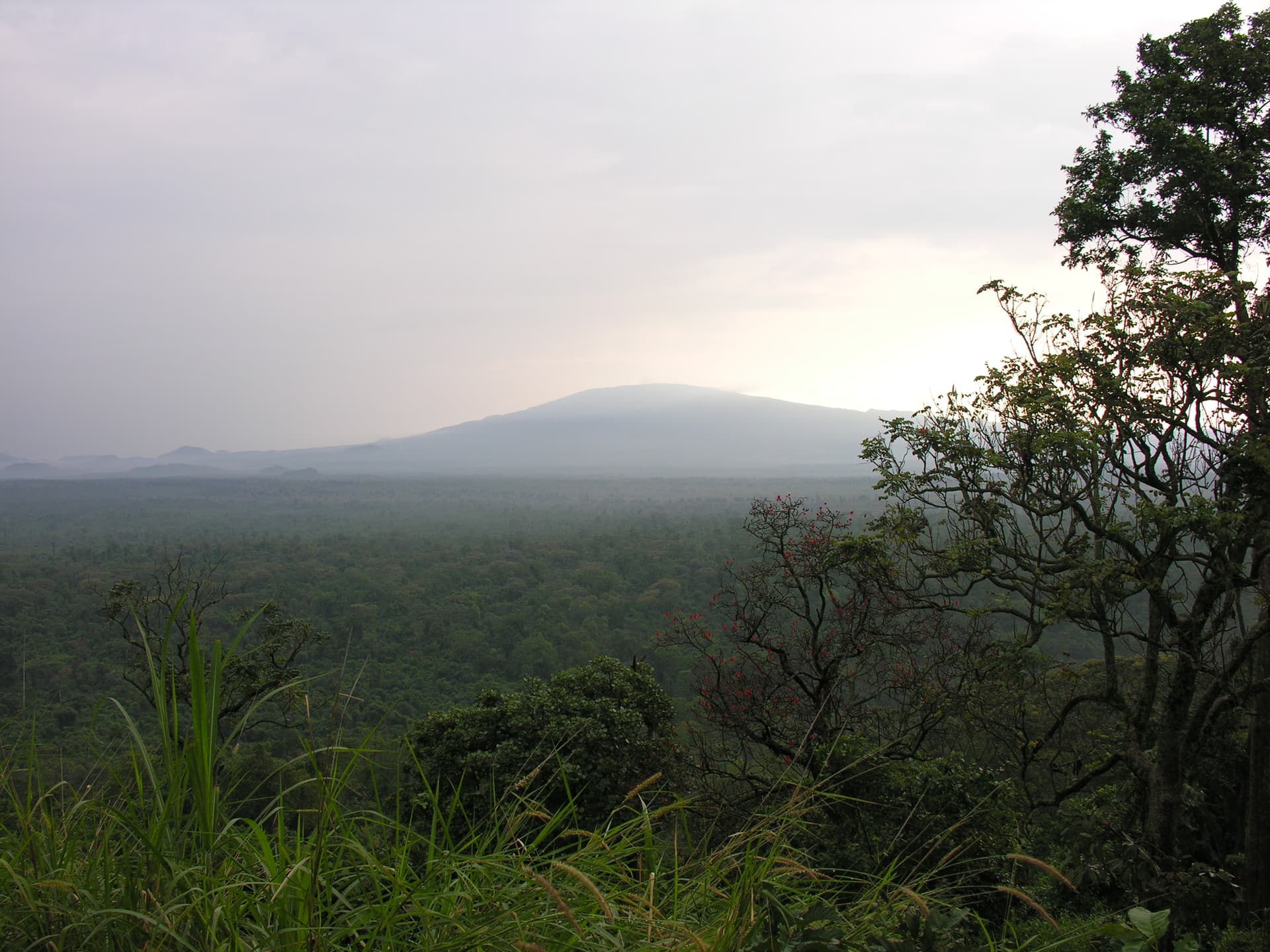
See more →The DRC is the second-largest country in Africa and holds a concentration of natural drama that has no equal, along with security conditions that keep most of it closed to visitors. Virunga National Park in the east is Africa's oldest national park and a UNESCO World Heritage Site, holding mountain gorillas alongside the volcanoes of the Virunga chain. Mount Nyiragongo, above Goma, contains one of the world's largest permanent lava lakes; the overnight trek to… the crater rim to watch it from a summit shelter was for years one of the most extraordinary experiences in African travel. Kahuzi-Biéga, near Bukavu, is the place to track eastern lowland gorillas, the largest gorilla subspecies and found nowhere else. Westward, the Congo River is navigable for over 1,500 km and Kinshasa is one of Africa's largest cities. Garamba in the northeast and Salonga, the continent's largest tropical rainforest reserve, are effectively inaccessible. Eastern DRC has seen renewed armed conflict, and Virunga has repeatedly suspended tourism. Most governments advise against all travel to the east.
June to September and December to February: the dry seasons, when trekking is practical. The long dry season, June to September, is the main window across most of the country and the traditional peak for Virunga gorilla trekking, Nyiragongo ascents and Kahuzi-Biéga. Forest trails are firmer, the volcano is more likely to be clear at the summit, and road access to trailheads is reliable. The short dry season, roughly December to February, is the second window and is often quieter. The rains fall March to May and October to November. Trekking continues in principle but the climbs become genuinely hard, the Nyiragongo summit is frequently cloud-locked, and unsealed roads deteriorate quickly. As elsewhere in the region, this is rainforest: expect rain in any month. The real constraint is security rather than season. Tourism in Virunga has been suspended repeatedly and for extended periods, and access to the east depends entirely on the current situation. Confirm directly with the park and check your government's advice before making any booking.
A visa is required for almost all nationalities. The DRC operates an eVisa system, and separate arrangements exist for park visitors. The route most gorilla trekkers use is the tourist visa issued through Virunga National Park itself: the park applies on your behalf once you have a confirmed booking, and the visa is collected at the Grande Barrière border crossing from Gisenyi in Rwanda into Goma. This is materially simpler than the embassy route and is one reason most eastern DRC itineraries start in Kigali. Otherwise, apply through the official eVisa portal or at a DRC embassy with a passport valid at least six months, passport photos, a letter of invitation or confirmed accommodation, a return ticket, and your yellow fever certificate, which is mandatory and checked. Registration with the immigration authorities may be required for longer stays, and photography permits are needed in many contexts. Photographing government buildings, airports, bridges or anyone in uniform is prohibited and enforced seriously. Do not confuse this with the Republic of Congo across the river, separate countries, separate visas. Check current requirements and government travel advice before booking.
Yellow fever: vaccination is mandatory for all travellers to the DRC and the certificate is checked on arrival. Get it at least ten days before travel. Malaria: risk is high and year-round throughout the country, including Goma, Kinshasa and all trekking areas. Prophylaxis is essential for every visitor. Commonly recommended: hepatitis A and B, typhoid, cholera, polio, meningococcal, tetanus-diphtheria, measles and rabies. Proof of polio vaccination is required for stays over four weeks, and neighbouring countries may ask for it on departure. Gorilla trekking has strict health rules: no one with a respiratory infection may trek, masks are mandatory and minimum distances are enforced. The DRC has recurrent Ebola outbreaks, generally confined to specific eastern or northwestern health zones, and cholera is endemic with frequent outbreaks. Check the current situation before travelling and follow screening procedures at airports and borders without complaint. They exist for good reason. The Nyiragongo ascent adds altitude, volcanic gas and cold to the picture; the summit shelters are basic and it drops near freezing. Medical facilities are very limited. Insurance covering air evacuation to Kigali or Nairobi is essential, and standard policies are void in areas under a do-not-travel advisory. See a travel clinic at least eight weeks ahead.
DR Congo on the map
Hand-picked safaris, beach escapes, and cultural journeys across DR Congo.