Djibouti is small, hot and geologically extraordinary: a country built on the junction of three tectonic plates, where the Afar Depression is slowly tearing the continent apart.
Read more about Djibouti →Capital: Djibouti
Currency: DJF
Best time: November to March: the cooler months, and the whale shark season in the Gulf of Tadjoura.
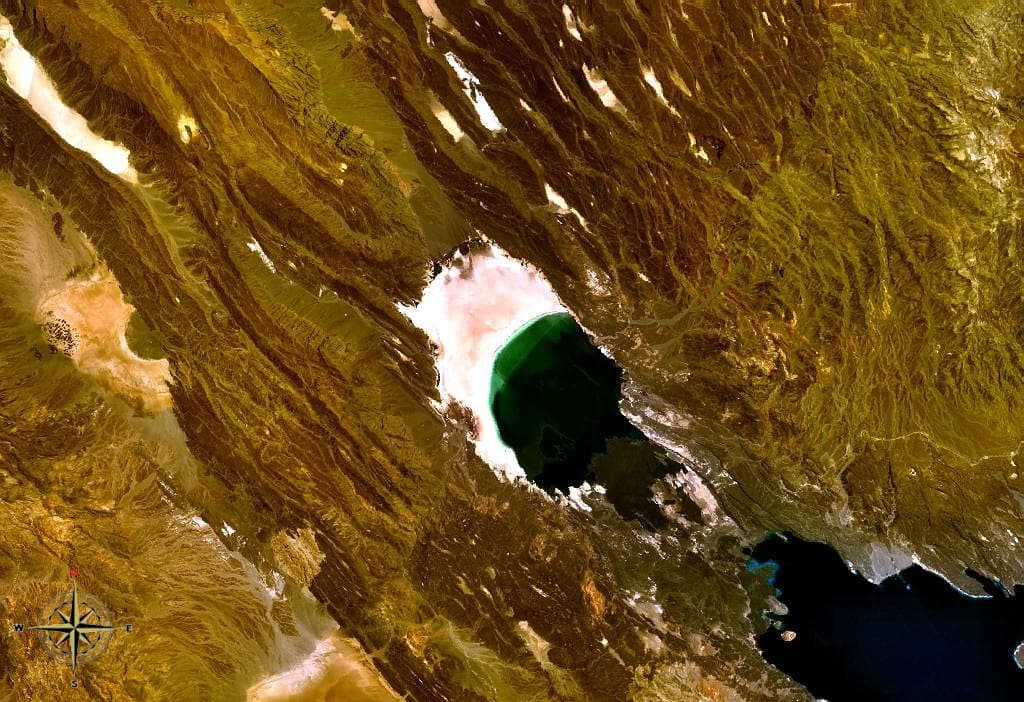
See more →Djibouti is small, hot and geologically extraordinary: a country built on the junction of three tectonic plates, where the Afar Depression is slowly tearing the continent apart. Lake Assal sits 155 m below sea level, the lowest point in Africa and one of the saltiest bodies of water on earth, ringed by a crust of white salt against black basalt. Lake Abbe, on the Ethiopian border, is a field of limestone chimneys venting steam that… has stood in for alien planets on film more than once. The Gulf of Tadjoura offers some of the most reliable whale shark encounters anywhere: from October to February the juveniles gather close inshore near Arta and Mucha Island, and swimming with them is the country's signature experience. Djibouti City is a compact port capital with strong French and Yemeni influence in its food. The country is expensive by regional standards, and most visitors travel on organised 4x4 trips because the interior has almost no tourism infrastructure.
November to March: the cooler months, and the whale shark season in the Gulf of Tadjoura. Djibouti is one of the hottest countries on earth and the season is really a question of what is bearable. Between November and March daytime temperatures settle around 25–30°C, the humidity drops and travel into the interior becomes comfortable. This is also the whale shark window, roughly October to February, with the most reliable sightings from November to January. April and May, and again September and October, are transitional, hot but workable, and quieter. June to August should be avoided by most visitors. Temperatures regularly exceed 45°C, the khamsin wind blows hot off the desert, and desert excursions to Lake Abbe or Lake Assal become genuinely dangerous rather than merely uncomfortable. Diving and snorkelling conditions in the Gulf are best in the cooler half of the year.
Djibouti is one of the more straightforward entries in the Horn of Africa. Most nationalities can apply online through the official eVisa portal, evisa.gouv.dj, with applications usually processed within around 48 hours. Apply before travel, print the approval, and present it on arrival. You will need a passport valid at least six months beyond entry, a passport photo, proof of accommodation, and a return or onward ticket. Tourist eVisas are typically issued for up to 30 days. A visa on arrival is also available at Djibouti–Ambouli International Airport for many nationalities, but the eVisa is faster at the border and avoids any discretion at the counter. Some desert areas near the Eritrean border are restricted and require permits and a licensed guide; your operator arranges these. Photography near military and port installations is prohibited and enforced. Djibouti hosts several foreign military bases. Confirm the current position for your nationality at evisa.gouv.dj before booking.
Yellow fever: a certificate is required if you are arriving from, or have transited through, a country with risk of yellow fever transmission, which includes Ethiopia, a very common routing into Djibouti. Check your itinerary rather than just your departure country. Malaria: risk is present but low and largely seasonal, concentrated after the rains and in the interior rather than in Djibouti City. Prophylaxis is generally recommended for travel outside the capital; discuss your specific route with a travel clinic. Commonly recommended: hepatitis A and B, typhoid, tetanus-diphtheria-polio, meningococcal, and rabies for extended or remote travel. Heat is the dominant health risk here, more than any pathogen. Dehydration and heat exhaustion put more visitors in trouble than anything else, particularly on Lake Abbe and Lake Assal excursions where there is no shade and no water. Carry far more water than you think you need, travel with a driver who knows the route, and avoid the middle of the day. Drink bottled water only. Medical facilities in Djibouti City are adequate for minor problems; anything serious means evacuation, so carry cover that includes it. See a travel clinic four to six weeks ahead.
Djibouti on the map
Hand-picked safaris, beach escapes, and cultural journeys across Djibouti.