The Republic of Congo holds one of the most intact stretches of the Congo Basin rainforest and, in Odzala-Kokoua, one of Africa's genuinely great wildlife experiences.
Read more about Congo →Capital: Brazzaville
Currency: XAF
Best time: June to September in the south; December to February for the northern parks.
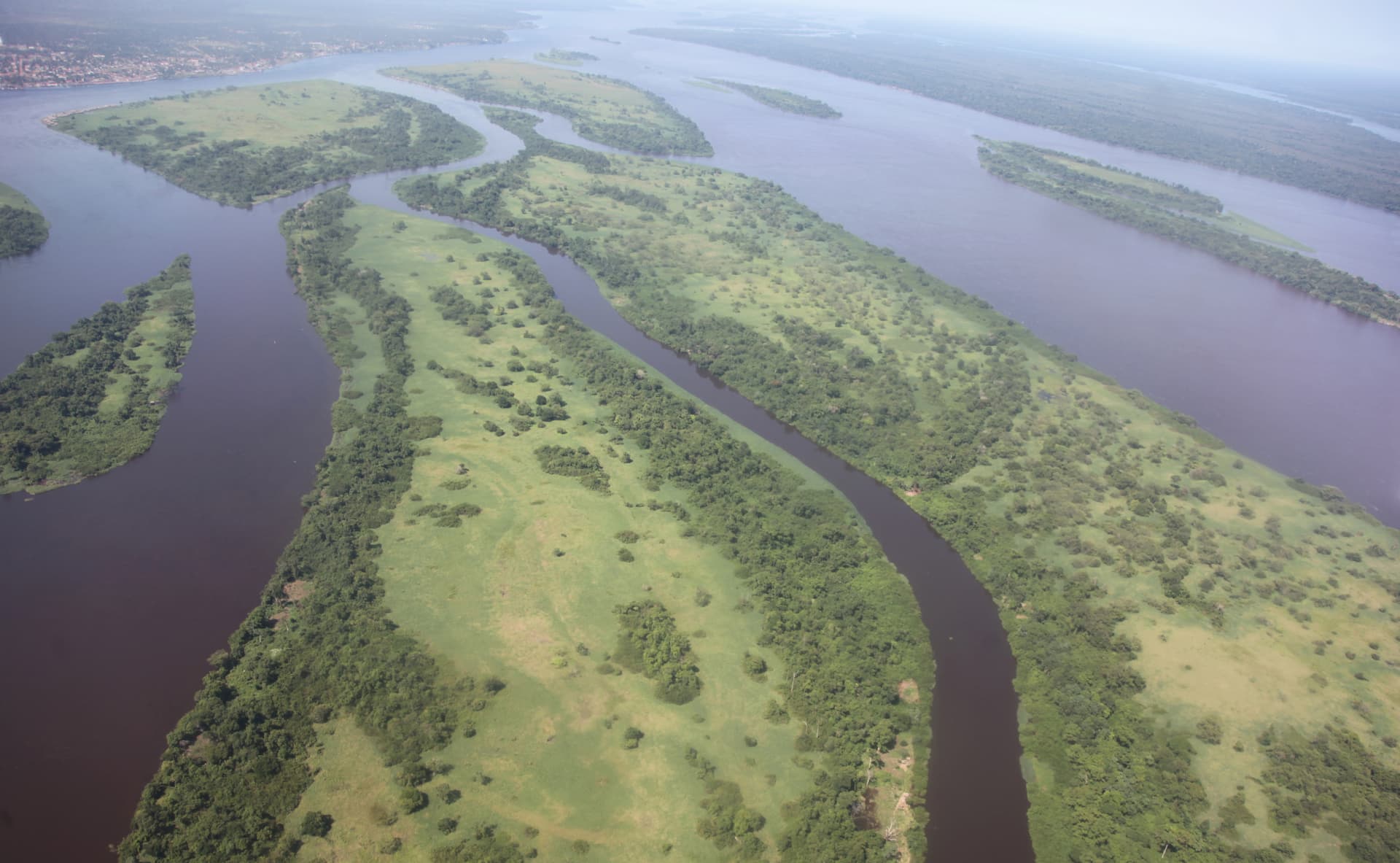
See more →The Republic of Congo holds one of the most intact stretches of the Congo Basin rainforest and, in Odzala-Kokoua, one of Africa's genuinely great wildlife experiences. Odzala-Kokoua National Park covers 13,500 km² of forest and savanna in the northwest and is managed to a standard rare in the region. Its habituated western lowland gorilla families can be tracked on foot, and the park's bais, natural forest clearings where mineral-rich soil draws animals out of the… canopy, allow you to sit on a raised platform and watch forest elephant, gorilla, bongo and forest buffalo come and go in the open. Nouabalé-Ndoki, further north and adjoining Cameroon and the Central African Republic, is even less disturbed; its Mbeli Bai is one of the longest-running great ape study sites in the world. Brazzaville sits on the Congo River directly across from Kinshasa, the closest pair of capital cities on earth. Access to the parks is by charter flight and then several hours by 4x4 and boat; this is expedition travel with a high price tag.
June to September in the south; December to February for the northern parks. The two halves of the country run on different calendars, and Odzala is in the north. The long dry season, May to September, is when southern roads are passable and Brazzaville is at its most comfortable. In the north, the rains ease around October and the short dry season in January and February is the prime window for Odzala and Nouabalé-Ndoki, firmer forest trails, better bai visibility and easier flying weather. Many operators run their main season across these months and again from June to August. Gorilla tracking is possible year-round in principle, but the wet months make the trek considerably harder and the light in the forest poorer. The heavy rains fall roughly March to May and October to November. Some camps close, charter flights are disrupted and the last leg of road access becomes unreliable. Camps in Odzala have limited capacity and fixed departure windows, so the season is partly chosen for you. Book a year ahead for the peak months.
A visa is required for almost all nationalities and must be obtained before travel; there is no dependable visa on arrival. Apply at a Congolese embassy or consulate with a completed application, passport photos, a passport valid at least six months, proof of accommodation or a letter of invitation, a return ticket, and your yellow fever vaccination certificate, proof of yellow fever, and often polio, is required at the application stage as well as on arrival. Fees typically run USD 100 or more and processing takes one to three weeks. In practice, most visitors travel on an operator-arranged itinerary and the operator supplies the invitation letter and supporting documentation, which materially improves the odds of approval. National park permits and gorilla tracking slots are arranged separately through the park management and are strictly limited. Do not confuse this country with the Democratic Republic of the Congo across the river. They have separate governments, visa systems and entry requirements, and a visa for one is worthless for the other. Check current requirements and your government's travel advice before booking.
Yellow fever: vaccination is mandatory for all travellers and proof is required both to obtain the visa and on arrival. Get it at least ten days before travel. Malaria: risk is high and year-round throughout the country including Brazzaville and all forest areas. Prophylaxis is essential for every visitor. Commonly recommended: hepatitis A and B, typhoid, tetanus-diphtheria-polio, meningococcal, and rabies. Polio vaccination proof is sometimes required at entry. Gorilla tracking rules apply strictly: no one with a respiratory infection may trek, masks are mandatory, and a minimum distance is enforced. The fee is not refunded if you are turned back at the briefing. The Congo Basin has periodic Ebola outbreaks, generally localised and in specific districts. Operators and park management monitor this closely and will suspend activity in an affected area; check the current position before travelling. Drink bottled or properly treated water. Do not swim in fresh water: schistosomiasis is widespread. Medical facilities are limited in Brazzaville and effectively absent in the north, where camps are several hours by road and boat from an airstrip. Comprehensive insurance including air evacuation is mandatory in practice, and operators will ask for proof. See a travel clinic at least eight weeks ahead.
Congo on the map
Hand-picked safaris, beach escapes, and cultural journeys across Congo.