Benin is the birthplace of Vodun, the religion that travelled with the slave trade and became voodoo in Haiti and Louisiana, and it is practised openly here as an official state religion rather than a tourist curiosity.
Read more about Benin →Capital: Porto-Novo
Currency: XOF
Best time: November to February: the dry season, and the window for the Vodun festival.
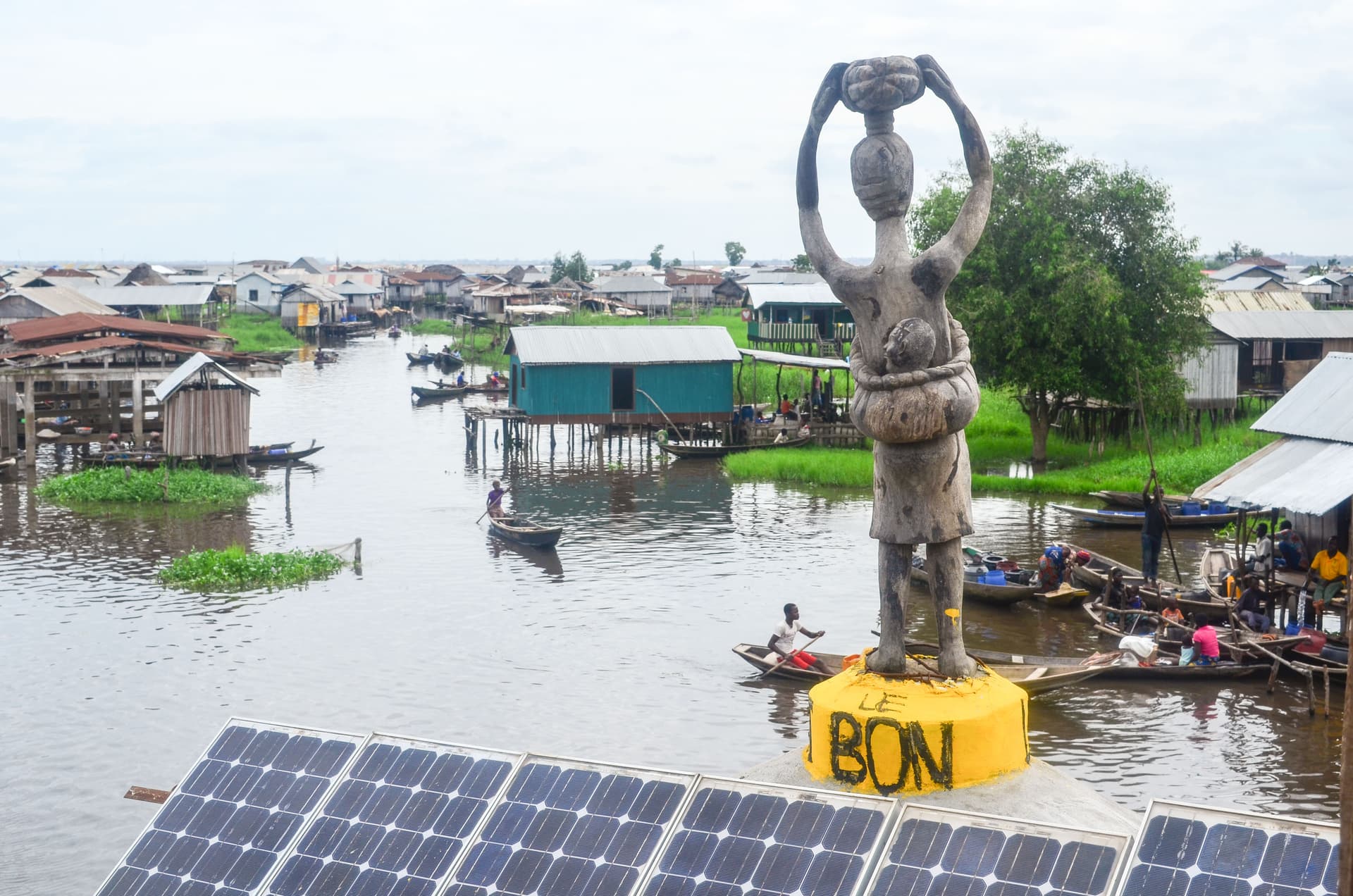
See more →Benin is the birthplace of Vodun, the religion that travelled with the slave trade and became voodoo in Haiti and Louisiana, and it is practised openly here as an official state religion rather than a tourist curiosity. Ouidah is its centre. The Temple of Pythons faces the Catholic basilica across the street, and the four-kilometre Route des Esclaves runs down to the Door of No Return on the beach, marking the path captives walked to… the ships. The annual Vodun festival on 10 January draws practitioners from across the diaspora. Abomey, the capital of the Dahomey kingdom, holds royal palaces that are a UNESCO World Heritage Site, built by a state whose army famously included a regiment of women soldiers. Ganvié, on Lake Nokoué, is a village of some 20,000 people living in stilt houses, reached by pirogue. Pendjari National Park in the far north is one of the last strongholds of the West African lion and part of the W-Arly-Pendjari complex, though the northern border areas have security restrictions that affect access.
November to February: the dry season, and the window for the Vodun festival. The main dry season runs November to February and is the best time to travel: lower humidity in the south, passable roads to the north, and the most comfortable temperatures. The harmattan in December and January cools the nights and brings dust. The date worth planning around is 10 January, the national Vodun Day festival at Ouidah, the country's single biggest cultural event, drawing thousands including a substantial diaspora contingent. Accommodation in Ouidah and Cotonou books out well ahead. March to June brings the main rains in the south, and September and October a second wet period. Roads deteriorate and flooding can disrupt rural travel. The north follows a single Sahelian pattern with rains from roughly June to September. For Pendjari, the dry months from December to April are the only realistic window; the park generally closes during the rains and wildlife viewing is best late in the dry season as animals concentrate at water. Check current security advice for the north before planning a Pendjari leg.
Benin operates an eVisa and it is the standard route. Apply online between seven and ninety days before travel; the eVisa is generally issued for 30 or 90 days, single or multiple entry. You will need a passport valid at least six months beyond arrival, a passport photo, proof of accommodation, a return ticket, and your yellow fever vaccination certificate, which is mandatory. Benin has at various points offered visa-free entry to all African nationals, which remains a significant liberalisation for regional travellers; ECOWAS citizens enter freely in any case. Approval usually arrives within a few working days as a document you print and present on arrival at Cotonou. The important caveat is regional. Extremist groups operating from Burkina Faso and Niger have carried out attacks in Benin's northern border areas, including near Pendjari, and Western visitors have been kidnapped in the park. Several governments advise against travel to the northern departments. Confirm the current position with your operator and your government before including a Pendjari leg, the southern cultural circuit is a separate proposition and is not subject to the same warnings.
Yellow fever: vaccination is mandatory for entry and proof is required both for the visa and on arrival. Get it at least ten days before travel. Malaria: risk is high and year-round throughout the country including Cotonou. Prophylaxis is essential for every visitor: take the tablets and use repellent and nets. Commonly recommended: hepatitis A and B, typhoid, tetanus-diphtheria-polio, meningococcal (the north lies within the African meningitis belt, with risk highest in the dry season), cholera for some itineraries, and rabies for rural travel. Drink bottled or sachet water. Traveller's diarrhoea is common; be selective with food outside established restaurants. Schistosomiasis is present in Lake Nokoué and the rivers: do not swim in fresh water, including around Ganvié. Atlantic currents along this coast are notoriously strong with a heavy shore break, and the beaches at Cotonou and Ouidah are genuinely dangerous for swimming; drownings occur regularly. Medical facilities are limited. Cotonou has a small number of adequate private clinics; care elsewhere is basic. Carry a full supply of prescription medication and insurance including air evacuation. See a travel clinic six weeks ahead.
Benin on the map
Hand-picked safaris, beach escapes, and cultural journeys across Benin.