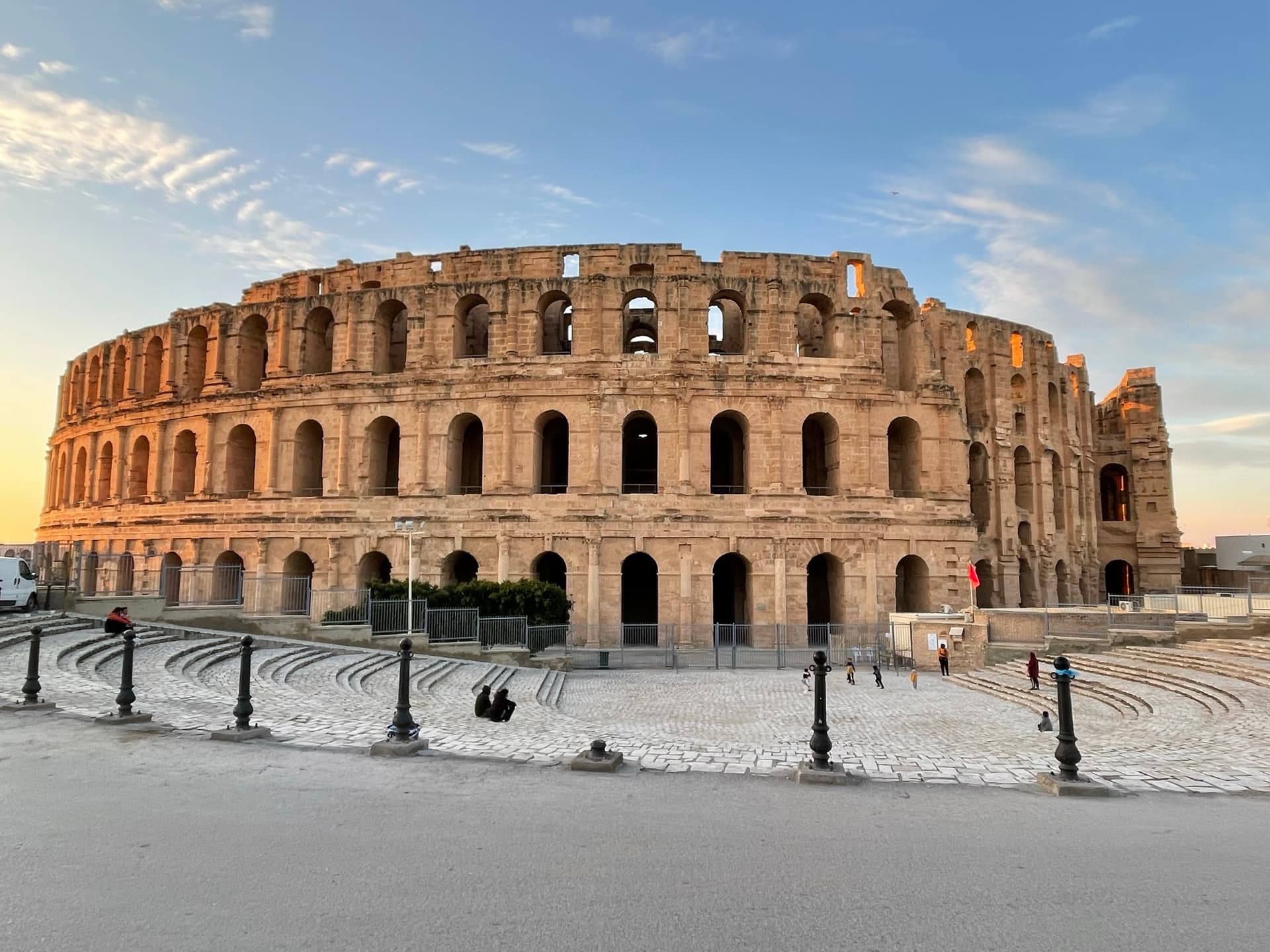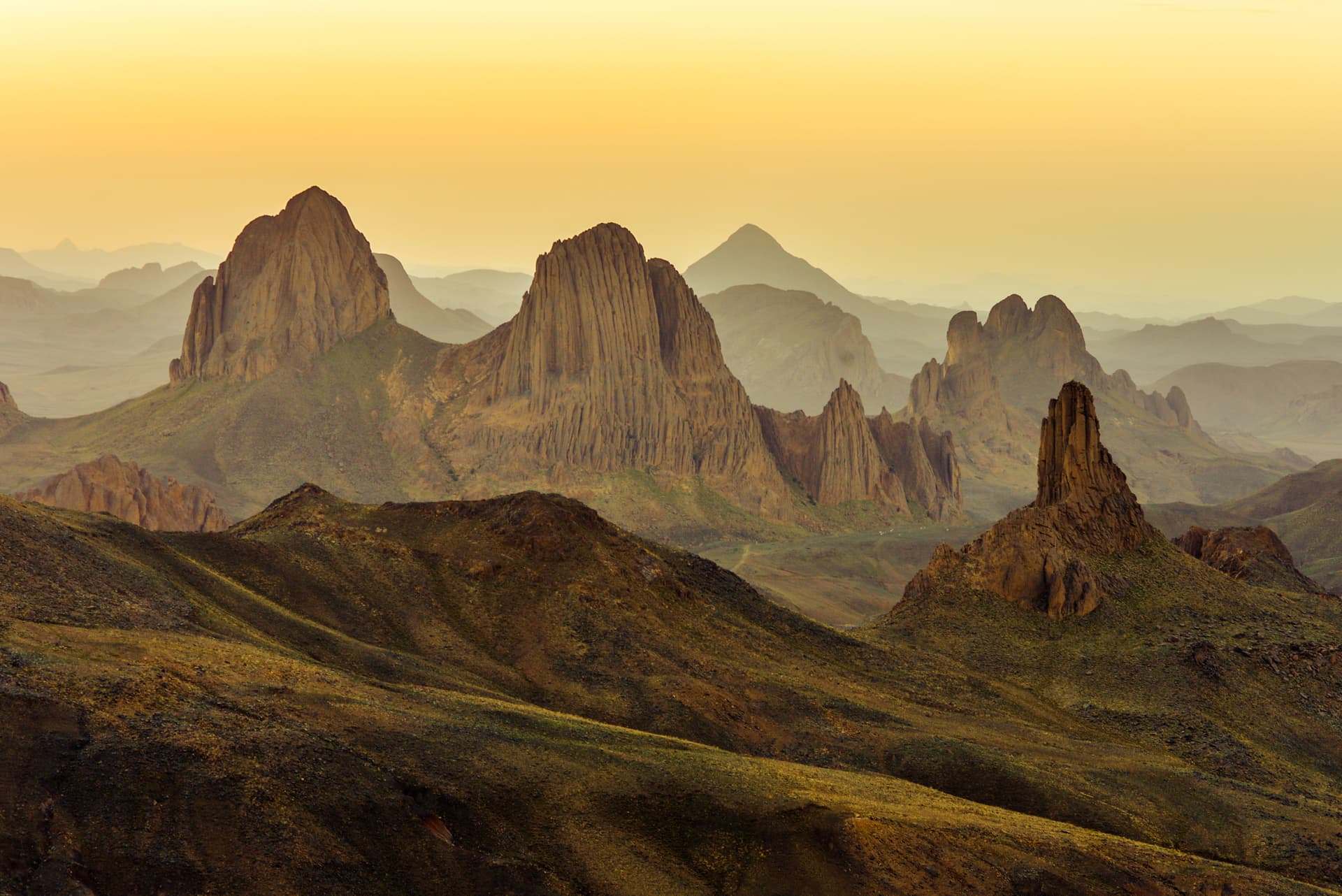
Algeria is Africa's largest country and one of its least visited, which is precisely the appeal for travellers who want Roman cities and Saharan rock art without the crowds.
Read more about Algeria →Capital: Algiers
Currency: DZD
Best time: October to April for the Sahara; April to June and September to October for the north.
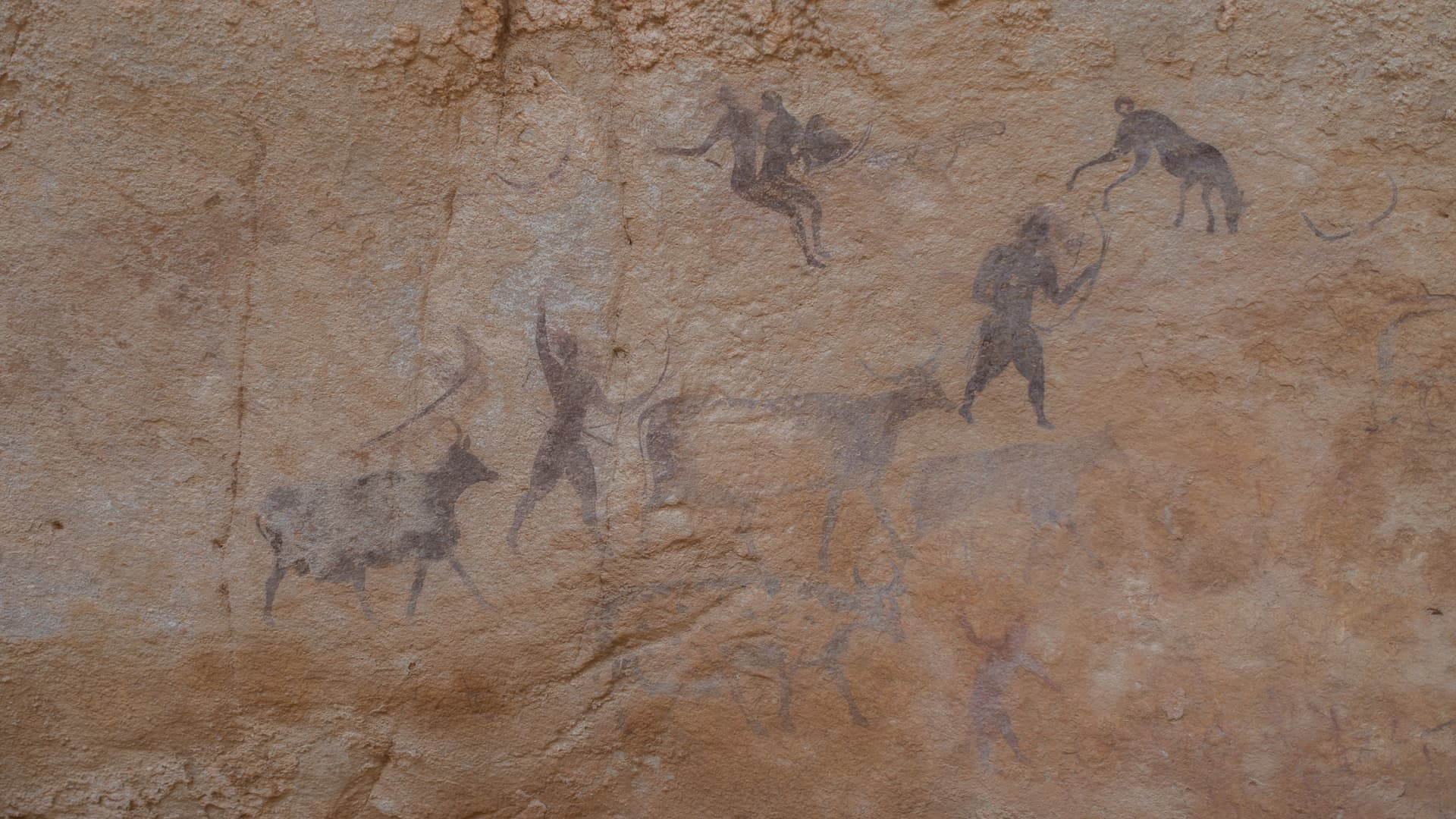
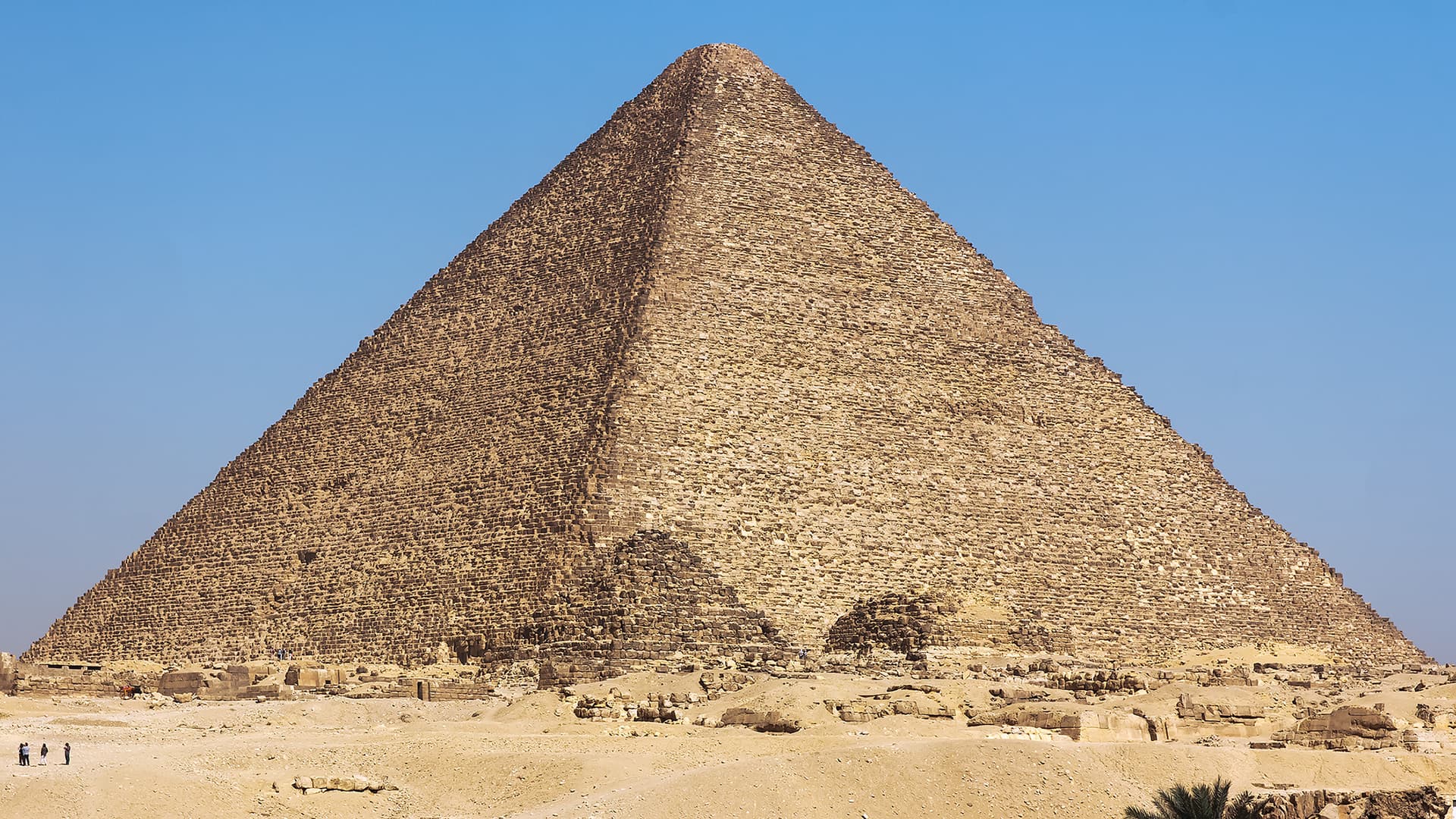
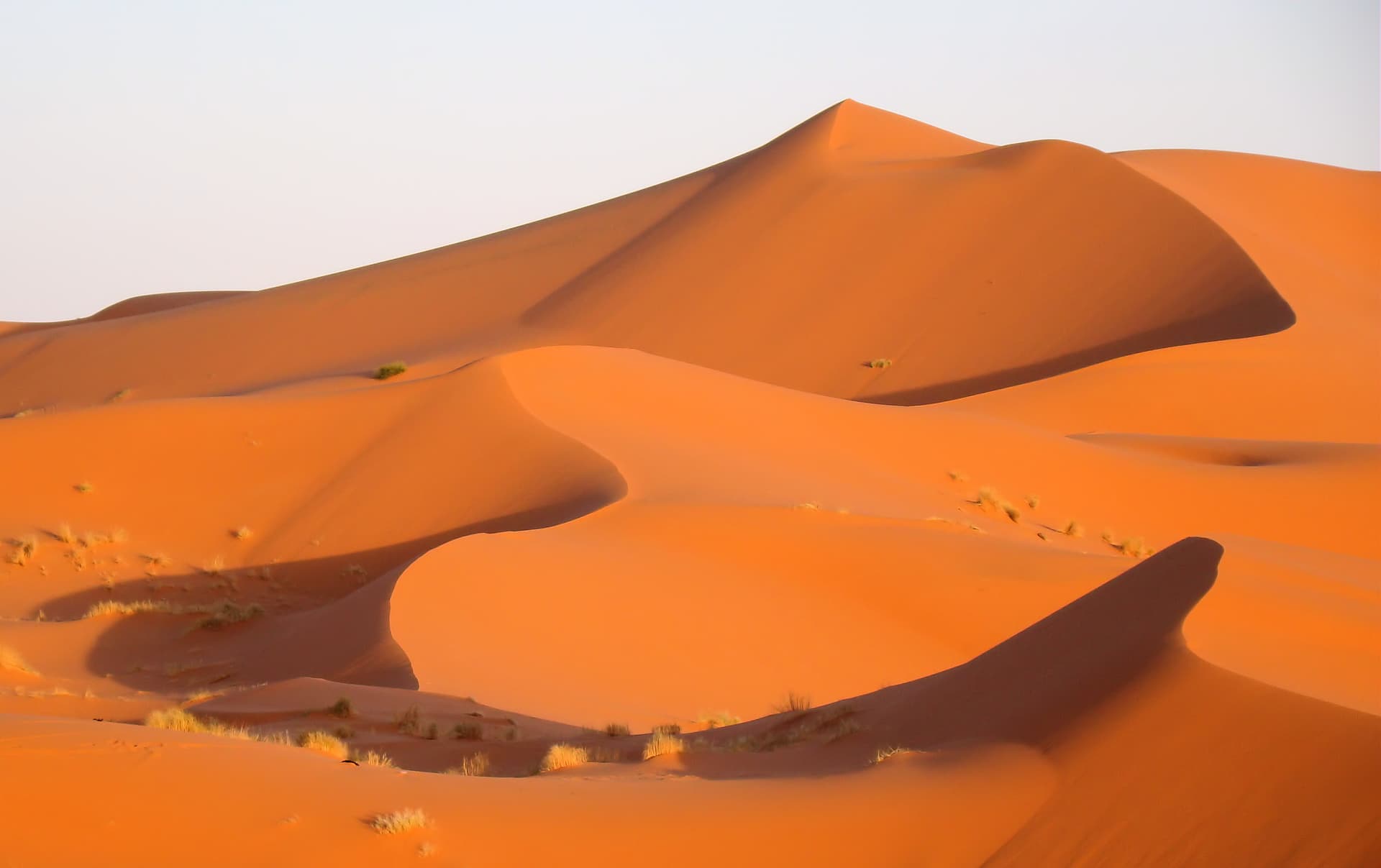
See more →Algeria is Africa's largest country and one of its least visited, which is precisely the appeal for travellers who want Roman cities and Saharan rock art without the crowds. The Mediterranean north holds the UNESCO-listed Casbah of Algiers, a dense Ottoman hill quarter above the bay, and some of the best-preserved Roman sites in the world at Timgad and Djémila. Timgad is a complete military colony laid out on a grid, largely intact and almost… empty of visitors. The south is the real draw. The Tassili n'Ajjer plateau near Djanet holds one of the greatest concentrations of prehistoric rock art anywhere, some 15,000 engravings and paintings recording a green Sahara of hippo and cattle herds thousands of years ago. The Hoggar Mountains around Tamanrasset are volcanic spires in a landscape of black rock, with some of the clearest night skies on earth. The fortified oasis towns of the M'Zab Valley at Ghardaïa are a UNESCO site and an unusual piece of urban design.
October to April for the Sahara; April to June and September to October for the north. Algeria's two halves want different seasons. The Saharan south, Tassili n'Ajjer, the Hoggar, the M'Zab, is only sensible between October and April, with the best conditions from November to February: warm days, cold nights and clear skies for the rock art and the stargazing. From May to September the desert exceeds 45°C and organised expeditions largely stop. The Mediterranean north follows a European pattern. Spring, April to June, and autumn, September to October, are the most comfortable for Algiers, Timgad, Djémila and the coast. Summer is hot and humid on the coast and busy with domestic holidaymakers; winter is mild but wet, with real snow in the Atlas. If you can only pick one window, October–November and March–April work reasonably across both halves of the country. Ramadan changes opening hours and daytime dining substantially. Check the dates.
Algeria requires a visa from almost every nationality and there is no eVisa for general tourism. Apply in advance at an Algerian consulate; processing typically takes five to eight working days and requires a completed application, passport photos, a passport valid at least six months, proof of accommodation or a hotel voucher, and in most cases an invitation letter or a booking confirmation from a licensed Algerian tour operator. Tourist visas are usually issued for up to 90 days. There is one significant exception worth knowing. Travellers heading to the Saharan south, Djanet, Tamanrasset, the Tassili and the Hoggar, with a tour agency licensed by the Ministry of Tourism can obtain a visa on arrival, sometimes called a regularisation visa. The agency issues a boarding authorisation that lets you board the flight, and the visa is granted on landing. This has made the desert far more accessible than the north and is how most rock-art trips now run. Independent travel in the south is not permitted; a licensed guide is required, and border regions with Mali, Niger and Libya are closed. Confirm with an Algerian consulate and check your government's travel advice before booking.
Yellow fever: a certificate is required if you are arriving from a country with risk of yellow fever transmission. Not required for arrivals from Europe or North America. Malaria: Algeria was certified malaria-free by the WHO in 2019 and no prophylaxis is required. Very rare imported cases occur in the far south but do not change the advice for travellers. Commonly recommended: hepatitis A and B, typhoid, tetanus-diphtheria-polio, and rabies for desert and rural travel. The Sahara is where the real risks are, and they are environmental. Heat, dehydration and exposure are the main causes of trouble on southern expeditions, daytime temperatures and freezing nights within the same twenty-four hours catch people out badly. Travel with a licensed operator, carry far more water than seems necessary, and pack genuine cold-weather layers for the nights, which people consistently underestimate. Drink bottled water throughout. Stomach upsets are common. Medical facilities are reasonable in Algiers and the northern cities and effectively absent in the deep south, where the nearest hospital may be a full day's drive. Insurance covering desert evacuation is essential and should be checked against exclusions for remote-area travel. See a travel clinic four to six weeks ahead.
Places worth building a trip around in Algeria, from our travel writing.
Algeria on the map
Hand-picked safaris, beach escapes, and cultural journeys across Algeria.