Kenya vs. Tanzania: Where to Go for the Ultimate Great Migration Experience
Africa Travel Bookings
· 5 min read
Published: 2 September 2026 | Category: Wildlife & Nature | Tags: Great Migration, Maasai Mara, Serengeti, Kenya, Tanzania
Few wildlife experiences compare with watching hundreds or thousands of wildebeest move across an African landscape in search of fresh grazing and water. The Great Migration is one of the planet's most remarkable ecological events, but despite the name, it is not confined to one country.
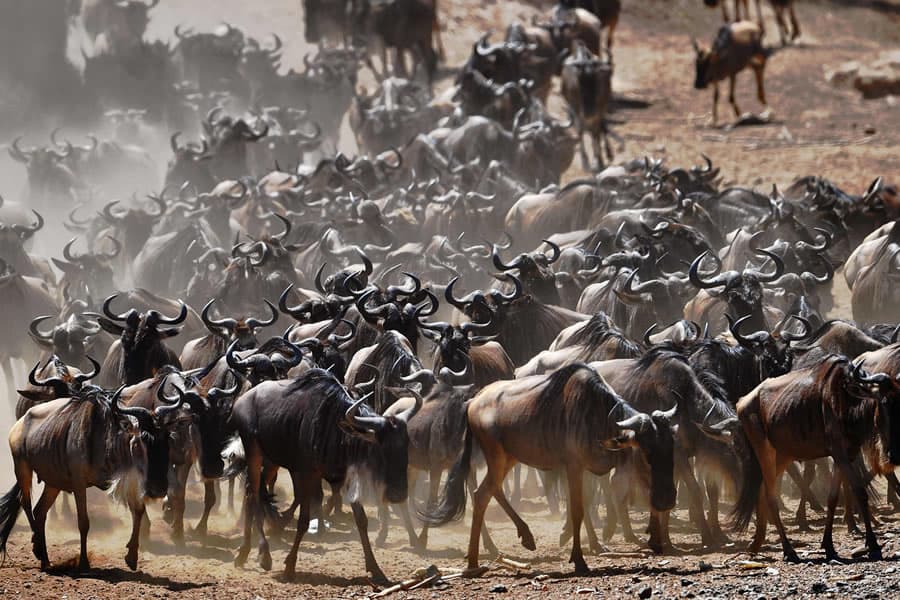
The migration is a continuous cycle across the Greater Serengeti-Mara ecosystem, linking Tanzania's Serengeti National Park with Kenya's Maasai Mara ecosystem: a roughly 1,000-kilometre annual circular movement involving more than one million wildebeest together with large numbers of zebra and other ungulates. This creates an important question for travellers planning a safari: should you visit Kenya or Tanzania for the ultimate Great Migration experience?
Both can deliver extraordinary wildlife encounters, but they offer different advantages depending on when you travel, what part of the migration you want to witness, your preferred safari style, and how much time you have. The crucial point is that there is no universally best country. The better choice is determined by the particular stage of the migration you want to experience.
First, Understand What the Great Migration Actually Is
The Great Migration is not an event that starts in Kenya and ends in Tanzania, nor is it a single procession of animals moving according to a fixed calendar. It is an ecological cycle driven primarily by rainfall, pasture availability, and the reproductive needs of the herds, and the animals continuously move through the Serengeti-Mara ecosystem, crossing an international border that means little to wildlife.
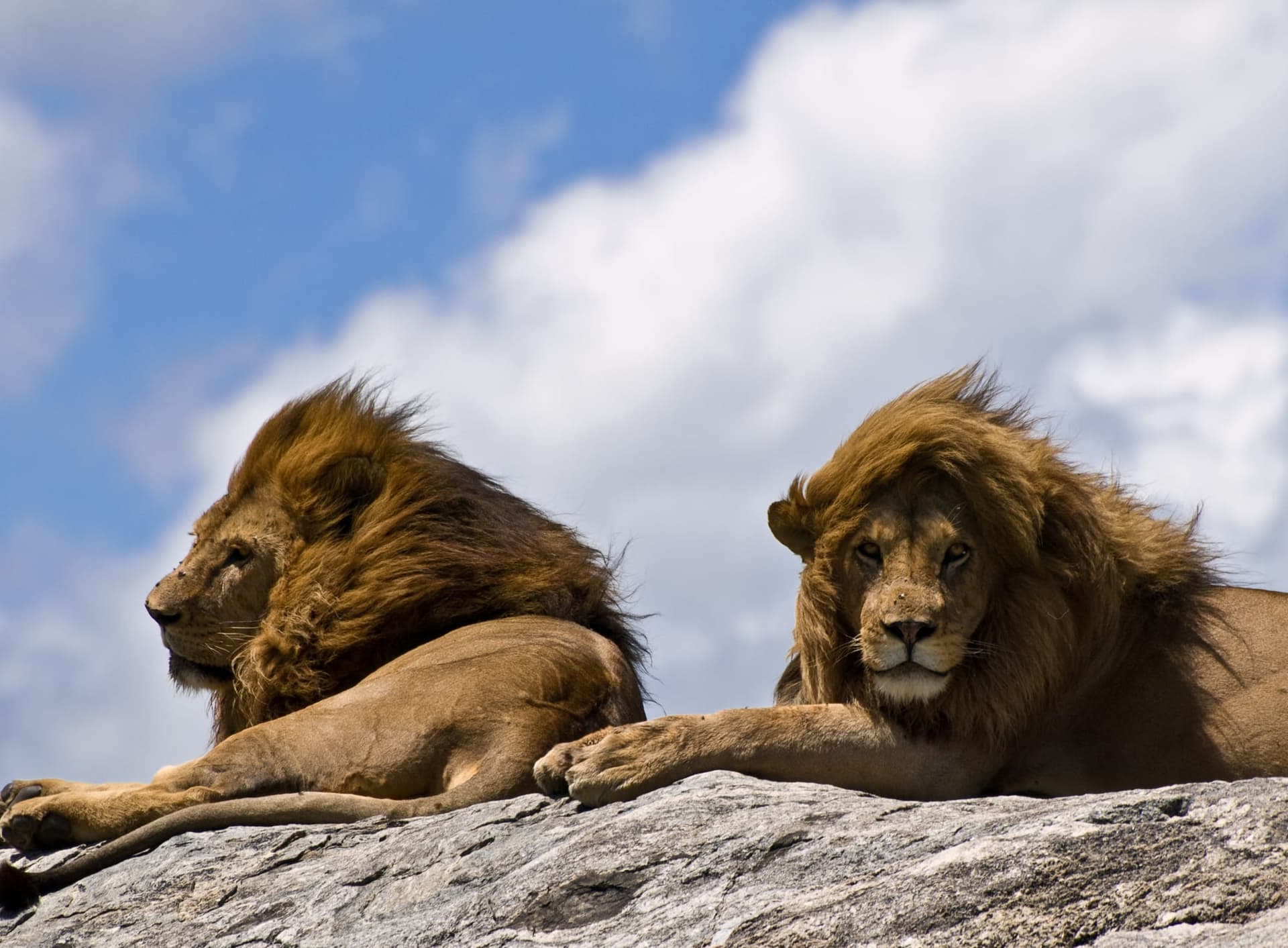
The Serengeti itself covers approximately 1.5 million hectares of savannah, and its annual migration is identified as one of the world's most impressive natural spectacles. The broader ecosystem extends into Kenya's Maasai Mara and the surrounding conservation areas. The migration also involves much more than wildebeest: large numbers of zebra and gazelles accompany the movement, while lions, cheetahs, hyenas, crocodiles, and other predators exploit the enormous concentration of prey. Selecting Kenya or Tanzania, then, is really about selecting where and when to intercept the migration.
Tanzania: Where the Annual Cycle Begins
Tanzania has an enormous advantage when it comes to understanding the migration as a whole: the country's Serengeti contains the majority of the migration's vast seasonal range.
The southern Serengeti is particularly important at the beginning of the year. This is the breeding and calving period, when huge numbers of wildebeest gather on the short-grass plains, moving north from the southern plains in search of new pasture. For travellers visiting around January to March, Tanzania is generally the stronger choice: rather than focusing exclusively on dramatic river crossings, visitors can experience one of the most important biological stages of the migration, calving. Thousands of young animals are born during this period, creating a very different safari atmosphere from the dry-season crossings, with newborn animals attracting predators and particularly compelling predator-prey interactions. For wildlife enthusiasts, photographers, and travellers interested in animal behaviour rather than simply witnessing a spectacular crossing, this period can be extraordinarily rewarding.
Kenya: The Stage for the Famous Mara River Crossings
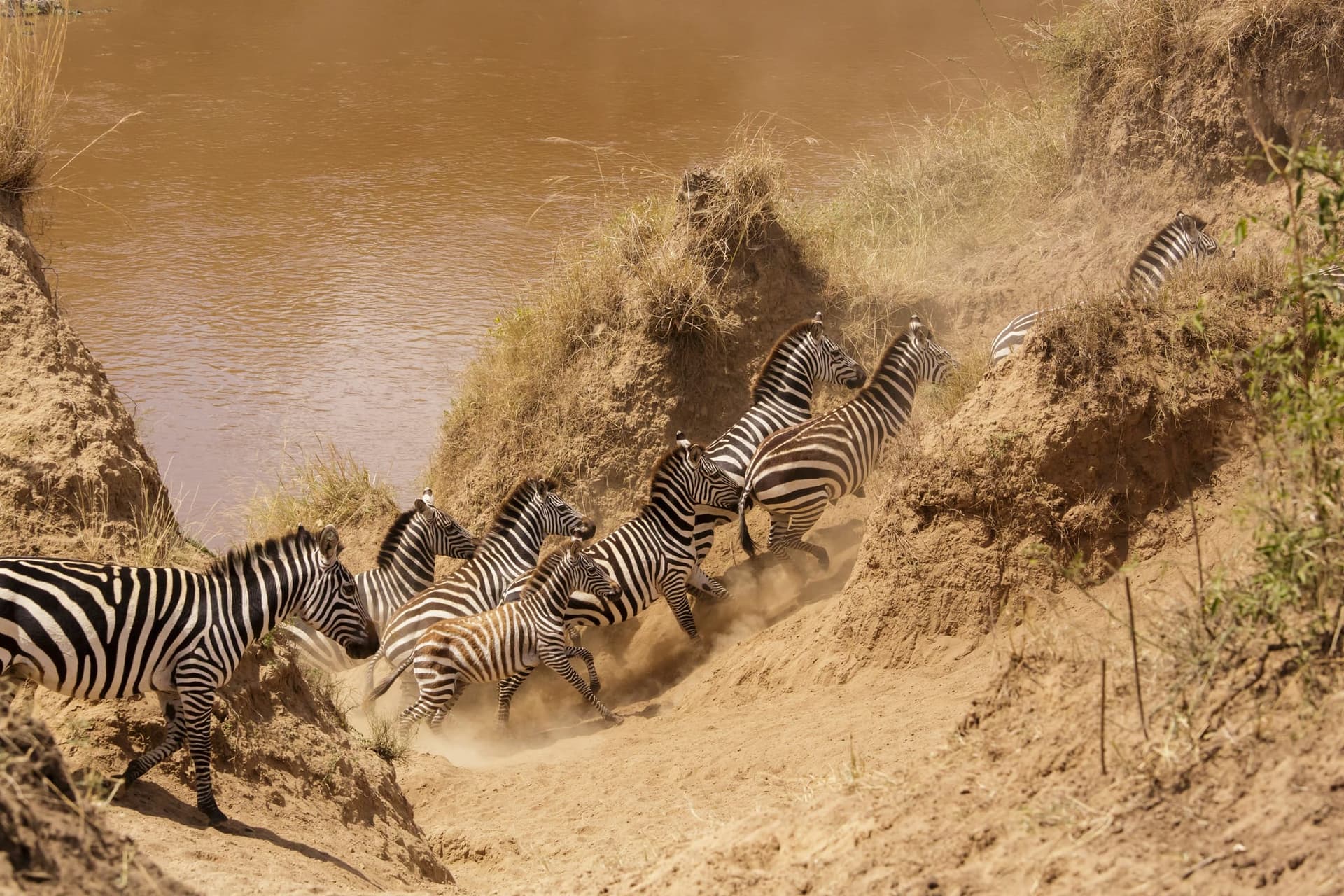
Kenya's greatest advantage comes later in the migration cycle. As the herds move northward, many enter the Maasai Mara ecosystem, particularly during the dry-season period traditionally associated with July through October, when the most dramatic and iconic portion of the migration generally occurs. This is the imagery that has made the Great Migration famous around the world: herds gather along riverbanks, hesitate, and then thousands may suddenly surge forward, plunging down steep banks into the water while others scramble behind them. The Mara River presents a formidable obstacle, with strong currents, steep banks, and crocodiles creating genuine danger for the animals.
For a traveller whose primary ambition is to see the iconic river-crossing spectacle, Kenya's Maasai Mara is a particularly compelling destination, but there is an important caveat: a river crossing is never guaranteed. The migration is controlled by ecological conditions rather than a tourist timetable, and herds may gather at one section of the river for days before crossing unexpectedly, while other groups may remain elsewhere. A responsible travel company should never promise a specific crossing on a specific day.
Kenya versus Tanzania: Which Has Better Wildlife?
This is one category with no clear winner. Both sides of the ecosystem support exceptional concentrations of wildlife. The Serengeti is famous for its large-scale plains and enormous herbivore populations, while the Maasai Mara has an outstanding diversity of resident wildlife in addition to the migratory herds. Kenya's most recent national wildlife census recorded more than 37,000 wildebeest, more than 32,000 zebra, over 11,000 buffalo, and thousands of impala, gazelles, topi, elephants, and giraffes within the broader Maasai Mara ecosystem.
This distinction matters. You do not need to visit during the migration to experience excellent wildlife viewing in the Mara, and similarly, the Serengeti remains an extraordinary safari destination even when the major herds are not concentrated in the northern sections. The migration adds another dimension to an already exceptional wildlife experience.
Which Offers the Better Safari Experience?
Your preferred safari style can make the decision easier.
Choose Kenya for a concentrated Mara experience. The Maasai Mara is relatively compact compared with the enormous Serengeti ecosystem, which can make the experience feel highly concentrated, particularly when large numbers of animals are present. The Mara is also surrounded by community and private conservancies, creating opportunities to combine traditional game drives with other experiences, such as hot-air-balloon safaris, depending on the area and operator. For travellers who want a classic safari holiday centred heavily around wildlife viewing, Kenya can be remarkably efficient.
Choose Tanzania for scale and broader itinerary possibilities. Tanzania offers the enormous Serengeti, but the migration is only one reason to travel there. A Tanzanian safari can combine the Serengeti with the Ngorongoro Conservation Area, Tarangire National Park, Lake Manyara, and other northern-circuit destinations, depending on the itinerary. Ngorongoro is particularly significant, since it forms part of the larger Serengeti ecosystem and contains a remarkable concentration of wildlife within the crater. Tanzania can be an especially strong choice for travellers who want the migration to form part of a longer, varied safari rather than being the sole objective.
A Broad Migration Calendar
A general migration calendar can be useful, but travellers should never treat it as a guaranteed schedule.
January to March: The southern Serengeti is generally the key area during the calving season, superb for travellers interested in newborn animals, predators, and the reproductive cycle of the migration.
April to June: The herds begin moving through the central and western Serengeti as environmental conditions change, giving travellers large herds while avoiding some of the peak-season concentration around the Mara.
July to October: This is the period most closely associated with the dramatic northern Serengeti and Maasai Mara river crossings, the principal window for the most iconic migration activity.
November to December: As conditions change again, the herds begin moving south toward Tanzania, and the cycle continues.
This is precisely why calling the phenomenon a "migration season" can sometimes be misleading. The Great Migration happens throughout the year; what changes is where the animals are and what they are doing.
Which Is Better for Avoiding Crowds?
Peak migration months are popular precisely because travellers want to witness the spectacular northern movement and possible river crossings, so the most famous locations can become busy. The experience can differ dramatically, though, depending on whether you stay inside a heavily visited national reserve or select a carefully positioned camp or conservancy. Kenya's Mara ecosystem contains multiple community and private conservancies surrounding the national reserve, providing alternatives to concentrating all activity inside the reserve itself. Tanzania's much larger Serengeti ecosystem also provides opportunities to choose less concentrated areas and travel according to where wildlife is located. The quality of your operator and the positioning of your camp can, therefore, sometimes matter as much as the country you choose.
Kenya or Tanzania for Photography?
For photographers, the answer depends on the photographs you want. Kenya's Mara River crossings can produce spectacular action photography: animals jumping, splashing water, dust rising from riverbanks, and predators waiting nearby. The relatively concentrated nature of the Mara can also make it easier to spend several days positioning yourself around active wildlife areas. Tanzania offers something different: the enormous landscapes of the Serengeti provide exceptional opportunities for wide environmental compositions and huge herds stretching toward the horizon, while the calving season in the southern plains offers intimate scenes of newborn animals and predator-prey behaviour rather than simply dramatic river crossings.
Or Visit Both
For travellers with sufficient time and budget, combining the two countries may actually be the best migration strategy. Rather than treating Kenya and Tanzania as competing destinations, consider them two sections of the same ecological system: a combined itinerary might include the Serengeti followed by the Maasai Mara during the northern migration period, giving you the landscape on both sides of the international boundary and dramatically improving flexibility when trying to follow the herds. The animals, after all, do not recognise the Kenya-Tanzania border.