Gorilla Trekking: Rwanda vs. Uganda, A Comprehensive Guide to Costs and Terrain
Africa Travel Bookings
· 5 min read
Published: 1 September 2026 | Category: Wildlife & Nature | Tags: Gorilla Trekking, Rwanda, Uganda, Volcanoes National Park, Bwindi
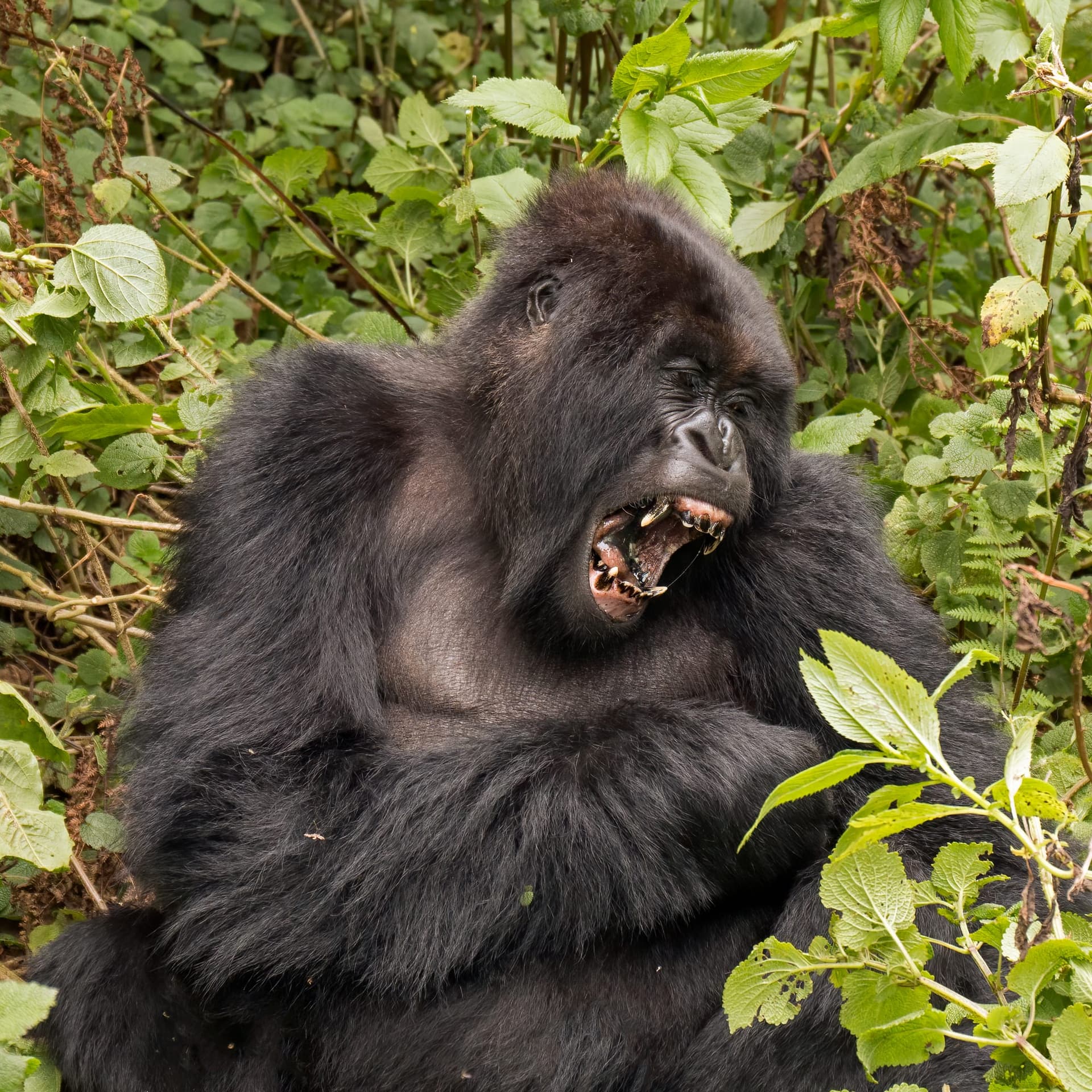
Few wildlife experiences are as intimate and physically demanding as standing in a mountain forest only metres away from a wild gorilla family. Unlike a conventional game drive, gorilla trekking requires travellers to leave the vehicle behind and walk into dense montane forest in search of one of the world's most endangered great apes. The reward is extraordinary: watching gorillas feed, rest, play, interact with one another, and move through their natural habitat.
For most international travellers, two destinations dominate the decision: Rwanda and Uganda. Both offer legitimate opportunities to trek mountain gorillas in their natural habitat, but they differ substantially in permit prices, accessibility, terrain, trekking style, and the type of wider safari that can be built around the experience. So which should you choose? The answer depends largely on your budget, physical fitness, available time, and appetite for adventure.
Rwanda versus Uganda at a Glance
- Main gorilla destination: Volcanoes National Park in Rwanda; Bwindi Impenetrable National Park and Mgahinga Gorilla National Park in Uganda.
- Standard permit, foreign non-residents: US$1,500 in Rwanda; US$800 in Uganda.
- Main landscape: volcanic slopes and montane forest in Rwanda; dense rainforest, ridges, and deep valleys in Uganda.
- Accessibility: relatively easy from Kigali in Rwanda; a longer overland journey from Entebbe or Kampala in Uganda.
- Trekking character: steep volcanic terrain, bamboo, and montane forest in Rwanda; dense, rugged, and often muddy rainforest in Uganda.
- Best for: convenience, premium travel, and shorter itineraries in Rwanda; value, wilderness, and broader Uganda adventures in Uganda.
- Minimum age: 15 in both countries.
- Wider travel opportunities: gorilla trekking, volcano hiking, cultural experiences, and Rwanda's other national parks in Rwanda; gorillas, chimpanzees, savannah safaris, Murchison Falls, Queen Elizabeth National Park, and more in Uganda.
Rwanda's tourism authority currently lists the standard gorilla permit at $1,500 per person, with a minimum trekking age of 15. Uganda's standard foreign non-resident permit sits at $800, making the initial permit cost $700 lower than Rwanda's. Travellers should verify the applicable tariff when booking, since wildlife authorities can revise fees and offer promotional rates.
That price difference is significant, but it does not tell the whole story.
The Gorilla Experience Is Similar, the Journey Is Different
Both countries offer visitors the opportunity to track habituated mountain gorilla groups under the supervision of trained guides and park staff. The encounter itself is highly regulated: Rwanda limits gorilla trekking to groups of no more than eight visitors, with its tourism authority emphasising advance booking and licensed operators and guides.
Responsible tourism is an important part of gorilla conservation, and Rwanda explicitly states that revenue from gorilla permits contributes to conservation and community projects, including efforts to expand forest and gorilla habitat. Uganda operates a similar conservation model: Bwindi and Mgahinga are protected areas managed by the Uganda Wildlife Authority, and gorilla tourism is a major component of their conservation and tourism framework. Uganda is home to more than half of the world's mountain gorilla population, concentrated across Bwindi and Mgahinga.
The choice, then, is not between a real gorilla experience and an inferior alternative; both are genuine mountain gorilla destinations. The major differences emerge when you consider what it takes to get there, and what happens outside the one-hour gorilla encounter.
Rwanda: The Easier and More Premium Option
Rwanda's greatest advantage is accessibility. Volcanoes National Park lies in the country's northwest, close to the town of Musanze, approximately 2.5 hours from Kigali by road, making it possible to build a gorilla itinerary without spending an entire day travelling between the airport and the trekking region.
This matters considerably for travellers with limited time. With only four or five days in Rwanda, you can arrive in Kigali, transfer to the Volcanoes region, trek gorillas the following morning, and still have time for other activities. That makes Rwanda particularly attractive to luxury travellers who value convenience, business travellers adding a wildlife experience to a short African trip, couples who want to minimise long road transfers, travellers with limited vacation time, and visitors combining gorilla trekking with Kigali or other Rwandan experiences.
The higher permit fee effectively places Rwanda at the premium end of the gorilla-tourism market, but the additional expenditure is not simply buying better gorillas. It is buying access to a highly developed, relatively compact destination, and a country where travel distances can be shorter.
Uganda: The Better Value Proposition
Uganda's headline advantage is price. At the standard foreign non-resident rate, an $800 gorilla permit is substantially cheaper than Rwanda's $1,500 permit, a saving of $700 per traveller before accommodation and transportation. For a couple, that difference becomes $1,400; for a family of four eligible for standard permits, it could reach $2,800.
Uganda also offers something Rwanda cannot match to the same extent: enormous opportunities to build a broader wildlife itinerary around the gorilla experience. A traveller can combine gorilla trekking with chimpanzee tracking, savannah wildlife viewing, boat cruises, and visits to other Ugandan national parks. Bwindi alone contains approximately 120 mammal species and more than 350 bird species, including numerous Albertine Rift endemics, which makes Uganda particularly attractive to travellers who see gorilla trekking as one component of a larger wildlife expedition rather than the sole objective of the holiday.
The Terrain: Where the Difference Becomes Real
Permit prices are important, but terrain may have a greater effect on your actual experience.
Uganda's Bwindi Impenetrable National Park is precisely what its name suggests: dense, ancient forest covering a rugged landscape of ridges and valleys, ranging from approximately 1,160 to 2,607 metres above sea level across about 321 square kilometres. This creates physically demanding trekking conditions: steep slopes, thick vegetation, slippery ground, and muddy trails, which can shift quickly after rain. The amount of walking required depends largely on where the allocated gorilla family is located, and Uganda's own tourism authority recommends physical preparation, suitable footwear, and rain gear. Not every trek is extremely difficult, and some hikes are shorter and relatively manageable, but you cannot reliably determine the difficulty of your trek from the country alone.
It would be a mistake, though, to assume Rwanda provides an easy walk through a flat forest. Volcanoes National Park lies in the Virunga volcanic region, where steep mountain slopes dominate the landscape, taking its name from a chain of dormant volcanoes, including Karisimbi, Bisoke, Sabinyo, Gahinga, and Muhabura, with Karisimbi reaching approximately 4,507 metres. Treks can involve steep ascents and uneven terrain, with areas of bamboo and montane vegetation giving Rwanda a reputation for being somewhat less physically demanding than Bwindi, though that should not be mistaken for easy. Gorilla trekking is a mountain hike in both countries, and fitness, appropriate clothing, good footwear, and preparation matter regardless of destination.
Rwanda usually has the advantage for travellers who prioritise logistical simplicity, since the proximity of Volcanoes National Park to Kigali means less time spent on long road transfers, leaving more time for rest and for the trek itself. Uganda requires more planning: Bwindi sits in the country's southwest, and reaching different trekking sectors can involve significant road travel, though domestic flight options and different entry points are available. There is an important distinction between accessibility and physical difficulty, though: a destination can be easier to reach and still require considerable hiking once you arrive. Rwanda is the more convenient option logistically, not a destination where fitness becomes irrelevant.
Where Does Your Money Go?
The gorilla permit is only one part of the final safari bill. Budget for accommodation, transport, meals, park-related expenses, guide and porter considerations, visas where applicable, travel insurance, tips, and additional sightseeing and activities. Simply comparing $800 against $1,500 does not tell you which destination is cheaper overall: Uganda's cheaper permit can be offset partially by longer transportation requirements, while Rwanda's expensive permit can be easier to build into a short trip because Volcanoes National Park sits close to Kigali. For that reason, travellers should compare complete itineraries, not permit prices alone.
Which Country Offers the Better Wider Safari?
This is where Uganda becomes particularly compelling. A Uganda itinerary can be designed around far more than gorillas: after Bwindi, travellers can continue to destinations such as Queen Elizabeth National Park, where wildlife viewing and boat experiences complement the forest trekking, along with chimpanzee tracking and other primate experiences elsewhere in the country. Uganda's geography allows travellers to create a safari that combines forest, primates, savannah, and dramatic landscapes.
Rwanda also offers substantial wildlife experiences: Akagera National Park provides savannah wildlife, while Nyungwe is important for forest biodiversity and primate experiences. Rwanda's appeal, though, is frequently centred around a more compact, premium itinerary, while Uganda tends to reward travellers who want a longer, more exploratory journey.
Rwanda or Uganda: Who Should Choose Which?
Choose Rwanda if you want a shorter transfer from an international arrival in Kigali, a premium and highly convenient safari experience, a short trip focused primarily on gorilla trekking, comfortable access to Volcanoes National Park, and a trip where convenience and time efficiency matter more than maximising budget.
Choose Uganda if you want a substantially cheaper standard gorilla permit, a more wilderness-oriented trekking experience, a broader multi-destination Ugandan safari, gorillas combined with chimpanzees and conventional savannah wildlife, and a longer adventure where the journey itself is part of the experience.
Rwanda sells convenience and a premium, concentrated experience; Uganda offers stronger value and a broader wilderness journey. Neither model is inherently superior. A traveller with four days available may find Rwanda's premium worthwhile, since minimising transportation can matter more than saving $700, while a traveller with ten to fourteen days and a strong interest in wildlife may prefer Uganda, since the money saved on permits can be redirected toward accommodation, additional activities, or extending the safari.